
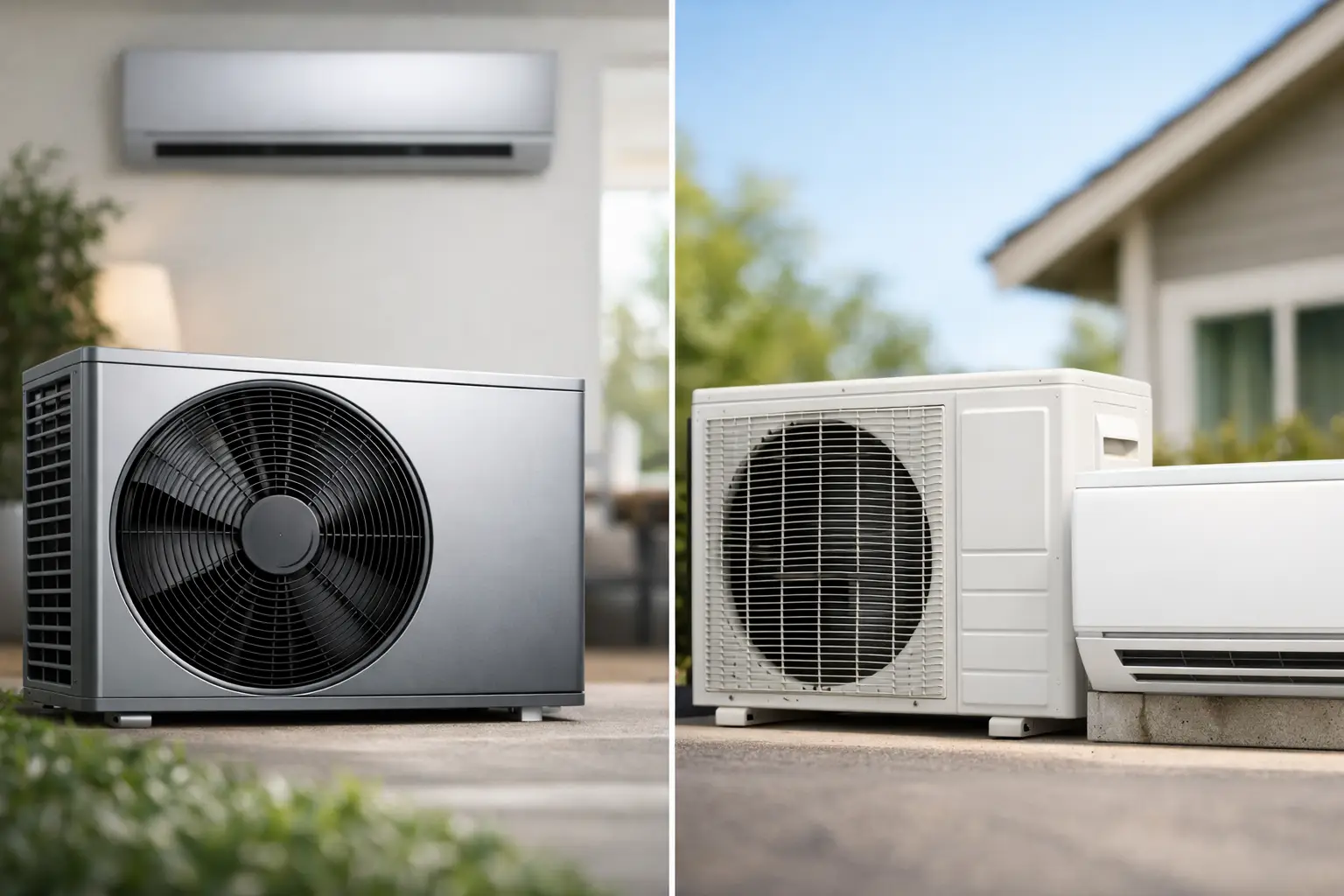
A central HVAC replacement in Corpus Christi is rarely a simple like-for-like decision. Homeowners often find that an MRCOOL Universal versus traditional split system comparison comes down to more than the equipment price. It affects how much existing ductwork can be used, who can install and service the system, how efficiently it handles long cooling seasons, and what happens when a repair is needed years from now.
Both options can provide dependable whole-home comfort. The better choice depends on your home, your existing equipment, and whether you want flexibility beyond the standard condenser-and-air-handler setup. Here is what South Texas homeowners should weigh before making the call.
What Is an MRCOOL Universal System?
The MRCOOL Universal Series is an inverter-driven heat pump system designed for flexible installation. Depending on the application, it can be paired with compatible existing ductwork, an air handler, a furnace and coil, or other approved components. That adaptability is a major difference from many conventional split systems, which are generally selected and installed as a matched set with a specific outdoor condenser and indoor coil or air handler.
An inverter system does not simply turn fully on and fully off every time the thermostat calls. It can adjust its output to better match the home’s current demand. During the long, humid cooling season common along the Coastal Bend, that ability can support steadier indoor temperatures and reduce the sharp temperature swings some homeowners notice with older single-stage equipment.
The Universal Series is not the same thing as a DIY mini-split. It is a central-system solution intended for applications that may use ductwork. Proper sizing, approved component matching, electrical work, condensate drainage, refrigerant connections, and commissioning still matter. A licensed installation is the right choice for most full-home replacements.
How a Traditional Split System Works
A traditional split system has an outdoor condensing unit and an indoor component, usually an evaporator coil installed with a furnace or an air handler. Refrigerant lines connect the two sections, and conditioned air moves through the home’s duct system. In cooling mode, the system removes heat from indoors and sends it outside. A heat-pump split system can reverse that process for heating.
This layout is familiar to homeowners and technicians alike. It remains a solid option when a home has sound ductwork, straightforward equipment access, and a need for a conventional replacement. Traditional systems are available in multiple efficiency levels and configurations, from basic single-stage equipment to variable-speed systems with more advanced comfort control.
The term “traditional” does not automatically mean outdated or inefficient. A properly sized, correctly installed modern split system can be an excellent long-term investment. The key is choosing equipment that fits the home rather than buying based only on the lowest initial quote.
MRCOOL Universal Versus Traditional Split System: The Real Differences
The biggest practical difference is flexibility. An MRCOOL Universal system is built around an adaptable inverter heat-pump platform. A traditional split system is often more fixed in its equipment pairing and installation approach. That distinction can matter when replacing an aging central system, converting from a straight-cool unit to a heat pump, or working around an existing furnace.
Efficiency and comfort control
Variable-capacity operation is one of the strongest reasons homeowners consider an MRCOOL Universal system. Rather than delivering one fixed level of cooling, the system can modulate. In real terms, this may mean quieter operation, longer lower-output cycles, and more consistent comfort during moderate weather.
Traditional systems vary widely. A single-stage system may cost less up front but generally cycles at full capacity when operating. Higher-end traditional variable-speed systems can offer similar comfort advantages, though the final comparison should be between specific models and matched system ratings, not broad labels alone.
For South Texas, efficiency should be considered alongside humidity control and installation quality. An oversized system can cool quickly but shut off before it has removed enough moisture. An undersized system may struggle during the hottest part of the afternoon. Proper load calculations are more useful than relying on the size of the old unit.
Compatibility with existing equipment
Many homeowners want to keep usable components when replacing a failed outdoor unit. That can sometimes be possible, but compatibility must be verified. Refrigerant type, coil capacity, metering devices, controls, line-set condition, and manufacturer requirements all affect whether a partial replacement is appropriate.
The Universal Series can offer more options than a conventional matched split system, particularly when integrating with certain existing ducted setups. Still, “universal” does not mean every furnace, air handler, thermostat, or coil is automatically compatible. A professional should review the complete system before promising that existing equipment can stay.
Traditional split systems may be the cleaner choice when both indoor and outdoor equipment are near the end of their service life. Replacing the full matched system at once can prevent performance compromises and make warranty coverage easier to understand.
Installation requirements
Neither system should be treated as a drop-in appliance. The outdoor unit needs a properly sized electrical circuit, stable pad or mounting location, clear airflow space, and correct refrigerant-line routing. Indoors, the installer must address airflow, drain protection, filter access, duct leakage, and thermostat setup.
For an MRCOOL Universal installation, the technician must also configure the inverter equipment and confirm it operates correctly across its capacity range. That extra setup is worthwhile when done correctly, but it is not a shortcut around professional workmanship.
A traditional split system is familiar territory for most licensed HVAC installers. That can be an advantage in a straightforward replacement. However, familiarity does not excuse rushed work. Poor evacuation, incorrect refrigerant charge, undersized return air, or neglected duct repairs can reduce the performance of any brand.
Heating performance
Corpus Christi homeowners usually prioritize cooling, but heating still matters during cold snaps. Heat pumps are especially attractive because they provide electric heating without requiring a separate gas-burning heating cycle. The MRCOOL Universal Series is designed to provide efficient heat-pump operation, making it a practical fit for many South Texas homes.
A traditional setup may use a heat pump, a gas furnace with air conditioning, or an electric air handler. If a home already has a reliable gas furnace and local fuel costs make sense, a conventional AC-and-furnace combination may remain the better fit. If the goal is all-electric heating and cooling, a heat pump comparison becomes more relevant.
Cost: Look Beyond the Equipment Price
The installed price depends on capacity, efficiency rating, indoor equipment, electrical upgrades, duct repairs, line-set work, permits, controls, and labor. A lower equipment price can disappear quickly if the installation requires major corrections. Conversely, spending more on inverter equipment may make sense when it improves comfort, reduces operating costs, or avoids replacing otherwise serviceable indoor components.
Ask for a clear scope of work. A dependable quote should explain what equipment is included, whether the system is fully matched, what warranty applies, and which installation items are covered. It should also state whether ductwork, electrical modifications, thermostats, drain upgrades, or pad replacement are extra.
Factory-backed warranty coverage has value, but it is only part of the ownership experience. Homeowners should also consider whether there is a local company willing and able to diagnose the system later. That is where buying from an authorized dealer with service capability matters.
Which System Is Right for Your Home?
Choose an MRCOOL Universal system when you want inverter-driven comfort, flexible options around an existing ducted setup, and an efficient heat-pump solution. It can be especially appealing for homeowners replacing older central equipment who want modern performance without assuming every indoor component must be replaced.
Choose a traditional split system when your home is best served by a complete matched replacement, your existing setup is conventional and straightforward, or you prefer a specific furnace-and-AC configuration. It is also a sensible path when the ductwork and indoor equipment need substantial updates anyway.
The right answer may change after an in-home evaluation. Square footage alone is not enough. Ceiling height, insulation, window exposure, duct condition, occupancy, and the home’s layout all affect system sizing and performance.
For homeowners who want honest pricing and local accountability, Your Bargain Mart can help identify the appropriate MRCOOL solution and coordinate licensed installation through Precision Air. The goal is not to force every home into one product category. It is to install equipment that fits the house, the budget, and the support you expect after the sale.
Before committing to either system, ask for a real assessment of your ductwork, electrical capacity, indoor equipment, and comfort concerns. The best HVAC upgrade is the one that keeps your home comfortable on the hottest South Texas afternoon and still has qualified local support when you need it.
Further reading: Mrcool universal versus traditional split system on wikipedia.org.
In short, mrcool universal versus traditional split system rewards a careful, informed approach. Use this mrcool universal versus traditional split system guide as a starting framework, adapt it to your situation, and re-check the facts whenever the topic moves.