
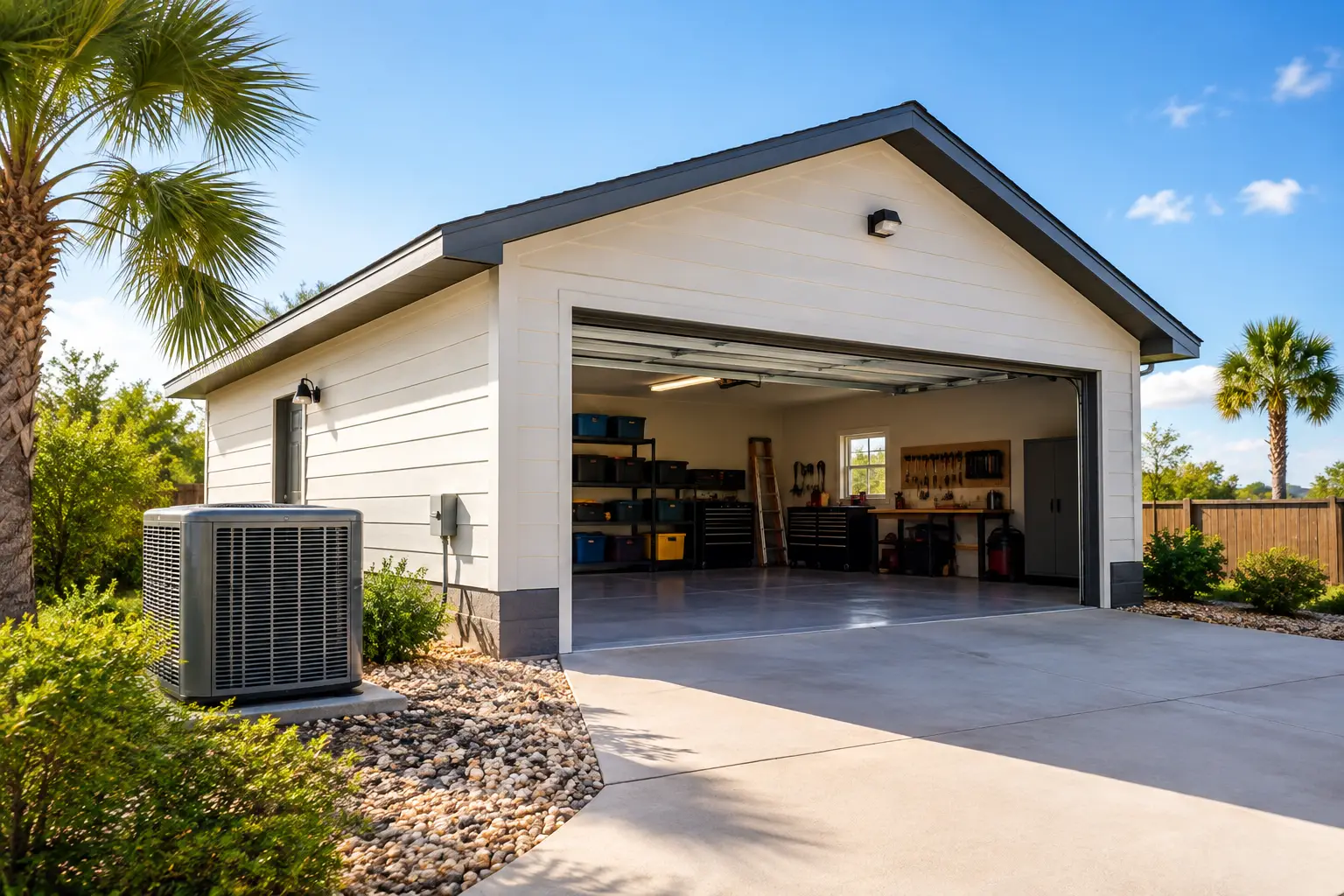
How to cool detached garage — this guide covers everything you need to know about how to cool detached garage, with practical tips and the latest updates.
A detached garage can be 15 to 25 degrees hotter than the outdoor temperature by late afternoon in Corpus Christi. Metal doors, uninsulated roofs, concrete floors, and direct sun turn the space into a heat trap fast. If you are researching how to cool a detached garage, the best answer is usually not one product. It is a practical combination of heat control, air movement, and a cooling system sized for the way you actually use the space.
Whether your garage is a workshop, home gym, hobby room, storage area, or a place to park a prized vehicle, comfort starts with reducing the load on the air conditioner. Then you can choose equipment that cools reliably without wasting energy or money.
How to cool detached garage: Start by Keeping Heat Out of the Garage
Air conditioning a garage with little insulation is like trying to cool a room with the windows open. The system may run constantly, yet the room will still feel sticky and uneven. Before selecting equipment, look at the roof, garage door, walls, windows, and air leaks.
The attic or ceiling is often the biggest opportunity. In South Texas, roof heat can radiate into the garage for hours after the sun goes down. Adding or improving attic insulation helps slow that transfer. If the garage has an exposed ceiling and no attic, insulated roof panels or a properly designed insulated ceiling can make a major difference.
An uninsulated garage door is another common weak point. A door facing west or south can become a large radiant heat source. Insulation kits can help, but a properly insulated replacement door may be the better long-term choice when the existing door is thin, damaged, or poorly sealed. Add weatherstripping around the perimeter and make sure the bottom seal contacts the slab evenly.
Seal obvious gaps around doors, windows, wall penetrations, and the connection where wiring or refrigerant lines enter the building. This does not mean making the garage airtight without a plan for ventilation. It means preventing uncontrolled hot, humid outdoor air from entering every time your cooling system runs.
Improve Ventilation Before You Add Cooling
Ventilation and air conditioning solve different problems. Ventilation removes trapped heat, fumes, and stale air. Air conditioning lowers temperature and helps control humidity. A garage used for woodworking, painting, welding, vehicle work, or chemical storage needs a ventilation plan even if it has a mini-split.
A roof-mounted or wall-mounted exhaust fan can move hot air out, especially during the early evening when the attic and garage structure are still releasing heat. The fan needs a source of replacement air, such as a properly sized louver or an open door during active work. Without makeup air, an exhaust fan cannot move air efficiently.
For a basic parking garage, a high-quality circulating fan may be enough to make the space more usable during mild weather. Ceiling fans and wall fans do not lower the actual air temperature, but they improve evaporative cooling on your skin. That can make a 90-degree garage feel more manageable while you are working.
Do not rely on a fan when the goal is protecting tools from humidity, keeping a home gym comfortable, or spending long stretches in the space. Fans move hot air around. They do not remove moisture from South Texas air.
Choose the Right Way to Cool a Detached Garage
There are several ways to cool detached garage space, but the right choice depends on the garage construction, electrical capacity, usage, and budget.
Portable and Window Units Have Limited Roles
A portable air conditioner can offer short-term relief in a small garage, but it has trade-offs. Most portable units take up floor space, require a window or vent opening, and may struggle with garage heat and humidity. Single-hose models can also pull hot outside air into the building as they exhaust indoor air.
A window air conditioner is generally more efficient than a portable unit, provided the garage has a suitable window and the unit can be secured correctly. For a lightly used one-car garage, it may be a reasonable budget option. It is less appealing for larger spaces, finished garages, workshops, or homeowners who want quiet operation and dependable humidity control.
A Ductless Mini-Split Is Often the Best Long-Term Fit
For many detached garages, a ductless mini-split is the most practical dedicated solution. It does not require tying into the central system serving your home, and it avoids the inefficiency of pushing conditioned air through a long duct run to a separate building. The indoor air handler mounts high on the wall, while the outdoor condenser sits outside the garage.
Modern MRCOOL mini-split systems provide efficient cooling, variable-speed operation, and strong humidity removal. Because they are heat pumps, they can also provide heat on the occasional cold South Texas morning. That matters for garages used as workspaces year-round.
A mini-split should be selected based on the room load, not simply the garage square footage. A two-car garage may need more capacity than its measurements suggest if it has a dark roof, west-facing door, little insulation, frequent door opening, or heat-producing equipment. On the other hand, an insulated garage with a shaded exterior may need less capacity than expected.
Oversizing is not a harmless shortcut. An oversized system can cycle too quickly, reduce humidity removal, and cost more upfront. Undersizing leaves the equipment running continuously on hot days. A proper load assessment considers ceiling height, insulation levels, window exposure, construction materials, occupancy, equipment, and how often the garage door opens.
Do Not Extend Your Home’s Central Air Into the Garage
It can be tempting to add a supply duct from the house to the garage. In most cases, this is not the right move. Garages can contain vehicle exhaust, gasoline vapors, solvents, and other contaminants that should not be pulled back toward the living area. Building codes and safety requirements also restrict how attached and detached garages can connect to home HVAC systems.
A detached garage needs an independent solution. A properly installed mini-split, separate packaged system, or another dedicated unit keeps the garage comfort system separate from the air you breathe inside the home.
Prepare the Electrical and Installation Details
Cooling equipment is only as dependable as the installation behind it. Larger garage systems typically require a dedicated electrical circuit, outdoor disconnect, correct wire sizing, and proper condensate management. The outdoor unit needs clearance for airflow and a location protected from standing water, lawn equipment, and accidental vehicle contact.
Indoor head placement matters, too. It should throw air across the longest practical span of the garage without blowing directly into shelving or being blocked by a raised door track. If the garage has separate work and storage areas, think about where people spend time rather than placing the unit wherever installation seems easiest.
DIY-capable mini-splits can be a good fit for hands-on homeowners, but electrical work, mounting, drainage, and local code requirements still deserve careful attention. Your Bargain Mart can help South Texas homeowners select the right MRCOOL system and arrange licensed installation through Precision Air, including support for MRCOOL DIY equipment when service is needed later.
Control Humidity and Everyday Heat Gain
In Corpus Christi, temperature is only part of the comfort problem. High humidity can make a cooled garage feel clammy, cause tools to rust, and encourage musty odors in stored belongings. A correctly sized mini-split will remove moisture while it cools, but garage habits still matter.
Avoid leaving the overhead door open longer than necessary. Use window shades or exterior solar screens where appropriate, and do not store wet gear against walls. If you bring a hot vehicle into the garage after a long drive, expect the temperature to rise for a while. The system can recover, but it will work less hard if the building envelope is insulated and sealed.
For workshops, keep dust filters and indoor coils clean. Sawdust, pet hair, and airborne debris reduce airflow and can shorten equipment life. Regular maintenance is not optional in a garage environment.
The most comfortable detached garages are planned as usable rooms, not treated as an afterthought. Reduce the heat coming in, provide ventilation for the work being done, and choose dedicated equipment sized for the building. That approach gives you a cooler space now and a system you can count on through many South Texas summers.
Further reading: How to cool detached garage on bbc.com.
In short, how to cool detached garage rewards a careful, informed approach. Use this how to cool detached garage guide as a starting framework, adapt it to your situation, and re-check the facts whenever the topic moves.