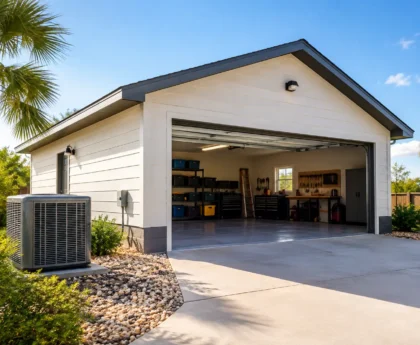
A Corpus Christi garage that feels like an oven by noon, a back bedroom that never matches the thermostat, or a room addition without ductwork creates the same buying question: ductless heat pump versus window unit? Both can cool one space without rebuilding your central HVAC system. The better choice depends on how often you use the room, how well it is insulated, and whether you want a short-term fix or dependable comfort for years.
- Ductless Heat Pump Versus Window Unit: The Core Difference
- Upfront Cost Is Not the Whole Cost
- Comfort, Noise, and Everyday Use
- Heating Capability Matters More Than You May Think
- Installation: Simple Does Not Always Mean Simple
- Sizing Can Make or Break Either Choice
- When a Window Unit Is the Better Buy
- When a Ductless Heat Pump Is Worth It
A window unit has a lower purchase price and can be in place quickly. A ductless heat pump, commonly called a mini-split, costs more up front but provides quieter, more efficient heating and cooling with a permanent installation. For many South Texas homeowners, that difference becomes clear after the first long stretch of summer heat.
Ductless Heat Pump Versus Window Unit: The Core Difference
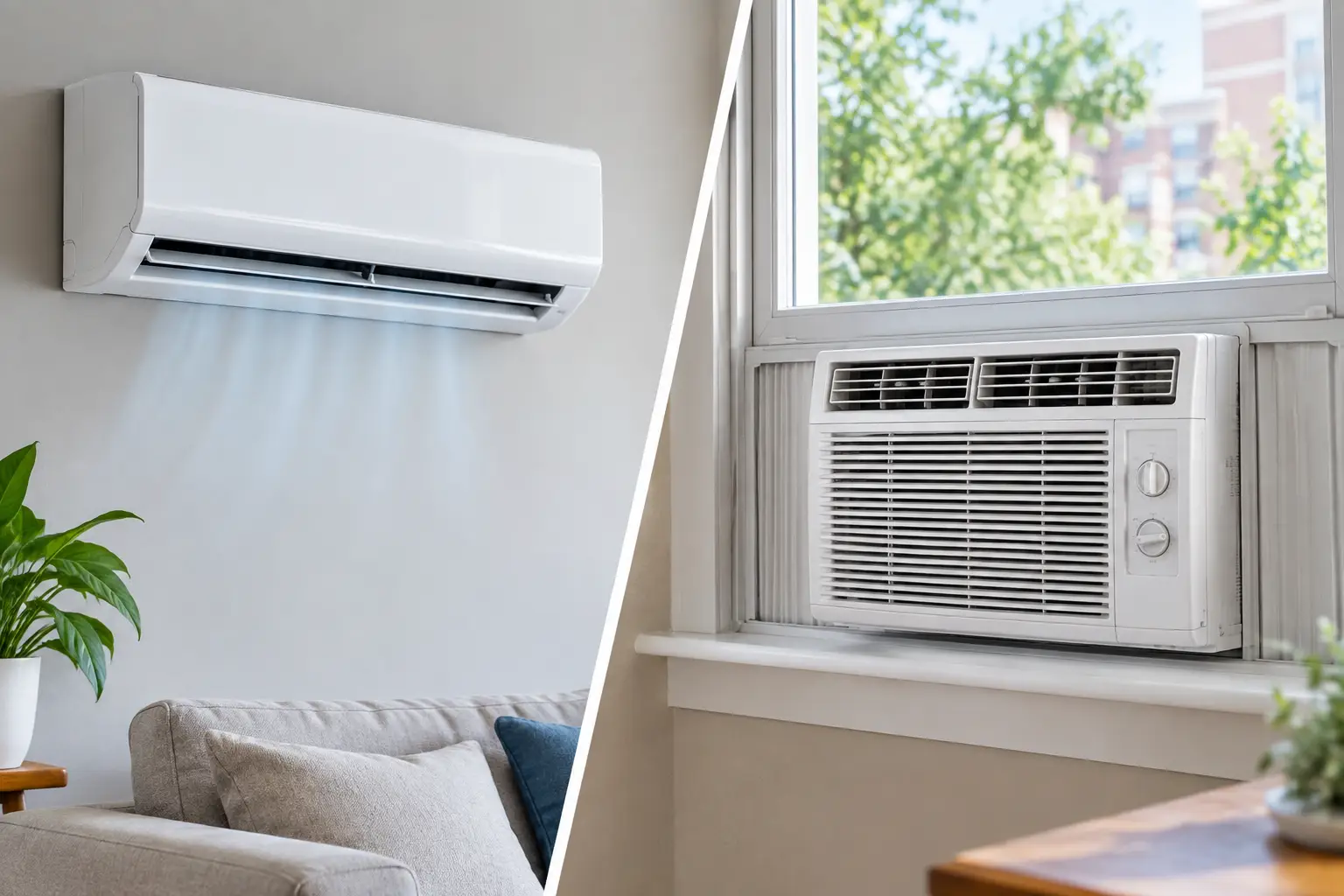
A window air conditioner is a self-contained appliance that sits in a window or a specially built wall opening. It pulls heat from the room and releases it outdoors. Some models also provide heat, though cooling is usually their primary job. Installation can be as simple as securing the unit, sealing the side panels, and plugging it into an appropriate outlet.
A ductless heat pump has an indoor air handler and an outdoor condenser connected by refrigerant lines, wiring, and a condensate drain. The indoor unit delivers conditioned air directly into the room. Because it is a heat pump, it reverses its operation to provide efficient heat during cooler weather as well as cooling in summer.
That split design gives a mini-split several practical advantages. The noisy compressor stays outside, the indoor unit can modulate its output instead of cycling hard on and off, and the system does not block a window. It also requires more planning. Correct sizing, a sound mounting location, electrical requirements, drainage, and proper installation all matter.
Upfront Cost Is Not the Whole Cost
If you need relief this week in a lightly used guest room, a window unit is hard to beat on initial price. The equipment costs far less than a ductless system, and many homeowners can install it themselves. It is a reasonable option for renters, temporary living arrangements, or rooms where a permanent upgrade does not make financial sense.
A ductless heat pump is an investment in the room. Equipment cost is higher, and professional installation adds to the total. The trade-off is that a properly selected system can use less electricity over time, especially when it cools a room for many hours each day. Inverter-driven mini-splits adjust their output to maintain a steady temperature rather than repeatedly running at full blast.
Electricity savings are never automatic. An oversized ductless system, a poorly insulated room, or doors left open to condition a much larger area can erase much of the advantage. Still, for a frequently used bedroom, office, enclosed patio, garage conversion, workshop, or small addition, the long-term operating cost often favors ductless equipment.
South Texas humidity changes the conversation
Corpus Christi heat comes with humidity, and comfort is not just a thermostat number. A unit that cools too quickly may not run long enough to remove adequate moisture. The room can feel cool but clammy.
Properly sized ductless systems are often especially good at maintaining steady comfort because they can run at lower output for longer periods. A quality window unit can manage humidity in a small room, but its performance is more dependent on correct sizing, clean filters, clear airflow, and tight window sealing. Neither option can overcome a major insulation problem or an unsealed garage door.
Comfort, Noise, and Everyday Use
Window units put the compressor and fan right at the window. That is acceptable for many spaces, but it can be disruptive in a bedroom, home office, or media room. They also take up window space, reduce natural light, and may affect the room’s appearance from outside.
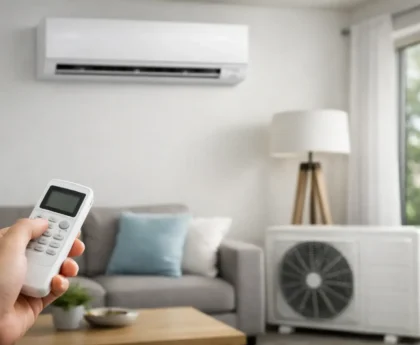
A ductless indoor head is noticeably quieter. It mounts high on a wall, keeps windows usable, and usually distributes air more evenly across the room. Most systems use a handheld remote or wall control, and many offer timer, sleep, and Wi-Fi control features depending on the model.
Air direction matters here. A wall-mounted mini-split works best when it can throw air across the room without blowing directly onto a bed or desk. A window unit needs enough clearance around the exterior portion to reject heat properly. Before buying either one, look at furniture placement, window location, exterior access, and where condensate water will drain.
Heating Capability Matters More Than You May Think
South Texas winters are mild compared with much of the country, but cold fronts still arrive. A cooling-only window unit leaves you looking for a separate heater when temperatures drop. Heat-and-cool window units are available, but their heating efficiency and cold-weather performance vary by model.
A ductless heat pump is designed to handle both jobs. It can provide efficient, targeted heat in the space where you need it without firing up the whole house system. That is useful in additions, detached offices, shops, and rooms that stay cooler than the rest of the home.
For the occasional cold night, portable heat may seem sufficient. For a room used every day, a heat pump is usually the more practical and safer long-term comfort solution when installed and operated correctly.
Installation: Simple Does Not Always Mean Simple
Window units have fewer installation steps, but they still need attention. The unit must be supported securely, level or slightly pitched as directed by the manufacturer, and sealed around the opening. An improperly installed unit can leak water, allow hot outside air indoors, create a security concern, or overload an electrical circuit.
Ductless installation is more involved because the indoor and outdoor sections must be correctly connected, pressure-tested, evacuated, wired, drained, and commissioned. The outdoor unit needs a stable pad or bracket with adequate clearance. Electrical work may require a dedicated circuit, disconnect, and permits depending on the installation.
Some homeowners choose a DIY-oriented system for a straightforward single-zone project. That can be a good fit when the buyer understands the work involved and has support available after the sale. Others are better served by licensed installation from the start, particularly for multi-zone systems, difficult wall penetrations, electrical upgrades, or spaces where performance and warranty protection are top priorities.
Sizing Can Make or Break Either Choice
Do not select equipment by room square footage alone. Ceiling height, insulation, window exposure, building materials, room use, occupants, and connected spaces all affect the cooling load. A sunny west-facing room above a garage needs far more consideration than a shaded, insulated bedroom of the same size.
Oversizing is a common mistake. Bigger equipment does not guarantee better cooling. It can cycle inefficiently, provide uneven temperatures, and reduce humidity control. Undersizing creates the opposite problem: the equipment runs continuously and still struggles during the hottest part of the day.
For a window unit, use the manufacturer’s sizing guidance as a starting point and adjust for direct sun, kitchens, high ceilings, and other heat sources. For a ductless heat pump, getting real sizing guidance before purchase is worth the effort. The right system capacity and layout protect both comfort and your budget.
When a Window Unit Is the Better Buy
A window unit makes sense when the need is temporary, the room is used only occasionally, or the budget does not support a permanent system right now. It is also practical for a small, enclosed room where noise, blocked window space, and appearance are not major concerns.
Choose a dependable model with the right capacity, use a dedicated outlet when required, and keep the filter clean. Treat it as a room appliance, not a replacement for a failing central system trying to cool an entire home.
When a Ductless Heat Pump Is Worth It
A ductless heat pump is usually the stronger choice for a permanent room addition, converted garage, workshop, detached space, primary bedroom, or home office. It is also a smart option when extending ductwork would be expensive or when one part of the home needs independent temperature control.
The higher initial cost buys more than cooling. You gain efficient heating, lower indoor noise, preserved window space, better room-by-room control, and a system built for regular use. With a properly selected MRCOOL system and reliable local service, homeowners can also avoid the uncertainty of buying equipment without a plan for installation, warranty questions, or future repairs.
Before choosing, stand in the room at the hottest time of day and consider how you actually live in it. If you need occasional, low-cost relief, a window unit may do exactly what you need. If the space deserves year-round comfort and you want an upgrade that feels like part of the home, take the time to size a ductless heat pump correctly and have a clear plan for support after installation.
In short, ductless heat pump versus window unit rewards a careful, informed approach. Use this ductless heat pump versus window unit guide as a starting framework, adapt it to your situation, and re-check the facts whenever the topic moves.