
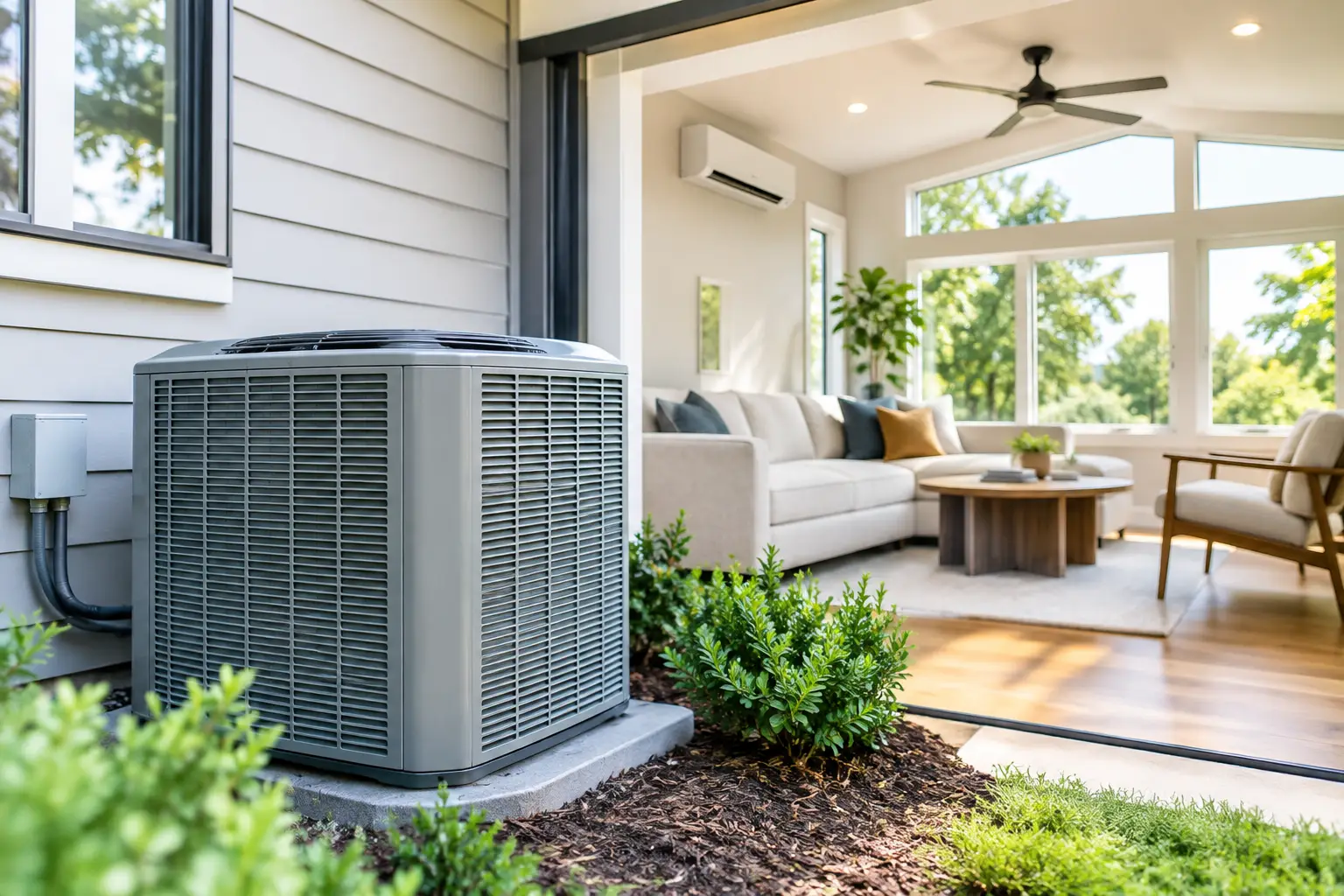
A new bedroom, enclosed patio, garage conversion, or backyard office can look finished long before it feels finished. In Corpus Christi, an addition with poor cooling can turn into the room nobody wants to use by midafternoon. The right cooling solutions for room additions account for more than square footage. They must handle South Texas heat, humidity, sun exposure, insulation levels, and how the new space connects to the rest of your home.
Table of Contents
Adding a vent and hoping for the best is rarely a dependable plan. Your existing system may already be near its capacity, and pushing it harder can make the original part of the house less comfortable. A proper recommendation starts with the room itself, then matches the equipment and installation method to the way you plan to use it.
Start With the Addition, Not the Equipment
Before choosing a mini-split or extending central ductwork, look at what makes the room gain heat. A 250-square-foot guest room under a well-insulated roof has very different needs than a 250-square-foot sunroom with west-facing glass. Ceiling height, wall and attic insulation, window size, shade, room orientation, occupancy, and electronics all affect the cooling load.
Humidity matters, too. Coastal South Texas air carries moisture that can make a room feel sticky even when the thermostat says the temperature is acceptable. Equipment that is oversized may cool the air quickly but shut off before it removes enough moisture. Equipment that is too small may run constantly and still struggle during the hottest hours.
That is why a load calculation and an on-site review are worth the time. Square-footage rules of thumb can provide a starting point, but they are not a final equipment selection. Proper sizing protects comfort, efficiency, and the life of the system.
Cooling Solutions for Room Additions: Your Main Options
Most homeowners are choosing between a ductless mini-split, an extension of their existing central HVAC system, or an independent ducted system for the new area. The best fit depends on the home, the addition, and the condition of your existing equipment.
Ductless mini-splits for independent comfort
A single-zone ductless mini-split is often the practical answer for one added room. It uses an outdoor condenser and an indoor wall-mounted, ceiling-mounted, or concealed air handler. Because the system serves that room directly, it does not depend on your existing central unit having extra capacity.
This approach is especially useful for garages, workshops, converted spaces, casitas, home offices, and additions built far from the main air handler. It also gives that space its own thermostat, so a family member can keep a bedroom comfortable without changing the temperature throughout the house.
MRCOOL mini-splits offer efficient variable-speed performance and are available in DIY and professional-grade configurations. DIY models can appeal to capable homeowners, but equipment selection, electrical requirements, line routing, wall penetration, condensate drainage, and local code considerations still need careful attention. Local support after the purchase matters just as much as the box arriving at your door.
The trade-off is appearance and layout. A wall-mounted head is visible, and placement must allow good air distribution without blowing directly onto a bed, desk, or seating area. Some rooms may be better served by a ceiling cassette or concealed ducted air handler, depending on the construction and access available.
Extending your existing central HVAC system
If the addition is next to the main living area and your current system has verified capacity, extending the ductwork can create a clean, consistent look. The room uses the same thermostat and filtration setup as the rest of the home, with supply and return air designed as part of one system.
The key phrase is verified capacity. A central system that was properly sized for the original home may not have enough cooling left for another room. Simply adding a supply register can reduce airflow to other rooms, create uneven temperatures, and increase strain on the equipment. A return-air path is also essential. Cool air cannot perform well if it has no practical way to circulate back to the air handler.
Duct extensions can make sense when the existing equipment is newer, the ducts are accessible, and the load calculation supports the change. They become less attractive when the attic run is long, the current system is undersized, or the addition needs its own schedule and temperature control.
A separate ducted system for larger additions
For a large primary-suite expansion, multi-room addition, or detached living space, a separate ducted heat pump and air handler may provide the best long-term result. This option allows multiple rooms to have registers and a more traditional central-air appearance without burdening the original system.
A ducted solution usually costs more than a single-zone mini-split because it involves duct design, air distribution, electrical work, and equipment installation. Still, it can be the better value when one small system needs to condition several connected rooms. It also gives additional independent control and simplifies future upgrades to the original home.
A multi-zone ductless system is another option when several rooms need separate temperature control but ductwork is impractical. Each indoor unit can be adjusted independently. That flexibility is valuable, although multi-zone systems require thoughtful design and should not be selected solely because they sound more versatile.
Do Not Ignore the Building Envelope
No air conditioner can fully overcome a hot, poorly insulated room. Before spending more on capacity, check the parts of the addition that determine how much heat gets inside.
Insulation above the ceiling is often one of the biggest factors in South Texas additions. Properly sealed ductwork, insulated exterior walls, quality windows, weatherstripping, and shading can reduce the load on the system every day. A west-facing room may benefit from exterior shade, window treatments, or lower solar-gain glass as much as it benefits from more cooling equipment.
For garage conversions, pay close attention to the garage door, attic connection, and air sealing around framing. For enclosed patios, inspect the roof structure and glass area. These rooms often need more planning than a standard bedroom addition because they were not originally built as conditioned space.
Installation Details That Affect Real-World Performance
Even high-quality equipment will disappoint if installation details are overlooked. The outdoor unit needs a stable location with appropriate clearance and service access. The refrigerant lines need proper routing and protection. Condensate must drain reliably, especially in humid weather, and electrical work must meet the requirements of the equipment and local codes.
For central extensions, duct size and return-air design should be based on measured airflow needs, not whatever duct size is easiest to install. Leaky or undersized ducts waste capacity and can create noisy airflow. For ductless equipment, indoor-head placement, line-set length, and condensate routing deserve the same level of planning.
Licensed installation is often the right choice when a project involves electrical upgrades, complex construction, a professional-grade system, or warranty requirements. A DIY installation can be a good fit for the right homeowner and product, but it should never mean being left alone when service is needed later. Your Bargain Mart provides product guidance, sizing support, licensed installation through Precision Air, and local service for MRCOOL DIY and professional systems.
Choosing the Right Path for Your Home
A ductless mini-split is often the strongest option when one room needs reliable comfort without remodeling the home’s existing duct system. Extending central air can work well when a qualified review confirms that the current unit and ductwork can support it. For larger additions, a separate ducted system or carefully designed multi-zone system may deliver better comfort and fewer compromises.
The lowest equipment price is not always the lowest ownership cost. A system that is correctly sized, installed cleanly, and supported locally is more likely to cool consistently, control humidity, and remain serviceable when you need it most.
Before the first hot season tests your new space, have the addition evaluated as a complete comfort project. The right system should make the room feel like it was always part of the home, not like an afterthought with a thermostat.
For additional guidance on cooling efficiency and home comfort, the U.S. Department of Energy offers helpful resources
In short, cooling solutions for room additions rewards a careful, informed approach. Use this cooling solutions for room additions guide as a starting framework, adapt it to your situation, and re-check the facts whenever the topic moves.