
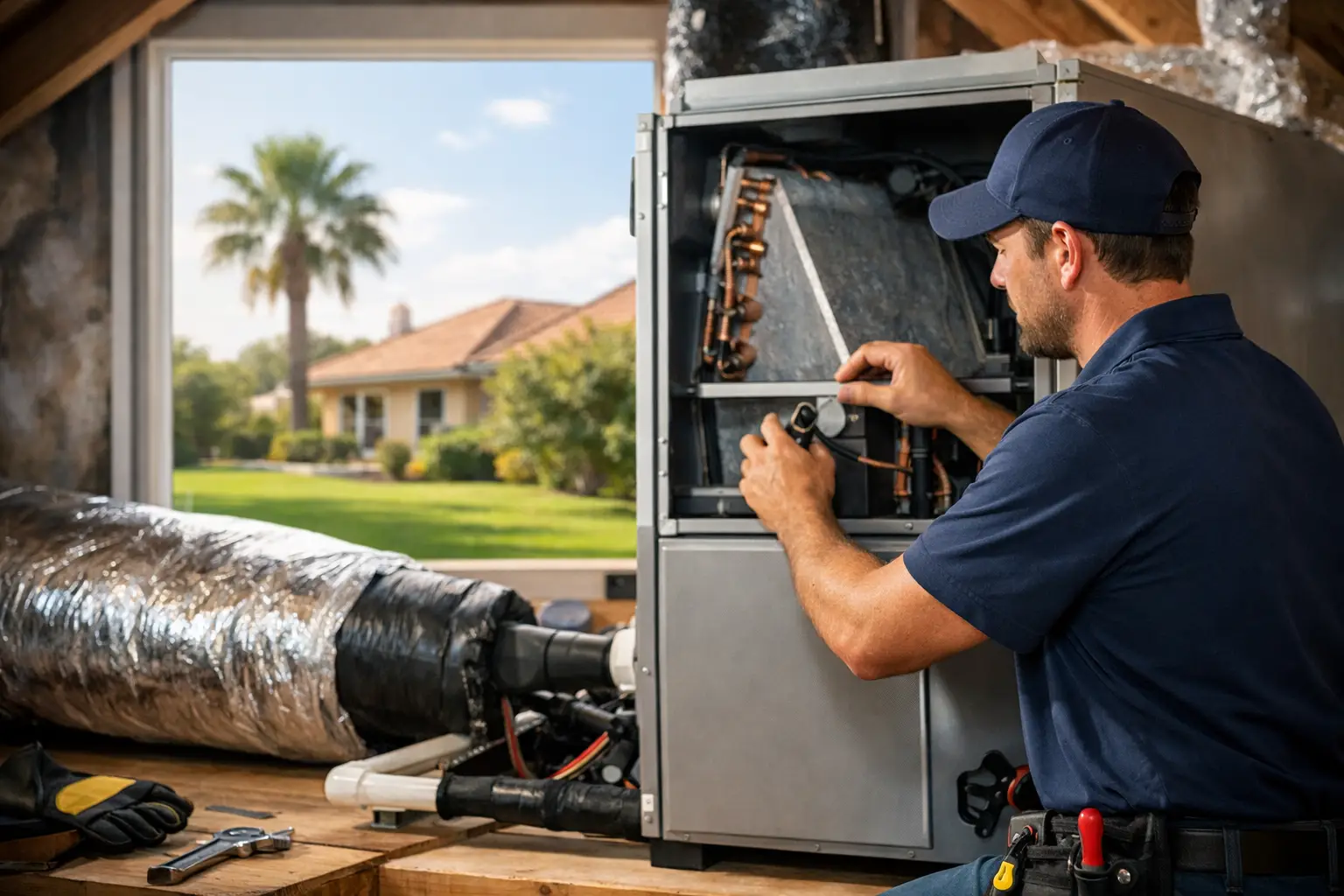
A failing air handler can make a South Texas home feel uncomfortable long before the outdoor unit quits. You may notice weak airflow in one room, rising electric bills, water near the indoor cabinet, or a system that runs constantly without keeping up. This air handler replacement guide explains how to recognize the problem, choose compatible equipment, and avoid paying for the wrong fix.
The air handler is the indoor half of many heat pump and central air systems. It contains the blower, evaporator coil, electrical controls, and often supplemental electric heat. It moves conditioned air through your ductwork, so even a high-efficiency outdoor unit cannot perform as intended if the indoor equipment is undersized, leaking, dirty, or failing.
When Air Handler Replacement Makes More Sense Than Repair
Not every problem calls for a new air handler. A failed capacitor, blower motor, float switch, thermostat issue, or clogged drain line may be a straightforward repair. If the cabinet is in otherwise good condition and the system is relatively new, repairing it can be the sensible, budget-friendly choice.
Replacement becomes more reasonable when repairs keep adding up, the indoor coil is leaking refrigerant, corrosion has damaged the cabinet or coil, or the unit is nearing the end of its expected service life. In Corpus Christi and nearby coastal areas, humidity and salt air can speed up corrosion, especially in garages, attics, and other harsh installation locations. A technician should inspect the whole system before anyone assumes that the air handler alone is the issue.
Age matters, but compatibility matters more. Replacing an older air handler while keeping an existing outdoor condenser or heat pump may work only when the equipment is properly matched. A mismatched coil, refrigerant type, metering device, blower setting, or capacity can reduce efficiency, cause comfort problems, and create warranty concerns.
Air Handler Replacement Guide: Start With the Whole System
The biggest mistake homeowners make is shopping by the size printed on the old unit. A 3-ton air handler does not automatically mean your home needs another 3-ton air handler. The original system may have been oversized from the beginning, your insulation may have changed, or a room addition may have altered the load.
A proper replacement recommendation considers your home’s square footage, ceiling height, window exposure, insulation, duct condition, number of occupants, and local climate. South Texas heat puts serious demand on cooling equipment, while humidity control also affects how comfortable your home feels. Bigger is not always better. An oversized system can cool too quickly, shut off before removing enough moisture, and leave rooms feeling clammy.
Check the outdoor unit and refrigerant first
Before selecting an air handler, identify the outdoor unit’s model number, capacity, refrigerant, and condition. Older equipment may use refrigerants that are no longer common for new systems. Installing new indoor equipment onto a worn-out outdoor unit can turn a short-term savings decision into another replacement project soon after.
If the outdoor unit is also near the end of its service life, replacing the matched system together often provides the better long-term value. You gain a properly rated combination, one coordinated warranty path, and a stronger chance of reaching the efficiency level you expect. There is an upfront cost trade-off, but it can prevent repeated labor charges and compatibility problems.
Confirm what type of indoor equipment you have
Many homeowners use “air handler” to describe any indoor HVAC cabinet, but the details matter. A heat pump air handler typically contains an evaporator coil and may include electric heat strips for colder days. A furnace and coil setup is different, using a gas furnace to move air and provide heat. Some homes also have vertical upflow units, horizontal attic installations, closet-mounted units, or modular systems with specific clearance requirements.
Measure the available space and note the direction of airflow before ordering equipment. A cabinet that is physically too tall, too wide, or configured for the wrong orientation can add unnecessary installation cost. Access matters too. Replacing an attic air handler may require planning for safe access, drain routing, electrical connections, and duct transitions.
Choose Features That Improve Daily Comfort
A replacement air handler should do more than turn on and blow cold air. The right configuration can improve temperature consistency, humidity control, sound levels, and operating costs.
Variable-speed and multi-speed blowers are worth considering when the rest of the system supports them. By moving air more gradually during longer cycles, these systems can provide steadier comfort and better moisture removal than a basic single-speed setup. The trade-off is higher equipment cost and the need for correct controls and installation. For some straightforward replacement situations, a dependable standard blower may be the better fit.
Also look at coil construction, filter access, drain pan design, and electric heat kit options. Easy filter access helps homeowners keep airflow where it needs to be. A properly designed condensate setup is especially valuable in humid coastal conditions, where a clogged drain can cause water damage or shut down the system. Heat strips should be sized for the home’s heating needs and the heat pump configuration, not selected as an afterthought.
For homeowners considering MRCOOL equipment, model matching is still essential. MRCOOL Universal Series systems and compatible air handlers can be a strong option when selected as an approved combination and installed correctly. Factory-backed warranty coverage depends on following the applicable equipment and installation requirements, so it pays to verify the complete system before purchase.
Do Not Ignore Ductwork and Airflow
A new air handler cannot correct undersized, disconnected, crushed, or poorly sealed ductwork. If certain rooms are always hot, airflow is noisy, or return grilles pull weakly, ask for a duct inspection during the replacement process.
Leaky attic ducts waste conditioned air before it reaches your living space. Poor return-air capacity can strain the blower and reduce performance. In some cases, a modest duct repair, added return, or better transition at the air handler delivers as much comfort improvement as the new equipment itself.
Static pressure testing is a useful part of a professional evaluation. It helps show whether the blower is pushing against excessive resistance from restrictive filters, undersized ducts, dirty coils, or inadequate returns. Skipping this step may leave you with a new unit that still has the same airflow complaints.
What a Proper Replacement Visit Should Include
A dependable installation is not simply removing one cabinet and setting another in its place. The technician should verify system compatibility, inspect electrical capacity, assess duct connections, and check the refrigerant line set. Depending on the equipment and condition of the existing system, the line set may need cleaning, modification, or replacement.
The installation should also include a secure platform or hanging arrangement, properly trapped and sloped condensate drainage where required, sealed duct transitions, and correct electrical connections. Once the unit is running, the installer should test airflow, temperature split, drain operation, safety controls, and thermostat communication.
Homeowners should receive clear information about the equipment model numbers, warranty registration steps, filter size, recommended maintenance, and what to do if a drain or comfort issue appears. Honest support after the sale matters just as much as getting a competitive price on the equipment.
Your Bargain Mart can help South Texas homeowners select genuine MRCOOL equipment, understand sizing and compatibility, and arrange licensed installation through Precision Air. Local support is particularly useful for customers who want help with a professionally installed system or need service for an existing MRCOOL DIY unit.
Budget for More Than the Cabinet Price
Air handler replacement pricing varies because the equipment itself is only part of the job. Labor, access, electrical updates, heat kits, thermostat upgrades, drain work, duct modifications, refrigerant work, and permits can all affect the final number. A low quote that leaves out these details is not always the lower-cost choice.
Ask for an itemized scope of work and compare what each proposal includes. You want to know whether the quote covers haul-away, start-up testing, duct sealing at the cabinet, a new drain safety switch, and warranty registration support. If one quote is significantly lower, find out what was omitted rather than assuming the equipment is equivalent.
For a replacement that lasts, start with accurate sizing, matched equipment, and a realistic look at your ductwork. The right air handler should fit your home, your outdoor unit, and the way South Texas weather actually tests your HVAC system.
Further reading: Air handler replacement guide on bbc.com.
In short, the air handler replacement guide rewards a careful, informed approach. Use this air handler replacement guide guide as a starting framework, adapt it to your situation, and re-check the facts whenever the topic moves.