
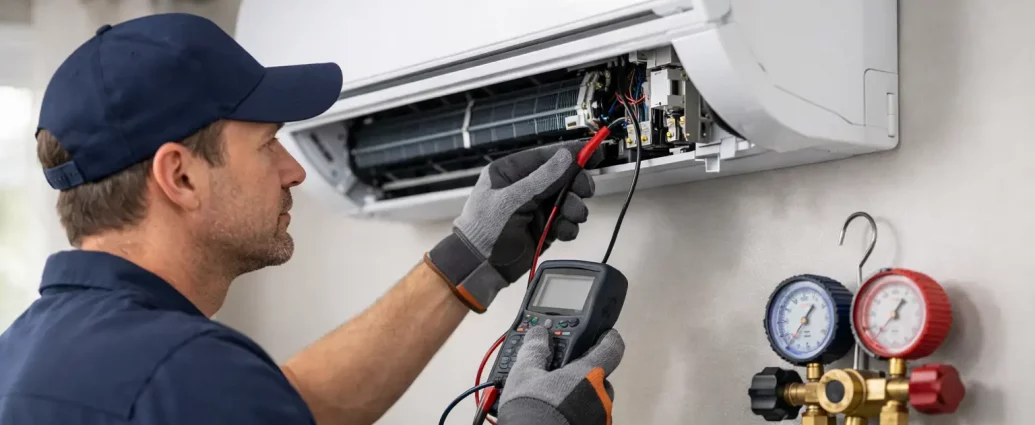
Here is the part nobody tells you: You usually find out a mini-split has a problem on the hottest afternoon of the week. The room isn’t cooling, the indoor head is blinking, or the system is running but never quite getting comfortable. on repairing self installed mini splits, the biggest mistake homeowners make is assuming every issue means the whole system was installed wrong. Sometimes the problem is simple. Sometimes it’s not. The key is knowing which is which before you waste time, money, or warranty coverage.
- What makes repairing self installed mini splits different?
- The most common problems after a self-install
- When you can safely check it yourself
- Repairing self installed mini splits without making the problem worse
- When the issue is installation-related
- When the issue is a true equipment failure
- Is it worth repairing or should you replace it?
- Choosing the right help for mini-split repair
In South Texas, ductless systems work hard for garages, additions, bedrooms, shops, and homes with hot spots that central air never seems to fix. That makes fast, accurate troubleshooting more than a convenience. It matters for comfort, energy bills, and preventing a small issue from turning into a compressor problem.
What makes repairing self installed mini splits different?
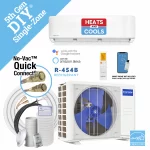
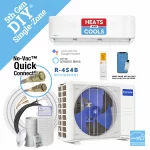
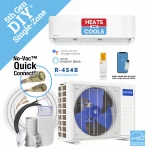
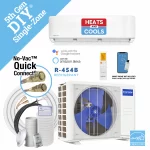
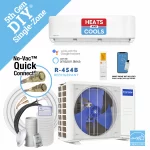
A self-installed mini-split isn’t automatically a bad installation. Some DIY systems are designed to simplify setup, especially models built around pre-charged line sets and homeowner-friendly instructions. Still, repair work on a self-installed unit is different from service on a traditional professionally installed system because the technician usually has to answer two questions at once.
I’ll be straight with you — First, what failed? Second, is the failure connected to installation, setup, electrical supply, drainage, airflow, or factory defect? That distinction matters because the repair path changes. A clogged drain line is one kind of call. A communication fault caused by wiring mismatch is another. A refrigerant issue on a system that was never supposed to be opened is another level entirely.
This is also where many homeowners run into frustration. Some HVAC companies simply don’t want to touch DIY equipment. They don’t want the liability, the diagnostic time, or the debate over whether the issue came from the product or the install. That leaves homeowners stuck between online troubleshooting videos and a system that still doesn’t work.
The most common problems after a self-install
Most mini-split problems fall into a few categories. The unit may not power on at all, it may run without heating or cooling properly, it may leak water indoors, or it may throw an error code. In many homes, the root cause is more basic than expected.
Electrical issues are common. A disconnect problem, undersized breaker, loose terminal connection, polarity mistake, or communication wire error can stop a system from operating correctly. These can look like major equipment failures when they’re really setup issues.
Drainage issues show up often too. If the indoor unit isn’t pitched correctly, if the drain line is kinked, or if it was routed in a way that traps water, you may get dripping inside. In Corpus Christi and surrounding areas, humidity adds pressure to that drain system, so a small installation mistake becomes obvious fast.
Airflow problems are another frequent cause of poor performance. Dirty filters, blocked outdoor coils, improper clearances, or an indoor head mounted where air can’t circulate properly will reduce comfort even if the equipment itself is fine.
Then there are genuine component failures. Control boards, sensors, fan motors, and communication modules can fail just like they can on any HVAC system. That’s why every service call should start with real diagnosis, not assumptions about DIY work.
When you can safely check it yourself
Before calling for service, there are a few things a homeowner can reasonably verify. Check that the breaker is on and hasn’t tripped. Confirm the remote settings are correct and the unit is actually in cooling or heating mode. Clean the filters if they’re dirty. Look for obvious drain line kinks or a blocked condensate path. Make sure the outdoor unit has room to breathe and isn’t packed with debris.
It’s also worth paying attention to the exact symptoms. Is the unit completely dead, or does it power up and then shut down? Is there a blinking code? Is the issue only in one mode, such as cooling but not heating? Details like that help shorten the diagnostic process.
What you shouldn’t do is start opening sealed refrigerant components, replacing random parts, or adding refrigerant because the air doesn’t feel cold enough. That’s where simple troubleshooting turns into expensive damage.
Repairing self installed mini splits without making the problem worse
Good repair work starts with narrowing the problem down in the right order. Power and control issues come before refrigerant assumptions. Installation-related concerns should be checked before part replacement. Airflow and drainage should be verified before anyone says the equipment is defective.
That order matters because mini-splits are sensitive systems. A communication error may come from wiring, board failure, voltage problems, or a mismatch in setup. Poor cooling may come from low airflow, sensor problems, line set issues, or load sizing. If a contractor skips the process and guesses, you pay for that guess.
This is why local support matters. A company familiar with MRCOOL systems and ductless applications in South Texas is going to approach the call more practically. Instead of refusing to work on the unit because it was self-installed, they can identify whether the next step is a simple correction, a warranty-related part issue, or a repair that requires licensed HVAC service.
When the issue is installation-related
Not every repair is really a repair. Sometimes it’s a correction. The wall bracket may be out of level. The drain may need to be rerouted. Wire terminations may need to be redone. The outdoor unit may be mounted where service access or airflow is poor. In those cases, the system may have perfectly good equipment that just needs proper adjustment.
That’s actually good news for many homeowners, because a correction is often more affordable than replacing major components. The trade-off is that it can take a careful technician to sort out, especially if the original install looked fine at first glance.
There’s also an honest middle ground here. Some self-installed systems work for months before a hidden issue shows up. That doesn’t always mean the installer was careless. Settling, vibration, weather exposure, and long run times can reveal weak points over time.
When the issue is a true equipment failure
Factory defects and part failures do happen. Sensors can read incorrectly. Boards can fail. Fan motors can stop. Even a well-installed mini-split can need service. If the unit is a genuine system from an authorized source, that becomes important because warranty support is much clearer.
This is one reason buyers should think beyond the box price. Getting legitimate equipment with factory-backed warranty protection and access to local service support can save a lot of frustration later. If a replacement part is needed, you want a clean path forward, not an argument over where the system came from.
For homeowners with MRCOOL equipment, this is where working with a dealer that understands both the product and the service side makes a real difference. Your Bargain Mart supports the full process, including homeowners who chose DIY systems and later need repair help.
Is it worth repairing or should you replace it?
That depends on the age of the system, the cost of the repair, and whether the problem is isolated or part of a bigger pattern. If the unit is newer and the issue is a board, sensor, drain correction, or wiring fix, repair usually makes sense. If the system has multiple ongoing problems, visible installation shortcuts, and performance issues from day one, replacement or reinstallation may be the better investment.
The size and use of the space matter too. A mini-split in a garage or workshop may tolerate a less-than-perfect setup for a while. A primary bedroom or main living area usually won’t. Comfort expectations are different, and so is the urgency.
This is where honest pricing and straightforward advice matter. A good contractor should tell you whether the repair is likely to hold, whether a correction solves the underlying issue, and whether you’re putting money into a unit that still won’t perform the way it should.
Choosing the right help for mini-split repair
If you need service on a self-installed unit, ask direct questions. Will the company diagnose DIY systems? Are they licensed for the work involved? Do they understand the brand you own? Can they handle both installation-related corrections and equipment repairs? Those answers tell you a lot.
The cheapest service call isn’t always the lowest-cost decision. If a company shows up already biased against the equipment, they may recommend replacement before doing real diagnosis. On the other hand, a contractor who knows these systems can often separate a fixable issue from a bad install without wasting your time.
For South Texas homeowners, the best outcome isn’t just getting the unit running again. It’s having confidence that the repair was done correctly, the warranty path is protected when applicable, and you know who to call the next time something feels off.
A self-installed mini-split shouldn’t leave you on your own once there’s a problem. The right repair support turns a frustrating breakdown into a solvable service call, and that peace of mind is worth more than any shortcut.
Further reading: Repairing self installed mini splits on investopedia.com.
In short, repairing self installed mini splits rewards a careful, informed approach. Use this repairing self installed mini splits guide as a starting framework, adapt it to your situation, and re-check the facts whenever the topic moves.