
If your upstairs bedrooms stay warm, your garage feels unusable half the year, or your older home never seems to cool evenly, the ductless vs central air question gets real fast. In South Texas, this is not a minor upgrade decision. It affects comfort, power bills, installation cost, and how well your system handles long cooling seasons.
- Ductless vs central air: the basic difference
- When central air makes more sense
- When ductless is the better fit
- Installation cost is not one-size-fits-all
- Energy efficiency and monthly bills
- Comfort control feels different with each system
- Maintenance and service considerations
- Which system is better for your type of home?
- Ductless vs central air for South Texas homes
For many homeowners, the right answer depends less on which system is “better” and more on how your house is built, where your problem areas are, and whether you want to cool the whole home or just specific spaces. Both systems can do the job well. The difference is in how they deliver that comfort.
Ductless vs central air: the basic difference
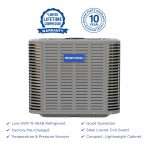
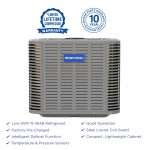
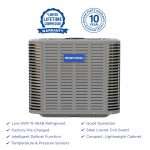
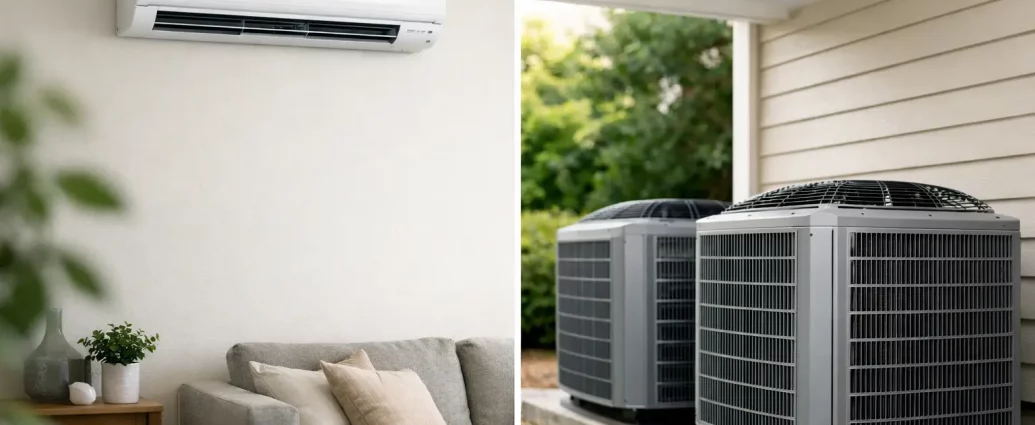
Central air cools your home through a duct system. An outdoor condenser works with an indoor coil or air handler, and conditioned air moves through supply ducts into each room. If your home already has solid ductwork, central air can be a familiar and effective whole-house solution.
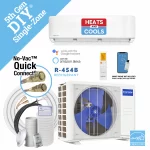
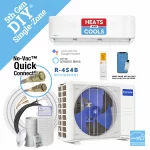
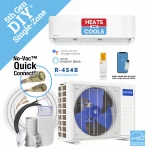
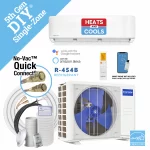
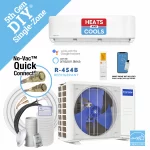
Ductless systems, often called mini-splits, skip the ductwork entirely. They use an outdoor unit connected to one or more indoor air handlers mounted in specific rooms or zones. Each zone gets direct heating and cooling, which gives you more control over where and when you use energy.
That basic design difference changes almost everything else, from install complexity to monthly operating costs.
When central air makes more sense
If you have a house with existing ducts that are properly sized and in good condition, central air often makes the most practical sense. It is built for whole-home comfort. You set the thermostat, the system cycles, and every connected room gets conditioned air.
For larger homes with a fairly open layout, central air can feel simpler to manage. There is one main system, one main thermostat, and a cleaner visual look because the equipment stays mostly out of sight. Many homeowners also prefer central air if they want a more traditional setup that works with existing heating equipment, especially in homes already built around a ducted system.
That said, central air performs best when the ductwork is right. If the ducts leak, run through hot attic spaces without proper insulation, or were poorly designed from the start, your system can lose efficiency quickly. In Corpus Christi and surrounding areas, attic heat is no joke. A central system may be fighting both outdoor heat and duct losses at the same time.
When ductless is the better fit
Ductless is often the smarter option when you need targeted comfort or when adding ducts would be expensive, messy, or unrealistic. Room additions, converted garages, workshops, detached spaces, upstairs problem rooms, and older homes without existing ducts are strong candidates.
This is where mini-splits earn their reputation. Instead of forcing a whole-house solution into one trouble spot, a ductless system handles the exact area that needs help. If one bedroom runs hot every afternoon, or your home office stays uncomfortable because of sun exposure, ductless gives you direct control without overcooling the rest of the house.
It can also be a good fit for homeowners who want energy savings through zoning. You only cool occupied rooms instead of sending conditioned air throughout the entire house. For families with different comfort preferences, that flexibility matters.
Installation cost is not one-size-fits-all
A lot of people ask which one costs less. The honest answer is that it depends on the house.
If your home already has usable ductwork, central air may have the lower upfront cost for whole-home cooling. But if ducts need major repairs, redesign, or full replacement, that number can climb fast. Duct installation is labor-intensive, and in some homes it is simply not practical without opening walls or working around tight attic conditions.
Ductless usually has a lower barrier for single-room or small-zone projects. Installing a mini-split in a garage, bonus room, or addition is often far more affordable than extending or rebuilding ductwork for that space. On the other hand, if you are trying to cool a large multi-room home with several indoor units, ductless can become a bigger investment.
This is why sizing and system design matter. A cheap quote that ignores load calculations or room-by-room needs can cost more later in comfort problems, high bills, and short equipment life.
Energy efficiency and monthly bills
Ductless systems often have the edge in efficiency, especially in homes where ducts are old or leaky. Because there is no duct loss, the cooling goes straight into the room. Variable-speed mini-splits can also adjust output more precisely than older single-stage systems, which helps reduce wasted energy.
Central air can still be very efficient, especially with modern high-efficiency equipment and well-sealed ducts. For whole-home cooling in a properly set up house, a quality central system can deliver excellent results. But if your ductwork is losing air in the attic, your monthly bill may reflect it.
In South Texas, long cooling seasons make these differences more noticeable. Small efficiency losses add up over time. That is one reason many homeowners look hard at ductless for additions, garages, and hot zones rather than trying to stretch an existing central system beyond what it was designed to handle.
Comfort control feels different with each system
Central air gives you broad, whole-home conditioning. If the system is designed correctly, it provides a consistent feel throughout the home. For many families, that is exactly what they want.
Ductless gives you room-by-room control. That can be a major advantage if comfort needs vary across the house. Maybe one person likes the bedroom cooler at night while another uses a home office during the day. With a multi-zone setup, you are not locked into one temperature for every area.
The trade-off is that ductless indoor units are visible inside the room, while central air stays mostly hidden behind vents and returns. Some homeowners do not mind wall-mounted air handlers at all. Others strongly prefer the cleaner look of a ducted system. That comes down to personal preference as much as performance.
Maintenance and service considerations
Both systems need regular maintenance. Filters, coils, refrigerant levels, electrical components, and drain lines all need attention. The difference is that ductless has indoor units in each zone, so cleaning and upkeep happen in multiple locations rather than around one central indoor unit.
Central air brings another maintenance factor: the ducts themselves. Dirty, leaking, or poorly insulated ducts can drag down performance even when the equipment is in decent shape.
Service support matters here. Some homeowners hesitate on ductless because they worry about finding help later, especially if they choose a DIY mini-split. That concern is valid. Not every company wants to work on systems they did not install, and many avoid DIY equipment altogether. That is why local support should be part of the buying decision, not an afterthought.
Which system is better for your type of home?
If you have a newer home with solid existing ducts and you want straightforward whole-house cooling, central air is often the cleanest fit.
If you own an older home without ducts, a house with stubborn hot spots, or a property where certain spaces need separate climate control, ductless may be the more efficient and cost-effective choice.
If you are finishing out a garage, adding a room, or cooling a workshop, ductless is frequently the better answer because it avoids major ductwork and gives you direct control where you need it.
If your current central system struggles in one section of the house, the right answer may not be replacing everything. Sometimes a ductless add-on solves the problem without overhauling the whole home.
Ductless vs central air for South Texas homes
In this region, humidity, salt air, and extended heat put real demands on HVAC equipment. That means system selection should be practical, not trendy. The best setup is the one that matches your home, your usage, and your budget while still giving you dependable support after the sale.
For some homeowners, that means a central system with the right efficiency level and properly addressed ductwork. For others, it means a MRCOOL ductless system for a room addition or multi-zone comfort upgrade. In many cases, the smartest move is not choosing sides. It is choosing the system that solves the actual problem without overspending.
At Your Bargain Mart, that is how we approach it. Honest pricing, real sizing guidance, and local support matter more than pushing a one-size-fits-all answer.
If you are weighing ductless against central air, start with your house as it is now, not the marketing claims. The right system should make your daily life easier, your comfort more predictable, and your next service call a lot less stressful.
Further reading: Ductless vs central air on mayoclinic.org.
In short, ductless vs central air rewards a careful, informed approach. Use this ductless vs central air guide as a starting framework, adapt it to your situation, and re-check the facts whenever the topic moves.