





A mini split usually tells you it needs attention long before it quits. The room takes longer to cool, airflow feels weak, the indoor air starts to smell musty, or your electric bill creeps up for no clear reason. A good mini split maintenance checklist helps you catch those small warnings early, which matters even more in Corpus Christi and across South Texas, where systems can run hard for long stretches.
- Why regular mini split maintenance matters
- Mini split maintenance checklist by season
- What homeowners can do safely?
- What professional mini split service should include
- Common maintenance mistakes that shorten system life
- How often should you schedule professional service?
- When to call for service right away
Why regular mini split maintenance matters
Ductless systems are efficient, but they are not maintenance-free. When the filter loads up with dust, the coil gets coated, or the drain line starts holding moisture, performance drops fast. You may still get cooling, but the system has to work harder to deliver it.
That extra strain shows up in a few ways. Energy use goes up. Indoor comfort becomes less consistent. Parts wear faster than they should. In coastal areas, salt air and humidity can add another layer of stress, especially on outdoor equipment. For homeowners trying to protect a newer MRCOOL system or extend the life of an older unit, routine maintenance is one of the simplest ways to avoid preventable service calls.
There is also a warranty angle to consider. Factory-backed warranties are valuable, but they do not replace basic upkeep. If a unit has clearly been neglected, that can complicate diagnosis and repair.
Mini split maintenance checklist by season
The most practical approach is to think in terms of timing rather than waiting for a problem. Some tasks are safe for homeowners to do themselves. Others should be handled by a licensed HVAC technician.
Monthly mini split maintenance checklist
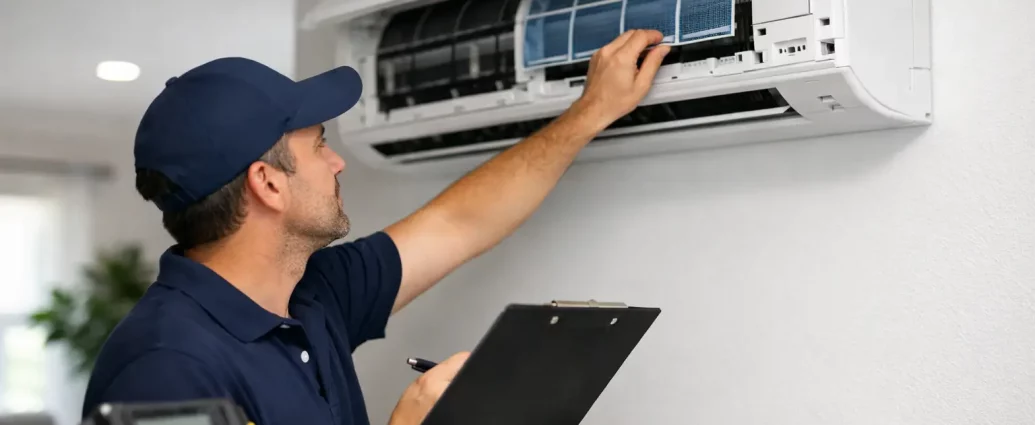
Start with the air filters. Open the indoor unit, remove the filters, and check for dust buildup. In a lightly used room, you may be able to clean them every month or two. In a bedroom, garage, shop, or pet-heavy home, they may need attention more often. Wash reusable filters according to the manufacturer’s instructions, let them dry fully, and reinstall them.
While the cover is open, look at the evaporator coil and blower wheel area with a flashlight. You are not trying to deep-clean internal components on your own, just checking for obvious dirt, mold-like growth, or heavy buildup. If you see more than light dust, it is time for service.
Run the system and pay attention to airflow, odor, and sound. A musty smell can point to moisture or biological growth. Rattling, buzzing, or whistling can mean anything from a loose panel to a developing mechanical issue. A quick monthly check often catches these signs before they become expensive.
Every 3 to 4 months
Take a look at the outdoor condenser. Clear away grass, weeds, leaves, and debris so the unit has breathing room. Two feet of open space around the condenser is a good target. If the coil fins look packed with dirt, do not attack them with a pressure washer. The fins bend easily, and too much force can cause real damage.
This is also a good time to inspect the line set cover, insulation, and visible wiring. You are looking for sun damage, cracked insulation, pest activity, or anything that looks loose. In South Texas heat, exterior materials can age faster than homeowners expect.
Check the condensate drain as well. If the indoor unit is dripping water inside, the drain may be restricted. Sometimes the first clue is not water on the wall but a damp smell near the unit.
Before peak cooling season
Before summer really hits, test the system in cooling mode and let it run long enough to stabilize. Confirm that the air coming off the indoor head feels properly cool and that the thermostat or remote settings respond correctly. If your mini split serves a room addition, garage apartment, or workspace, this is the time to make sure it is ready before daily use ramps up.
If you have a multi-zone system, test each zone separately. One underperforming head can be easy to miss if you are only checking the main room.
Before heating season
Even in South Texas, heat mode still matters on chilly mornings and winter fronts. Switch the unit into heating mode and make sure it starts, runs, and changes temperature properly. A lot of homeowners forget this check until the first cold snap, which is exactly when you do not want to find out something is wrong.
What homeowners can do safely?
A mini split is not the same as a window unit you can take apart casually. Homeowners can and should handle basic upkeep, but there is a line between routine maintenance and work that needs tools, training, or refrigerant access.
Safe homeowner tasks include cleaning filters, wiping the outer cabinet, clearing debris around the outdoor unit, checking for unusual noise or smell, and watching for drainage problems. These steps go a long way when done consistently.
What you should not do is open sealed components, add refrigerant, disassemble blower assemblies, use harsh coil cleaners without guidance, or wash the condenser with high-pressure water. DIY systems make installation more accessible, but they still benefit from proper maintenance and service support.
What professional mini split service should include
A professional tune-up goes beyond what you can see from the outside. The technician should inspect electrical connections, test system operation, check temperature split, evaluate condensate drainage, inspect indoor and outdoor coils, and look for signs of refrigerant or performance issues.
In some cases, the indoor blower wheel needs a more thorough cleaning than a homeowner can reasonably do. This is common when the system has gone too long without filter cleaning or when the space has higher dust, cooking residue, or pet hair. The difference after a proper cleaning is usually noticeable right away.
A service visit is also the right time to address issues that seem minor but are not. Short cycling, weak cooling in one zone, intermittent error codes, or ice forming on the indoor unit can all point to deeper problems. Waiting rarely makes them cheaper.
Common maintenance mistakes that shorten system life
The biggest one is simply ignoring the filter. A clogged filter restricts airflow, reduces efficiency, and can lead to coil problems. It is the easiest task on the list, and also the one most often skipped.
Another mistake is treating poor performance like normal aging. Mini splits do lose efficiency over time, but a noticeable drop in airflow or cooling capacity often means maintenance is overdue, not that the unit is just getting old.
Some homeowners also over-clean in the wrong way. Strong chemicals, stiff brushes, or aggressive rinsing can damage components. If you are unsure, it is better to stop and have the unit inspected than to turn a maintenance issue into a repair.
The last common problem is assuming no one will service a DIY mini split. That concern keeps some people from calling early. In reality, local support matters, especially when the system was self-installed and now needs proper troubleshooting.
How often should you schedule professional service?
For most homeowners, once a year is a smart baseline. If the system runs nearly year-round, serves a hard-working space like a garage or shop, or operates in a salty, humid coastal environment, twice-yearly service may make more sense.
It depends on usage and conditions. A guest room unit that runs occasionally is different from the main ductless system cooling a busy family room every day. Homes with pets, renovation dust, or higher humidity usually benefit from more frequent attention.
If you are not sure what schedule fits your setup, err on the side of earlier service. Preventive maintenance is usually more affordable than emergency repair, and it helps protect comfort during the months when you need the system most.
When to call for service right away
Some problems should not wait for your next routine check. Call for help if the unit is leaking indoors, tripping breakers, blowing warm air in cooling mode, making new loud noises, or showing persistent error codes. The same goes for ice buildup, burnt smells, or a condenser that does not seem to start correctly.
Those are not maintenance reminders. There are signs that something needs diagnosis.
For homeowners in Corpus Christi and surrounding areas, having local support matters here. If your system needs attention, especially on an MRCOOL DIY or pro-grade mini split, working with a dealer that understands the equipment and offers honest pricing can save time and frustration.
A mini split does not ask for much, but it does ask for consistency. Keep the filters clean, watch for small changes, and get professional service before a minor issue turns into a comfort problem on the hottest week of the year.
Further reading: Mini split maintenance checklist on theguardian.com.
In short, mini split maintenance checklist rewards a careful, informed approach. Use this mini split maintenance checklist guide as a starting framework, adapt it to your situation, and re-check the facts whenever the topic moves.