
Table of Contents
A heat pump installation is not just an equipment swap. In Corpus Christi, it is a decision about handling long cooling seasons, humid weather, occasional cold snaps, and high summer electric bills without gambling on comfort. The right system can heat and cool efficiently for years. The wrong size, poor duct connection, or rushed startup can leave a new unit working harder than it should from day one.
- Start With the Right Heat Pump Size
- What Professional Heat Pump Installation Includes
- Ductwork Can Make or Break a Central System
- Choosing Equipment for Corpus Christi Conditions
- Questions to Ask Before You Approve the Work
- Preparing Your Home for Installation Day
- Protect the Investment After Installation
For South Texas homeowners, the best results come from matching the equipment, installation method, and support plan to the home itself. That means looking beyond a model number or the lowest quote.
Start With the Right Heat Pump Size
A bigger heat pump is not automatically better. Oversized equipment can cool a house too quickly, shut off before removing enough humidity, and cycle more often. Undersized equipment may run continuously during peak weather and struggle to keep rooms comfortable. Either situation can shorten equipment life and raise operating costs.
Proper sizing should account for the home’s square footage, insulation, window exposure, ceiling height, duct condition, occupancy, and how each room is used. A sun-facing living room, a converted garage, and a well-insulated bedroom wing do not place the same demand on a system. South Texas humidity also matters. Comfort is about temperature and moisture control, not just tonnage.
A load calculation is the practical starting point. It gives a qualified installer a clearer picture of what the home needs instead of relying on the size of the old unit. Replacing a 4-ton system with another 4-ton system may be correct, but only if the original system was properly sized and the home has not changed.
Whole-Home, Ductless, or a Hybrid Setup?
The best configuration depends on the space you need to condition. A central heat pump is often a strong fit for homes with usable ductwork. It can replace an aging split system while using the existing supply and return layout, provided the ducts are sealed, insulated, and sized appropriately.
A ductless mini-split can make more sense for a room addition, garage, workshop, enclosed patio, or area that never seems to match the rest of the house. Multi-zone systems can serve several rooms with separate indoor units, giving occupants more individual temperature control. The trade-off is that planning indoor-unit locations, line-set routing, and condensate drainage takes care and should not be treated as an afterthought.
Some homes benefit from both. A central system can handle the main living areas while a ductless unit takes care of a hard-to-cool room. This can be more practical than forcing the main system to compensate for one problem area.
What Professional Heat Pump Installation Includes
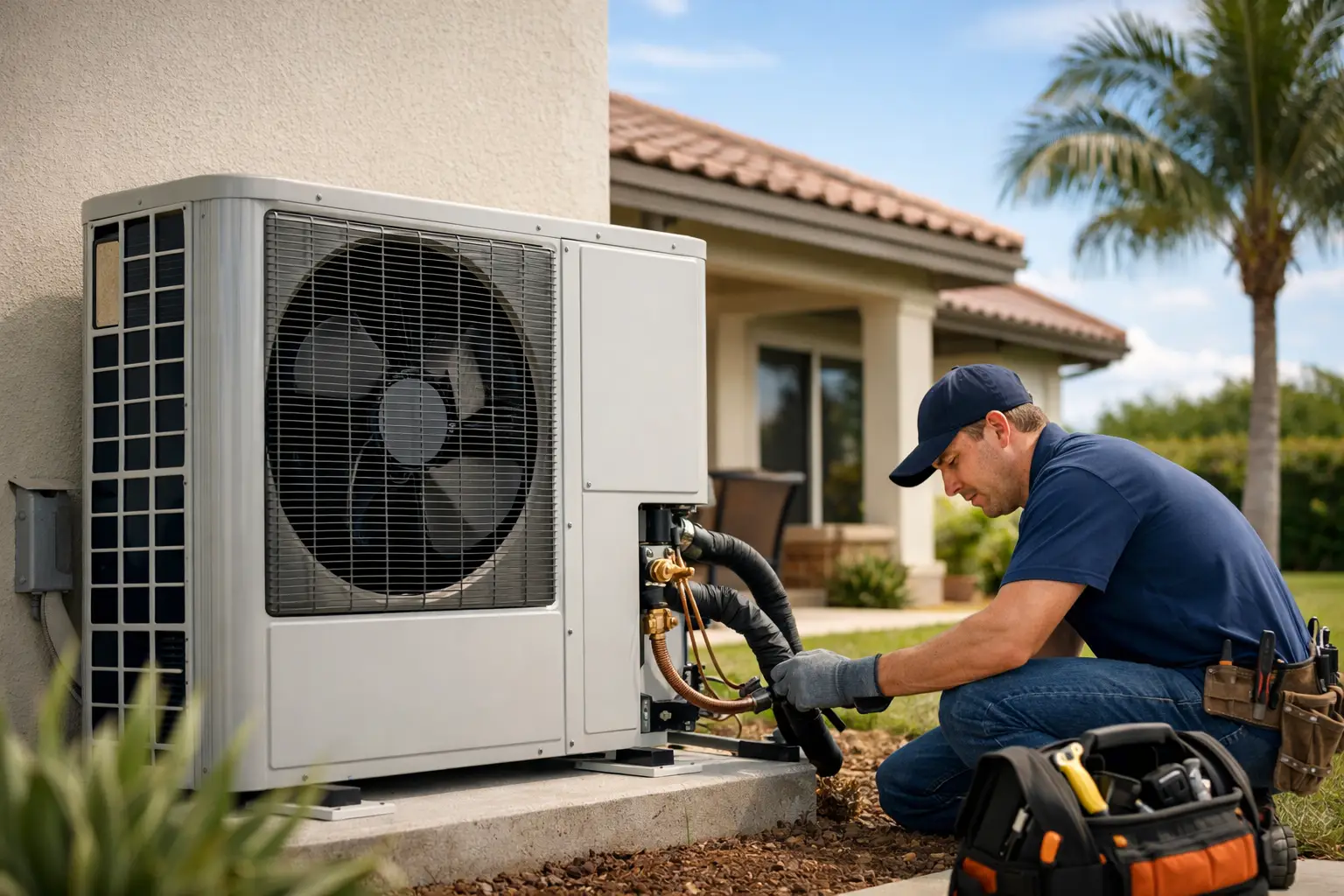
A quality installation begins before equipment arrives. The installer should confirm the electrical capacity, inspect the pad or mounting location, review drainage, and verify that the duct system can support the selected equipment. If a system is being installed in a flood-prone or exposed area, outdoor-unit placement deserves extra attention.
During installation, the indoor and outdoor equipment must be matched correctly. Refrigerant lines need proper sizing, secure routing, insulation, pressure testing, and evacuation before refrigerant is released into the system. These steps are not cosmetic. Moisture, air, or leaks in the refrigerant circuit can hurt performance and lead to expensive problems later.
The electrical work also matters. Heat pumps require correctly sized breakers, disconnects, wiring, and surge protection where appropriate. In coastal South Texas, protecting equipment from electrical events and weather exposure is a sensible investment, especially for systems expected to run heavily through the summer.
Startup should include more than turning the thermostat down and checking for cold air. A licensed technician should verify refrigerant operation, airflow, temperature split, drain function, thermostat settings, electrical readings, and heating performance. The goal is to leave the system operating within manufacturer specifications, not simply operating.
Ductwork Can Make or Break a Central System
Homeowners often focus on the outdoor condenser because it is the most visible part of a new system. Yet damaged, undersized, or leaking ducts can waste a significant part of the comfort a new heat pump is supposed to deliver.
Leaky ducts can pull hot attic air into the system or send conditioned air into unconditioned spaces. Restricted return air can reduce airflow and put stress on the equipment. Poorly insulated duct runs can add heat gain before cooled air reaches the rooms that need it.
Before a central heat pump installation, ask whether the ducts have been inspected for leakage, insulation, return-air capacity, and obvious restrictions. Duct upgrades are not necessary in every home, but ignoring a real duct problem to protect the initial budget can create disappointment after the installation is complete.
Choosing Equipment for Corpus Christi Conditions
Efficiency ratings are useful, but they should be part of the decision rather than the whole decision. A higher-efficiency heat pump may reduce energy use, particularly in a home where the system runs many months of the year. However, the value depends on the home, local utility costs, system usage, and the condition of the ducts.
Variable-capacity and inverter-driven systems can offer quieter operation, steadier temperatures, and better part-load efficiency. They are often attractive for homeowners who prioritize consistent comfort. Standard systems may still be the better value for a budget-focused replacement when the equipment is properly sized and professionally installed.
MRCOOL systems offer options across central, Universal Series, and ductless configurations. For homeowners considering a DIY mini-split, the equipment can reduce installation complexity in the right application, but planning remains essential. Electrical connections, mounting, drainage, line-set protection, code requirements, and local service needs do not disappear because a system is marketed for DIY use.
Your Bargain Mart helps South Texas customers choose genuine MRCOOL equipment with honest pricing, factory-backed warranty support, and access to licensed installation through Precision Air. That local continuity matters when you want help before purchase and a real service option after the system is running.
Questions to Ask Before You Approve the Work
A clear estimate should explain what is included and what could affect the final scope. You do not need to be an HVAC expert to ask direct questions. Start with the system size and why it was selected. Ask whether duct repairs, a new thermostat, electrical upgrades, drain modifications, pad work, permits, or disposal of old equipment are included.
It is also reasonable to ask who will perform the work, whether they are licensed for the required HVAC and electrical tasks, and how the startup process will be documented. If the proposal is dramatically lower than others, find out what has been omitted. A low price can become expensive when it excludes the materials and labor needed for a proper installation.
Warranty coverage deserves the same attention. Confirm the manufacturer warranty, registration requirements, and the labor warranty provided by the installer. Authorized equipment and correct installation protect more than comfort. They protect your ability to receive support if a covered issue arises.
Preparing Your Home for Installation Day
A little preparation helps the job move faster and protects your home. Clear access around the indoor equipment, attic opening, electrical panel, and outdoor-unit location. Move vehicles, furniture, pets, and stored items out of the work path. If the air handler is in the attic, make sure the technician can safely reach it.
Expect some temporary disruption. The old system may be disconnected for part of the day, and technicians may need access to several rooms to check vents and thermostat operation. Ask ahead of time how long the replacement is expected to take and whether any areas will be without cooling overnight. Most straightforward replacements can be completed efficiently, while duct changes, electrical work, or difficult access can add time.
Protect the Investment After Installation
A new heat pump needs basic care to deliver the efficiency you paid for. Change or clean filters on schedule, keep the outdoor unit clear of grass and debris, and make sure the condensate drain is functioning. In our climate, a clogged drain can quickly become a water-damage problem instead of a minor maintenance issue.
Regular professional service helps catch loose electrical connections, drainage concerns, airflow problems, and early wear before a busy summer exposes them. It also gives you a chance to address comfort changes while they are still small.
The most useful heat pump installation is the one that fits your home, your budget, and your plan for long-term service. Take the time to verify sizing, workmanship, and support before installation day, and you will be far more likely to enjoy reliable comfort when South Texas heat returns.
Further reading: Heat pump installation on nytimes.com.
In short, heat pump installation rewards a careful, informed approach. Use this heat pump installation guide as a starting framework, adapt it to your situation, and re-check the facts whenever the topic moves.