
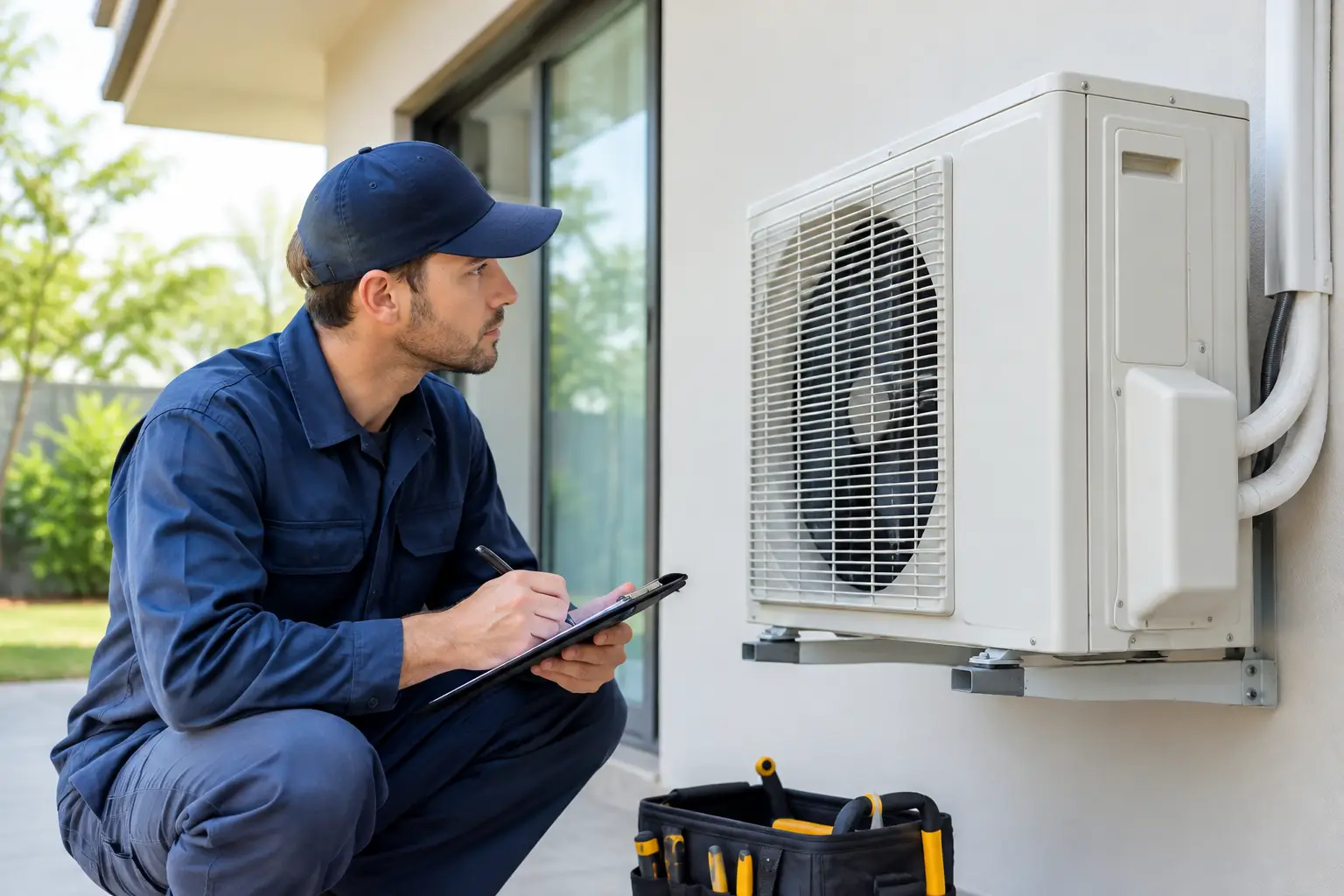
A 12,000 BTU mini split may sound like the safe choice for a bedroom, but too much capacity can be just as frustrating as too little. In Corpus Christi, mini split BTUs have to account for more than square footage. High outdoor temperatures, coastal humidity, sun exposure, insulation, ceiling height, and how the room is used all affect what size system will actually keep you comfortable.
- Why Correct Mini Split BTU Sizing Matters
- What Mini Split BTUs Actually Measure
- Common Mini Split BTU Sizes Explained
- Mini Split BTU Sizing Chart
- Factors That Affect Mini Split Sizing
- What Happens If Your Mini Split Is Too Small?
- What Happens If Your Mini Split Is Too Large?
- Mini Split BTUs by Room Size: A Useful Starting Point
- Why Corpus Christi Homes Need More Than a Square-Foot Rule
- Do Not Size a Garage or Shop Like a Bedroom
- One Large Unit or a Multi-Zone System?
- Other Details That Change the Right BTU Size
- Avoid the Most Common Mini Split Sizing Mistakes
- Why MRCOOL Mini Splits Are Popular for Home Sizing Flexibility
- When a Manual J Load Calculation Is Worth It
When selecting a system, consider the mini split BTUs needed to handle the specific climate challenges of your area.
The goal is not to buy the biggest unit that fits the budget. It is to choose a properly sized MRCOOL mini split that can run efficiently, control humidity, and hold the temperature you want without constantly cycling on and off.
Why Correct Mini Split BTU Sizing Matters
Understanding mini split BTUs can also help you make informed decisions about energy efficiency and overall comfort.
Choosing the correct mini split BTU capacity is one of the most important decisions when purchasing a ductless air conditioning system. A mini split that is too small will struggle to keep your home comfortable during the hottest summer days. A system that is too large may short cycle, turning on and off frequently, which can reduce efficiency, increase humidity, and create uneven temperatures throughout the room.
Proper mini split sizing helps homeowners:
- Maintain consistent indoor comfort
- Reduce monthly energy costs
- Improve humidity control
- Extend equipment lifespan
- Avoid unnecessary system strain
- Maximize SEER2 efficiency ratings
Whether you’re installing a DIY mini split or a professionally installed ductless system, matching BTU capacity to the space is essential for peak performance.
What Mini Split BTUs Actually Measure
BTU stands for British Thermal Unit. In HVAC equipment, BTUs describe how much heat an air conditioner can remove from a space in one hour. A system rated at 12,000 BTUs, often called one ton of cooling, has a nominal cooling capacity of 12,000 BTUs per hour.
For a heat pump mini split, that rating also relates to heating output. South Texas homeowners usually focus on cooling capacity, but heating performance still matters during cold snaps. The right system should be selected based on both the room’s cooling load and the unit’s published heating performance for the conditions it will face.
BTU ratings are a starting point, not a complete sizing calculation. A 12,000 BTU unit does not automatically serve every 500-square-foot room, and a 24,000 BTU unit is not automatically right for every large living area. Construction details can change the answer considerably.
Common Mini Split BTU Sizes Explained
Mini split systems are available in several standard BTU ratings designed for different room sizes.
Choosing the right mini split BTUs for your space will enhance your HVAC system’s performance.
Evaluating mini split BTUs helps you achieve optimal comfort levels in your home.
Mini Split BTU Sizing Chart
| Room Size (Sq. Ft.) | Recommended BTUs |
|---|---|
| 150-300 | 6,000-9,000 BTU |
| 300-450 | 9,000 BTU |
| 450-600 | 12,000 BTU |
| 600-800 | 18,000 BTU |
| 800-1,200 | 24,000 BTU |
| 1,200-1,500 | 30,000-36,000 BTU |
9,000 BTU Mini Split
A 9,000 BTU mini split is commonly used for:
- Small bedrooms
- Home offices
- Guest rooms
- Hobby rooms
Typical coverage ranges from approximately 300 to 450 square feet depending on insulation, ceiling height, and climate conditions.
12,000 BTU Mini Split
A 12,000 BTU mini split is often ideal for:
Correctly sizing mini split BTUs can also prolong the life of your HVAC equipment.
- Large bedrooms
- Small apartments
- Finished garages
- Medium-sized living spaces
Coverage typically ranges from 450 to 600 square feet.
18,000 BTU Mini Split
To achieve optimal conditions, ensure your selected mini split BTUs align with your space’s needs.
An 18,000 BTU mini split can effectively cool:
- Large living rooms
- Open concept spaces
- Small commercial offices
Another benefit of proper mini split BTUs sizing is the potential for lower energy bills.
Coverage generally falls between 700 and 1,000 square feet.
Additionally, learning about mini split BTUs improves your overall home comfort experience.
Considering mini split BTUs can help avoid common HVAC mistakes.
24,000 BTU Mini Split
A 24,000 BTU mini split is often selected for:
- Large open floor plans
- Multi-purpose rooms
- Large additions
- Workshops
Coverage may range from 1,000 to 1,500 square feet.
Factors That Affect Mini Split Sizing
Calculating the correct mini split BTUs ensures that your system runs effectively during peak heat.
Square footage is only the starting point when calculating BTU requirements.
Additional factors include:
Ceiling Height
Rooms with vaulted or high ceilings contain more air volume and often require additional cooling capacity.
Sun Exposure
South-facing rooms and areas with large windows receive more solar heat gain and may need higher BTU capacity than similarly sized shaded rooms.
Insulation Quality
Well-insulated homes retain conditioned air more effectively, while older homes may require additional BTUs to offset heat infiltration. Poorly insulated homes may need additional cooling capacity because conditioned air escapes more easily. Learn more about how proper
Occupancy
Rooms with multiple occupants generate more heat. Family rooms, playrooms, and gathering spaces may require larger systems than bedrooms of the same size.
Appliances and Electronics
Kitchens, server rooms, and media rooms generate additional heat loads that should be considered during sizing calculations.
What Happens If Your Mini Split Is Too Small?
An undersized mini split often runs continuously while struggling to achieve the desired temperature.
For effective cooling, understanding mini split BTUs is essential for any homeowner.
Common symptoms include:
- Warm indoor temperatures
- Constant operation
- Increased energy consumption
- Reduced comfort during extreme weather
- Premature equipment wear
Many homeowners mistakenly assume continuous operation means efficiency, but a severely undersized system may never achieve optimal performance.
What Happens If Your Mini Split Is Too Large?
Oversizing can be just as problematic.
A mini split with excessive BTU capacity may:
- Short cycle frequently
- Create temperature swings
- Reduce humidity removal
- Increase wear on components
- Waste energy
Modern inverter-driven mini splits offer better load matching than traditional systems, but proper sizing remains critical for long-term comfort and efficiency.
Mini Split BTUs by Room Size: A Useful Starting Point
In summary, proper understanding of mini split BTUs leads to better comfort in your home.
Square footage gives you a quick way to narrow the options before looking at the details. For a typical insulated space with standard ceilings, these ranges are practical starting points:
| Room size | Typical starting capacity | | — | — | | Up to 350 square feet | 9,000 BTUs | | 350 to 550 square feet | 12,000 BTUs | | 550 to 800 square feet | 18,000 BTUs | | 800 to 1,200 square feet | 24,000 BTUs |
These are not promises or substitutes for a load calculation. A 400-square-foot upstairs room with west-facing windows can need more cooling than a 500-square-foot shaded room in a well-insulated home. Likewise, a 24,000 BTU system may be too large for an open area if it is divided by hallways, doorways, or partial walls that restrict airflow.
Mini splits move conditioned air from the indoor head into the room. They do not deliver air through a network of ducts, so layout matters. One wall-mounted air handler can cool an open living room well, but it cannot reliably solve comfort problems in three closed bedrooms down the hall.
Why Corpus Christi Homes Need More Than a Square-Foot Rule
South Texas heat is only part of the sizing conversation. Humidity is a major comfort issue, especially near the coast. A correctly sized inverter-driven mini split can operate at lower output for longer periods, removing moisture while maintaining a steady indoor temperature.
An oversized unit may cool the room very quickly and shut down before it has removed enough humidity. The thermostat may show the temperature you set, yet the room can still feel clammy. Modern variable-capacity equipment handles part-load operation better than older single-stage systems, but oversizing is still not a free pass.
Solar gain is another common factor. Rooms with large west- or south-facing windows, dark roofs above, little attic insulation, or unshaded exterior walls absorb more heat throughout the afternoon. In Corpus Christi, a converted sunroom, an upstairs bonus room, or a detached workshop often needs more careful planning than a standard interior bedroom.
Ceiling height also changes the math. A 500-square-foot room with 8-foot ceilings has a much smaller air volume than the same room with a vaulted 14-foot ceiling. The taller space may need additional capacity, better air circulation, or a different indoor-unit location to avoid hot and cold areas.
Do Not Size a Garage or Shop Like a Bedroom
Garages, workshops, and metal buildings are some of the most common mini split projects, and they are also where simple BTU charts fail most often. An uninsulated garage door, bare attic, concrete slab, open vehicle bay, or heat-producing tools can create a much heavier cooling load than the floor area suggests.
Before selecting a unit, consider whether the walls and ceiling are insulated, whether the garage door is insulated, how often the space is opened, and whether you will run equipment that creates heat. A hobby shop with welding equipment, compressors, or multiple computers may need a larger system than a quiet home office of the same size.
For many garage projects, spending on insulation and weather sealing first can reduce the mini split capacity you need and lower operating costs for years. It also makes the space more comfortable when the system is off.
One Large Unit or a Multi-Zone System?
A single-zone mini split has one outdoor condenser and one indoor air handler. It is usually the most straightforward choice for a single bedroom, office, garage, shop, or room addition. It gives that space its own temperature control and avoids adding ductwork.
A multi-zone system connects one outdoor unit to two or more indoor air handlers. It can be a strong option for several separate rooms, especially when each room needs independent control. However, the total capacity requires careful review. A multi-zone condenser may support indoor heads whose combined ratings are higher than the outdoor unit’s nominal capacity, but that does not mean every zone can receive full rated output at the same time.
That arrangement can work well when rooms have different usage patterns. It may be less appropriate when every room faces afternoon sun and is occupied at the same time. Proper design should consider each room’s load, not just add up the square footage and choose the next available outdoor unit.
Other Details That Change the Right BTU Size
A dependable sizing recommendation considers the full space. The biggest variables include:
- Insulation in the attic, walls, doors, and floor
- Window size, direction, glazing, and exterior shading
- Ceiling height and whether the room is open or divided
- Number of occupants and heat from appliances or equipment
- Outdoor air leaks around doors, windows, and penetrations
- How the room will be used throughout the day
Properly sizing mini split BTUs should always be a priority during installation.
A kitchen, for example, has cooking heat that a guest room does not. A nursery may need quiet, steady temperature control. A server closet or home gym can generate enough internal heat to change equipment selection. These details are why a quick online estimate is helpful, but not the final word.
Ultimately, the right mini split BTUs can result in significant energy savings and a comfortable environment.
Avoid the Most Common Mini Split Sizing Mistakes
The first mistake is choosing capacity based only on price. A smaller system may cost less upfront, but an undersized unit can run continuously during the hottest part of the day and still leave the room uncomfortable. It may also struggle to recover after exterior doors are opened or after the sun has heated the space for hours.
The second mistake is assuming bigger always means better. Oversized equipment can create short cycles, uneven temperatures, and reduced moisture removal. It can also cost more to buy than necessary.
The third is overlooking installation. Even the correct BTU rating cannot overcome poor line-set routing, an improperly located indoor head, electrical issues, refrigerant problems, or a condenser installed where airflow is restricted. Factory-backed equipment and licensed workmanship both matter when long-term reliability is the goal.
The fourth is treating a DIY installation as a reason to skip planning. DIY-capable systems can be a practical option for qualified homeowners, but the system still needs appropriate electrical service, a solid mounting location, proper condensate drainage, and a realistic capacity choice. Your Bargain Mart can help South Texas customers sort through those decisions and provides support for MRCOOL DIY systems as well as professionally installed equipment.
Why MRCOOL Mini Splits Are Popular for Home Sizing Flexibility
MRCOOL mini split systems utilize inverter technology that automatically adjusts compressor output based on demand. This allows the system to operate efficiently across changing conditions while maintaining indoor comfort.
Resources for calculating mini split BTUs are available to help you select the right unit.
Reviewing mini split BTUs will enhance your HVAC system’s performance during heat waves.
By assessing your needs, you can determine the right mini split BTUs for your home.
Popular options include:
- MRCOOL Easy Pro
- MRCOOL DIY Series
- MRCOOL Advantage Series
- MRCOOL Olympus Multi-Zone Systems
These systems provide flexible sizing options for single rooms, additions, garages, workshops, and whole-home applications.
When a Manual J Load Calculation Is Worth It
For a simple, insulated bedroom or modest office, a room-size estimate and a review of the conditions may be enough to select the right mini-split. For a whole-home ductless plan, a large addition, a custom home, a high-ceiling living area, or a difficult garage conversion, a Manual J load calculation is the better approach.
Manual J accounts for the home’s construction, windows, orientation, insulation, air leakage, occupants, and local design conditions. It takes more effort than choosing from a square-foot chart, but it prevents expensive guesswork. That is especially valuable when deciding between 18,000 and 24,000 BTUs or selecting a multi-zone configuration.
Ultimately, understanding and applying mini split BTUs will lead to a more enjoyable living space.
Thus, understanding mini split BTUs is essential for efficient HVAC operation.
The right mini split should make the room feel consistently comfortable, not merely cold for a few minutes. Start with square footage, then look closely at sunlight, insulation, humidity, room layout, and how you use the space. A little sizing guidance before you buy can turn a ductless mini split upgrade into comfort you can count on through every South Texas summer.
With the correct mini split BTUs, you can effectively manage the comfort of your home.
Consider consulting with a professional to assess your specific needs and recommend the best system. Regular maintenance will also ensure optimal performance and longevity of your mini split unit. Don’t overlook the importance of energy efficiency ratings, as they can significantly impact your utility bills. Finally, take the time to read customer reviews to gauge the reliability and effectiveness of the chosen model. Making informed decisions now will pay off in comfort and cost savings for years to come.
In conclusion, grasping the importance of mini split BTUs is essential for maximizing efficiency, ultimately saving you valuable time and money.
To maintain comfort, consider the impact of mini split BTUs when making your HVAC choices.
Remember, the goal is to match the right mini split BTUs with your specific needs. For complex projects, HVAC professionals often perform detailed load calculations rather than relying solely on square footage. Organizations such as ASHRAE publish industry standards for residential cooling load calculations used throughout the HVAC industry.
Do not overlook the importance of mini split BTUs in your decision-making process.
When in doubt, refer to mini split BTUs to guide your equipment selection.
How many BTUs for a mini split do I need?
The right mini split BTU size depends on more than just square footage. Factors such as ceiling height, insulation quality, sun exposure, window size, and room occupancy can significantly impact your cooling and heating needs. As a general guideline, a 9,000 BTU mini split may cover 300-450 square feet, while a 12,000 BTU unit is often suitable for 450-600 square feet. Larger spaces may require 18,000 BTU, 24,000 BTU, or even multi-zone systems. Proper sizing helps improve comfort, energy efficiency, and system longevity.
What mini split brands to stay away from?
Rather than focusing on brands to avoid, homeowners should prioritize manufacturers with proven reliability, strong warranty support, readily available replacement parts, and qualified dealer networks. Extremely low-cost, off-brand mini split systems may offer attractive pricing but can be difficult to service or repair when replacement components are needed. Well-established brands typically provide better technical support, warranty coverage, and long-term performance. Before purchasing any mini split system, review warranty terms, efficiency ratings, and local service availability.
Why is my electric bill so high with mini split?
A mini split system is normally very energy efficient, but several factors can increase electricity usage. Common causes include incorrect system sizing, poor insulation, air leaks, dirty air filters, extreme thermostat settings, or a unit running continuously to compensate for excessive heat gain. If the system is undersized, it may struggle to maintain temperature and operate longer than necessary. Regular maintenance, proper sizing, and realistic temperature settings can help reduce energy consumption and improve overall efficiency.
Why is it called a mini split system?
A mini split gets its name from its two main components: an outdoor condenser and one or more indoor air-handling units that are connected by a small refrigerant line set. The term u0022splitu0022 refers to these components being separated, while u0022miniu0022 refers to the compact size of the connections compared to traditional ducted HVAC systems. Because mini split systems do not require extensive ductwork, they are often easier to install and can provide efficient, room-by-room temperature control.