
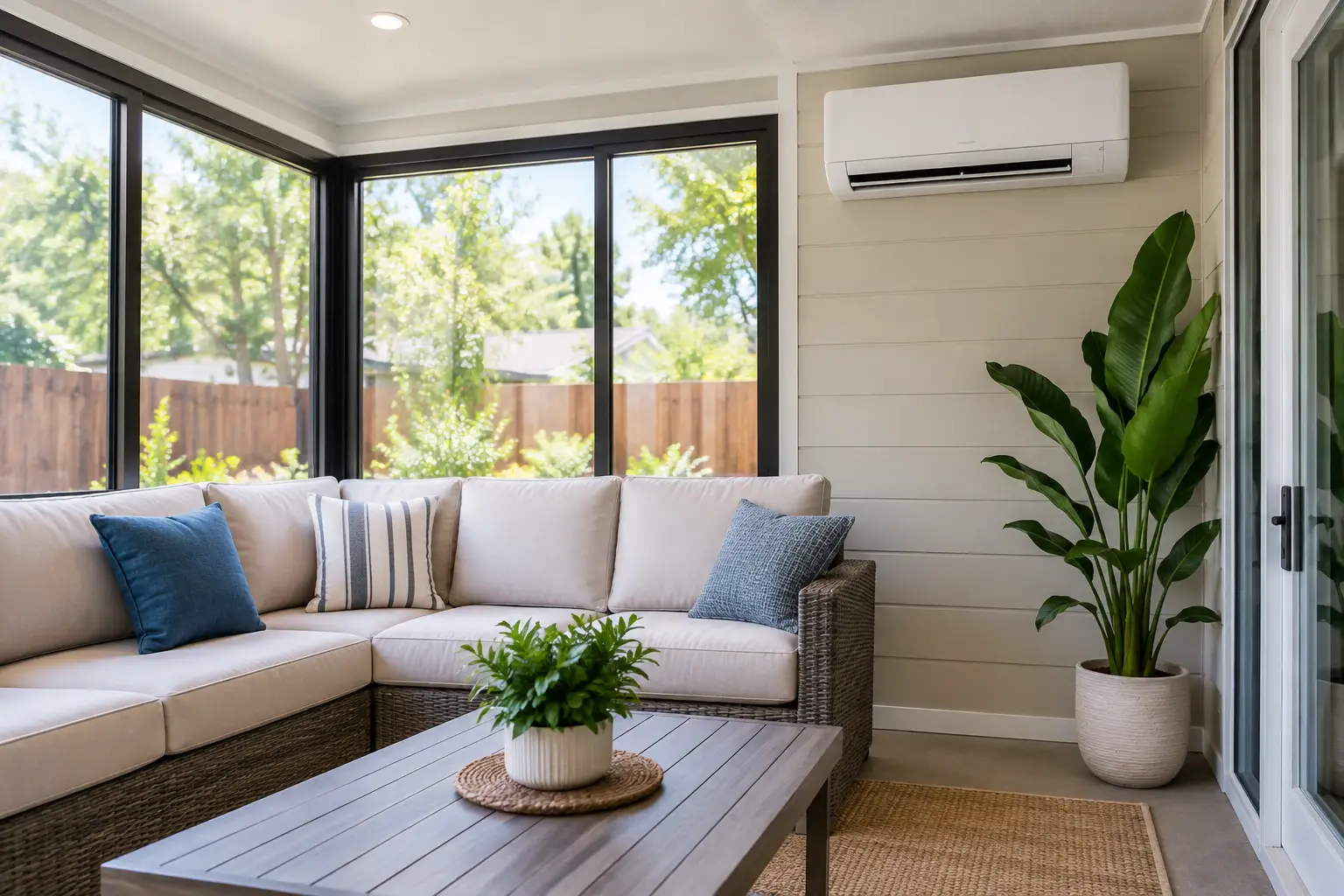
A mini split for enclosed patio space is often the difference between a room you admire through the glass and one your family actually uses in July. In Corpus Christi and across South Texas, an enclosed patio can heat up quickly, hold humidity after a storm, and feel chilly on the few winter mornings when temperatures dip. A properly selected ductless system can make that room comfortable without extending ductwork from the main house.
- When a Mini Split Makes Sense for an Enclosed Patio
- How to Size a Mini Split for Enclosed Patio Applications
- Benefits of Installing a Mini Split for Enclosed Patio Spaces
- Choosing the Best Mini Split for Enclosed Patio Use
- Installation Details That Affect Comfort
- Can a Mini Split for Enclosed Patio Spaces Provide Winter Heating?
- Keeping the Patio Efficient After Installation
The key is treating the patio as its own space, not assuming its square footage tells the whole story. Glass, insulation, sun exposure, ceiling height, and how the room connects to the house all affect the equipment size and installation approach. The right answer is practical: choose a system that can handle the room’s real heat gain, install it correctly, and buy from a dealer who will still be available when you need service.
When a Mini Split Makes Sense for an Enclosed Patio
A ductless mini split is a strong option when the enclosed patio has no existing supply and return ducts, when adding ducts would be costly, or when you want to control that room separately from the rest of the home. It provides both cooling and heating through a wall-mounted indoor unit and an outdoor condenser. Because it uses inverter technology, the system can adjust output instead of repeatedly running at full blast and shutting off.
That flexible operation matters in a sunroom or patio conversion. The room may need serious cooling in the late afternoon, then only light conditioning after sunset. A mini split can respond more efficiently than trying to force the home’s central system to cool an extra room it was never sized to serve.
It also protects comfort inside the main house. Without a dedicated system, homeowners often lower the central thermostat to make the patio tolerable. The result is an overcooled living room, higher utility use, and a patio that may still be warm near its windows.
A mini split is not automatically the best choice, however. If the patio is open to outdoor air, has temporary screens instead of sealed walls, or is used only a few weekends a year, equipment may struggle to keep up or may not be worth the investment. First make sure the enclosure is truly weather-tight and suitable for conditioned space.
How to Size a Mini Split for Enclosed Patio Applications
The right answer is practical: choose a system that can handle the room’s heat gain, install it correctly, and buy from a dealer who will still be available when you need service. The U.S. Department of Energy provides additional information on energy-efficient heating and cooling systems.
Square footage is a starting point, not a final equipment recommendation. Many enclosed patios contain more glass than a typical bedroom, and that glass can add a major cooling load. West-facing windows, uninsulated roofs, dark roofing materials, skylights, and tall ceilings raise the demand further.
A small, well-insulated patio may work with a 9,000 BTU system. Larger rooms or rooms with extensive glass may need 12,000, 18,000, or more BTUs. But bigger is not always better. An oversized unit can cool the room too quickly, run in shorter cycles, and remove less humidity. In South Texas, poor humidity control can make a room feel clammy even when the thermostat says it is cool.
Before selecting a system, consider the room’s square footage, ceiling height, window area and direction, wall and roof insulation, local shade, and how frequently exterior doors open. Also consider whether the patio shares air with the house. A wide opening with no door can make the mini split work harder because it is effectively helping condition adjacent areas.
For a dependable recommendation, have the space evaluated rather than ordering based solely on an online BTU chart. Your Bargain Mart can help homeowners narrow down the right MRCOOL configuration and connect them with licensed local installation through Precision Air when professional installation is the better fit.
Why Glass Changes the Calculation
A 200-square-foot room with insulated walls is not the same as a 200-square-foot patio enclosed by sliding glass doors. Solar heat moves through that glass all afternoon. Even efficient windows do not eliminate the load, especially when direct sunlight reaches the floor and furnishings.
Window coverings, exterior shades, solar screens, and insulated roof construction can reduce the burden on the equipment. These upgrades may allow a properly sized mini split to maintain comfort more consistently while reducing operating costs. They are not substitutes for correct sizing, but they can make a noticeable difference.
Benefits of Installing a Mini Split for Enclosed Patio Spaces
A mini split for enclosed patio applications offers several advantages over extending existing ductwork. Because the system delivers heating and cooling directly into the space, homeowners can maintain comfort without placing additional strain on their central HVAC system.
A properly sized mini split for enclosed patio use can help improve temperature control, reduce humidity levels, and provide year-round comfort. Many homeowners also appreciate the ability to adjust temperatures independently from the rest of the house, making the enclosed patio more practical for entertaining, dining, hobbies, or everyday relaxation.
In South Texas, where heat and humidity can make sunrooms and patio conversions uncomfortable for much of the year, a mini split for enclosed patio projects often provides a simple and efficient solution.
Choosing the Best Mini Split for Enclosed Patio Use
For one enclosed patio, a single-zone mini split is generally the cleanest solution. It uses one indoor air handler and one outdoor condenser, with independent temperature control for that room. A single-zone design is usually simpler to install and easier to understand when the patio is the only comfort problem you are solving.
A multi-zone ductless system may make sense if you also plan to condition a garage, workshop, room addition, or another area without ducts. It can connect multiple indoor units to one outdoor unit. The trade-off is more planning, more installation complexity, and the need to size the outdoor unit around the combined load and expected use of each zone.
MRCOOL DIY systems appeal to homeowners who are comfortable handling parts of the installation themselves. Their pre-charged line sets can reduce the technical work required compared with traditional equipment. Still, DIY does not mean every job is simple. Mounting, electrical service, drainage, weatherproofing, and local code requirements must be handled correctly. A poor condensate drain or undersized electrical circuit can create problems long after the system starts cooling.
For homeowners who prefer licensed workmanship from the start, a professional-grade system installed by a qualified HVAC team may be the better route. Either path should include a clear plan for warranty coverage, service access, and future repairs.
Installation Details That Affect Comfort
The indoor head should be placed where it can distribute air across the room without blowing directly at a favorite chair or dining table. Proper mini split placement can have a significant impact on comfort and efficiency. Even a correctly sized system may struggle if airflow is blocked by furniture, curtains, decorative features, or room dividers. Thoughtful mini split placement helps ensure even air distribution throughout the enclosed patio while reducing hot and cold spots.
High wall placement is common, but the best location depends on the patio layout, beams, windows, and furniture. Avoid hiding the unit behind a curtain, tall cabinet, or decorative feature that blocks airflow.
The outdoor condenser needs stable mounting, proper clearance, and a location that allows technicians to service it. When selecting locations for mini split outdoor units, homeowners should consider airflow, accessibility, drainage, noise levels, and exposure to coastal conditions. Proper placement of mini split outdoor units can improve efficiency, simplify maintenance, and help extend equipment life.
It should not be placed where dryer vents, heavy landscaping, or accumulated debris can restrict airflow. Coastal South Texas conditions also make outdoor placement especially important. Salt air and humidity are hard on outdoor equipment, so routine cleaning and inspection are worthwhile.
Drainage deserves equal attention. During humid weather, the indoor unit produces condensate as it removes moisture from the air. That water needs a correctly sloped drain path to an appropriate discharge location. A sloppy drain installation can lead to drips, wall damage, odors, or nuisance shutdowns.
Electrical work is another place not to cut corners. Most mini splits require a dedicated circuit, disconnect, and correctly sized wiring. Permits and code requirements can vary by location, and professional installation helps ensure the job is safe, inspectable, and built to last.
Can a Mini Split for Enclosed Patio Spaces Provide Winter Heating?
A heat pump mini split can provide useful heating during Corpus Christi’s mild winter weather. Instead of creating heat through electric resistance alone, it transfers heat from outside air into the room. This can be an efficient way to take the chill out of a patio without relying on portable heaters.
Cold-weather performance varies by model. If your patio needs reliable heat during occasional freezes or you live farther inland where temperatures can run lower, ask about a system’s low-ambient heating capability. The goal is not simply to buy cooling capacity with a heat button added. It is to select equipment that matches how you intend to use the room throughout the year.
Keeping the Patio Efficient After Installation
Once the system is running, set a realistic temperature and let the inverter do its job. Constantly turning the unit off and then demanding a major temperature change can reduce comfort and may use more energy than maintaining a steady setting. Clean or wash the indoor filters regularly, keep the outdoor unit clear, and schedule service if you notice reduced airflow, unusual noise, leaks, or inconsistent cooling.
An enclosed patio should feel like a usable part of your home, not a seasonal compromise. With the right mini split, careful sizing, and local support behind the equipment, you can enjoy that extra space through South Texas heat, humidity, and the occasional cold front.
Can 2 Split ACs Have 1 Outdoor Unit?u003cbru003e
Yes. Many multi-zone mini split systems are designed to connect multiple indoor air handlers to a single outdoor condenser. This setup allows different rooms or zones to have independent temperature control while sharing one outdoor unit. Multi-zone systems are popular for homes with several problem areas, room additions, home offices, or bedrooms that require separate comfort settings. The number of indoor units that can connect to one outdoor unit depends on the equipment model and total capacity, so proper system design and sizing are important.
How Many Square Feet Will a Mini Split Cover?u003cbru003e
The coverage area of a mini split depends on its BTU capacity, insulation levels, ceiling height, sun exposure, and local climate conditions. As a general guideline:u003cbru003e9,000 BTU: 300-450 square feetu003cbru003e12,000 BTU: 450-600 square feetu003cbru003e18,000 BTU: 700-1,000 square feetu003cbru003e24,000 BTU: 1,000-1,500 square feetu003cbru003eThese numbers are starting points rather than guarantees. Homes in South Texas often require additional consideration for humidity, solar heat gain, and insulation quality. A professional load calculation remains the most accurate way to determine the correct mini split size.
Are Mini Splits DIY?u003cbru003e
Some mini split systems are specifically designed for DIY installation, while others require professional installation. DIY-friendly models, such as certain MRCOOL systems, are designed to simplify installation and reduce labor costs for homeowners. However, even DIY mini splits require careful planning, proper mounting, electrical connections, condensate drainage, and compliance with local building codes. Homeowners should always review manufacturer requirements and ensure the system is properly sized before installation.
Can Mini Split Systems Handle Cold Temperatures?u003cbru003e
Yes. Most modern mini split heat pumps provide both cooling and heating and can operate effectively during cold weather. Many systems continue delivering heat efficiently even when outdoor temperatures fall below freezing. Cold-climate models are engineered to maintain heating performance in much lower temperatures than standard heat pumps. For homeowners in South Texas, where winters are generally mild, a mini split heat pump can often provide reliable year-round comfort without requiring a separate heating system.u003cbru003e
Do Mini Splits Heat and Cool?u003cbru003e
Yes. Most modern mini split systems are heat pumps, meaning they can both cool your home during the summer and provide heat during the winter. This dual-purpose design makes them a popular choice for garages, workshops, room additions, home offices, and even whole-home comfort applications. Homeowners benefit from having one efficient system that can handle heating and cooling needs throughout the year.
What Size Mini Split for Enclosed Patio Do I Need?u003cbru003e
The correct u003cstrongu003emini split for enclosed patiou003c/strongu003e size depends on square footage, ceiling height, glass exposure, insulation quality, and how much direct sunlight enters the room. While some patios may only need 9,000 BTUs, others with extensive windows or western exposure may require 12,000 BTUs, 18,000 BTUs, or more. A load calculation is the best way to determine the proper size.u003cbru003e
Is a Mini Split for Enclosed Patio Spaces Worth It?u003cbru003e
For homeowners who regularly use their patio, a u003cstrongu003emini split for enclosed patiou003c/strongu003e installations can be a worthwhile investment. The system provides heating and cooling without requiring expensive ductwork modifications, helping transform the space into a comfortable extension of the home.u003cbru003e
Can a Mini Split for Enclosed Patio Areas Cool Rooms with Lots of Glass?u003cbru003e
Yes. A properly sized u003cstrongu003emini split for enclosed patiou003c/strongu003e applications can effectively cool rooms with significant glass exposure. However, patios with large windows often experience greater solar heat gain and may require larger equipment capacity than a typical room of the same size.u003cbru003e
Are DIY Systems Good for a Mini Split for Enclosed Patio Project?u003cbru003e
Some homeowners choose DIY-friendly systems like MRCOOL when installing a u003cstrongu003emini split for enclosed patiou003c/strongu003e use. However, proper electrical connections, drainage, mounting, and sizing remain essential for long-term performance and reliability.u003cbru003e
Can a Mini Split for Enclosed Patio Rooms Provide Heat in Winter?u003cbru003e
Most modern mini splits function as heat pumps, allowing a u003cstrongu003emini split for enclosed patiou003c/strongu003e installations to provide cooling during summer and heating during cooler months. This makes the system useful throughout the year rather than during only one season.
A properly selected mini split for enclosed patio projects can transform an underused room into a comfortable living space throughout the year. Whether the goal is cooling a sunroom, controlling humidity, heating during cooler weather, or creating a more functional entertainment area, the right mini split for enclosed patio installation starts with accurate sizing, quality equipment, and a plan designed around the unique characteristics of the space.