
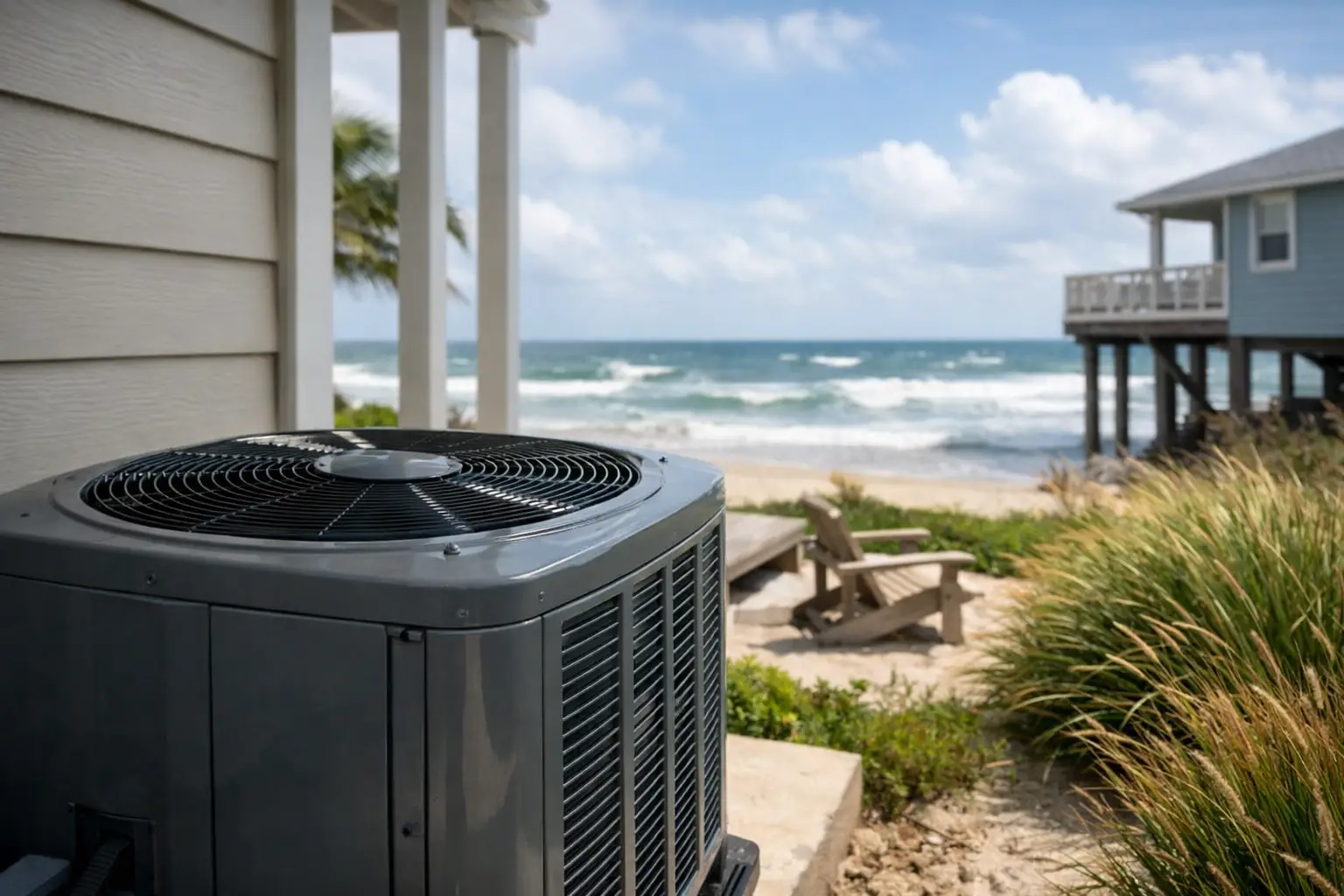
Guide to coastal HVAC protection
This guide to coastal HVAC protection is designed for homeowners living near the Gulf Coast who face constant salt‑air exposure. Using a guide to coastal HVAC protection helps you understand how corrosion starts, how humidity affects system performance, and how to prevent long‑term HVAC damage. By following this guide to coastal HVAC protection, you can reduce repair costs, improve efficiency, and extend the lifespan of your cooling system in Corpus Christi and surrounding coastal areas.
Regular maintenance is the foundation of any guide to coastal HVAC protection. Coastal HVAC systems require more frequent coil cleaning, anti‑corrosion treatments, and airflow inspections. This guide to coastal HVAC protection emphasizes seasonal planning, ensuring your system stays protected during high‑humidity months. When homeowners follow a proven guide to coastal HVAC protection, they experience fewer breakdowns and better cooling performance year‑round.
A condenser can look perfectly fine from the sidewalk while salt buildup is already working its way into coil fins, cabinet seams, wiring connections, and fasteners. This guide to coastal HVAC protection is built for Corpus Christi and South Texas homeowners who want their heating and cooling equipment to last longer in a climate that is hard on outdoor units.
Coastal HVAC protection is not one product, one cover, or one annual tune-up. It is a practical combination of choosing the right equipment, installing it correctly, cleaning it safely, and catching corrosion before it turns into a repair call during the hottest part of summer.
Improving efficiency is a major goal of this guide to coastal HVAC protection. Salt‑air buildup reduces airflow and forces your HVAC system to work harder. By applying the steps in this guide to coastal HVAC protection, you can optimize energy use, maintain stronger cooling output, and protect your equipment from coastal wear. Every coastal homeowner benefits from a reliable guide to coastal HVAC protection that explains how to keep systems running smoothly.
Homes in Corpus Christi, Portland, Ingleside, and Aransas Pass benefit greatly from a guide to coastal HVAC protection. Coastal winds carry salt particles that accelerate corrosion, making this guide to coastal HVAC protection essential for long‑term HVAC reliability. Whether you’re dealing with humidity, salt exposure, or seasonal temperature swings, a trusted guide to coastal HVAC protection helps protect your home’s comfort all year long.
Why Salt Air Is Tough on HVAC Equipment
Salt does not need to be immediately visible to pose significant risks to outdoor equipment. Fine salt particles can be transported by the wind and carried inland, where they may settle on surfaces such as outdoor condensers or heat pumps. The presence of moisture plays a crucial role in this process, as it helps keep these salt particles active, particularly following humid nights, coastal fog, rainfall, and during stormy weather conditions. Over time, consistent exposure to these salt-laden moisture conditions can lead to accelerated corrosion of the metal components within these devices. This corrosion can weaken the structural integrity and functionality of the equipment, potentially leading to costly repairs or replacements if left unaddressed.
The outdoor coil is a major concern. Its thin aluminum fins are designed to release heat efficiently, but salt deposits and corrosion can restrict airflow and reduce heat transfer. When the system cannot reject heat properly, it may run longer, use more electricity, and put added strain on the compressor.
Salt exposure can also affect cabinet panels, screws, fan guards, electrical disconnects, refrigerant line connections, and mounting hardware. A small amount of rust on a screw is not always urgent. Corrosion around electrical connections, coil surfaces, or structural supports deserves prompt attention.
How quickly this happens depends on location. A home near the water, on an exposed bay-facing lot, or in a neighborhood with steady coastal wind usually needs more frequent attention than a home farther inland. The age of the unit, local drainage, surrounding landscaping, and installation quality also matter.
Start With the Right Coastal HVAC Setup
Protection begins before the system is switched on. A correctly sized, professionally installed system is less likely to run excessively, which helps limit wear in every environment. In South Texas, oversized equipment can short-cycle, while undersized equipment may run for long periods during severe heat. Neither condition is good for comfort, energy use, or equipment life.
When installing the outdoor unit, it’s essential to position it in a location that allows for adequate airflow, while also minimizing its direct exposure to prevailing winds whenever feasible. To achieve this, consider placing a solid fence, wall, or landscape screen nearby, as these structures can effectively shield the unit from wind-driven debris and reduce salt exposure in coastal areas. However, it’s crucial to ensure that these barriers do not encroach on the unit’s space.
Adequate clearance is vital, as obstructing the airflow to the condenser can lead to efficiency losses and reliability issues, ultimately undermining the very purpose of the installation.
The condenser unit must be positioned securely on a sturdy pad or stand, ensuring it is perfectly level to promote optimal performance. It’s particularly important to place the unit above regions where water tends to accumulate, especially in flood-prone or low-lying areas; doing so can significantly reduce the risk of damage during heavy rains or flooding.
The primary objective is to provide a stable and reliable support system that facilitates proper drainage, rather than merely elevating the unit as high as possible without regard for function. When planning the installation, it is crucial to take into account the proper routing of refrigerant lines, the arrangement of electrical connections, and easy access for maintenance and servicing. Thoughtful consideration of these factors will ensure both the longevity of the unit and the safety of the surrounding area.
When it comes to installations near coastal areas, the choice of mounting hardware and the protection of electrical components play a crucial role in ensuring long-term durability and functionality. It’s essential to inquire about the types of corrosion-resistant fasteners being used, as these materials are specifically designed to withstand the harsh marine environment.
Additionally, pay close attention to the state of the disconnect box; it should be properly sealed and rated for outdoor use to prevent moisture ingress, which can lead to electrical failures. Furthermore, consider the drainage system for condensate and rainwater. Understanding how water will flow away from the equipment will help mitigate potential water damage and ensure optimal performance.
These seemingly minor details in the installation process can save you from encountering costly issues down the line, so it’s worth taking the time to address them thoroughly.
Guide to Coastal HVAC Protection: The Maintenance Routine
For many homes located inland, scheduling annual HVAC service might be sufficient for routine maintenance and ensuring the system operates efficiently. However, if your property is situated in a coastal area, particularly one that is near the bay or Gulf, it is advisable to conduct more frequent visual inspections of your HVAC system. These checks do not require you to disassemble the unit; instead, focus on observing any noticeable changes or anomalies in the system’s performance.
Look for signs such as unusual noises, irregular airflow, or any visible wear and tear. By identifying these changes early on, you can address potential issues before they escalate, ultimately prolonging the life of your HVAC system and maintaining a comfortable indoor environment. Regular attention can greatly reduce the risk of breakdowns and enhance energy efficiency.
Once a month throughout the peak of the cooling season, take the time to carefully inspect the outdoor unit with the power still on and the panels securely closed. Begin by examining the area surrounding the unit for any accumulation of leaves, grass clippings, plastic bags, or other debris that might obstruct airflow. Ensure that nearby shrubs and plants are properly trimmed back to allow for adequate space around the unit, and check to see that the unit is not sitting in stagnant water, which can lead to damage.
As you conduct your inspection, pay close attention to the condition of the coil fins—if they appear bent, this can impact efficiency. Look for any signs of deterioration on the cabinet, such as flaking paint or the presence of rust creeping around the electrical connections. If you notice any of these issues, or if panels seem loose, it’s wise to schedule a professional service appointment promptly rather than risk a breakdown when you need the system most. Your proactive care can help ensure the longevity and reliability of your cooling system.
A light fresh-water rinse of the exterior coil can help remove salt and airborne debris. Turn off power at the outdoor disconnect first, and use a gentle garden-hose spray. Work from the top down and avoid high-pressure nozzles, which can flatten delicate coil fins. Do not direct water into electrical compartments, remove panels, or use harsh cleaners unless a qualified technician has recommended a specific product.
A practical coastal maintenance routine includes these four habits:
- Replace or clean indoor air filters on schedule so airflow stays where it should be.
- Keep the outdoor unit clear of plants, mulch, lawn clippings, and standing water.
- Rinse exterior coil surfaces gently after periods of heavy salt spray or storm activity.
- Schedule professional service at least annually, and consider twice-yearly checks for homes closest to the coast.
The exact schedule depends on exposure. A condenser a few blocks from the water may benefit from more frequent rinsing and inspections than one farther inland. If the unit is sheltered and the area is regularly maintained, less frequent cleaning may be reasonable.
Be Careful With Covers, Coatings, and Cleaning Products
Homeowners often ask whether a condenser cover will protect equipment from salt air. A full cover left on during operation is never appropriate because it blocks airflow. A tightly fitted cover left on for long periods can also trap moisture against the cabinet and create conditions for corrosion.
If you use a cover during an extended off-season or before a major storm, follow the equipment manufacturer’s instructions and remove it before operation. In Corpus Christi, where cooling systems may run through much of the year, routine airflow and cleaning matter more than keeping the unit covered.
Protective coil coatings can be a good option in certain coastal applications, but they are not automatically right for every system. Coatings must be compatible with the coil and applied correctly. An improper coating or aftermarket chemical treatment can interfere with heat transfer or create warranty concerns. Ask a qualified HVAC professional whether a factory-applied coastal protection option or an approved field treatment fits your specific system.
Avoid household degreasers, bleach, acidic cleaners, and unapproved coil chemicals. They can damage aluminum fins, painted surfaces, and nearby landscaping. The safest homeowner approach is simple: gentle fresh water, clear airflow, and professional cleaning when buildup is more than surface dust.
Signs Your Coastal Unit Needs Service Now
Do not wait for a complete system failure if your air conditioner or heat pump starts acting differently. Long cooling cycles, weak airflow indoors, warmer supply air, unusual noise, water around the base, or an unexplained increase in electric bills can all point to an issue worth checking.
Visible corrosion is another reason to call. Watch closely for crumbling or discolored electrical connections, loose disconnect hardware, refrigerant line damage, oil residue near tubing, or coil areas that look badly deteriorated. These conditions can affect safety, refrigerant performance, and the cost of future repairs.
A professional visit should include more than a quick rinse. The technician can inspect electrical connections, measure system performance, check refrigerant operation, clean the coil properly, verify drainage, and identify corrosion before it compromises a major component. This is especially valuable for heat pumps, which work year-round and have more seasonal demand placed on their outdoor section.
Equipment Choice Still Matters
This guide to coastal HVAC protection gives homeowners the knowledge they need to prevent corrosion, improve efficiency, and plan smart HVAC service. By using a detailed guide to coastal HVAC protection, you can make informed decisions that extend system life and reduce costly repairs. Every coastal homeowner should rely on a proven guide to coastal HVAC protection to safeguard their HVAC investment.
No HVAC system is completely immune to a coastal environment, but buying genuine equipment through an authorized dealer gives you a clearer path to factory-backed warranty coverage and proper product support. It also makes future service simpler because the system’s specifications, installation requirements, and replacement parts are easier to verify.
For ductless rooms, garages, shops, additions, and whole-home replacements, the best system is not always the biggest or least expensive option. Consider capacity, efficiency rating, electrical requirements, indoor-unit placement, and outdoor exposure together. A properly selected MRCOOL system, installed with attention to coastal conditions, can provide efficient comfort without treating the outdoor unit as an afterthought.
Your Bargain Mart helps South Texas homeowners choose MRCOOL equipment with honest pricing, sizing guidance, licensed installation options through Precision Air, and local service support for both professional-grade and DIY systems. That local accountability matters when salt air, storm weather, and summer demand put equipment to the test.
A coastal HVAC system does not need perfect conditions to deliver dependable comfort. It needs consistent care, good airflow, and a service plan that treats salt exposure as a normal part of owning a home near the Texas coast.
Helpful Links:
U.S. Department of Energy – HVAC Efficiency Tips
ENERGY STAR – Home Cooling Guide