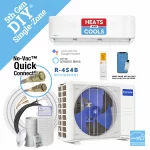
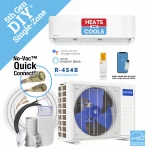
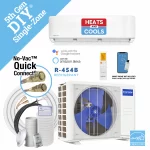
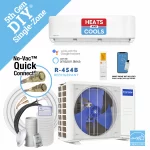

That blinking code on your wall unit usually shows up at the worst time – right before bed, on a hot Corpus Christi afternoon, or when you finally expect the room to cool down. This mini split error codes FAQ is here to help you make sense of what your system is telling you without guessing, overreacting, or ignoring a warning that could turn into a bigger repair.
Mini-splits are built to protect themselves. When something is off, the system often shuts down or limits operation and displays an error code. That is useful, but only if you know what the code is pointing to. The hard part is that the same code style can mean slightly different things depending on the brand and model, which is why you should treat any online code list as a starting point, not a final diagnosis.
What mini split error codes usually mean
Most mini split error codes fall into a few broad categories. Some point to sensor problems, some to communication faults between indoor and outdoor units, and others warn about refrigerant, voltage, drainage, fan motor, or compressor issues. The code itself is not always the failed part. It is often the system’s best clue based on what it can detect.
For example, a temperature sensor code may mean the sensor failed, but it can also mean the wiring is loose or the reading is outside the expected range because of another system issue. A communication code might come from damaged wiring, poor connections, power problems, or a control board fault. That is why a code can help narrow the problem fast, but it does not replace proper testing.
Mini split error codes FAQ: the most common homeowner questions
Can I reset a mini-split and clear the code?
Sometimes, yes. If the issue was temporary, such as a brief power interruption, a reset may clear the alert. A simple power cycle is often the first step. Turn the system off, shut off power at the disconnect or breaker for a few minutes, then restore power and restart the unit.
If the code comes right back, the system is still detecting a fault. Repeatedly resetting it will not solve the underlying problem and can delay a repair. If the unit starts, runs briefly, and throws the same code again, that is usually a sign the issue needs attention.
Are all error codes serious?
No, but they should all be taken seriously enough to check. Some codes point to conditions that are minor or temporary, while others are tied to components that can be damaged if the system keeps running. A drain-related code may start as a simple clog. A compressor or inverter code can be more urgent and more expensive if ignored.
The safest approach is to stop guessing based on whether the unit still blows air. Mini-splits can partially operate even when they are not operating correctly.
Why is my mini-split showing a communication error?
Communication errors are common because mini-splits rely on indoor and outdoor components constantly sharing information. If that signal is interrupted, the system may stop cooling or heating. Causes can include loose terminal connections, wire damage, voltage fluctuations, a bad board, or installation-related wiring mistakes.
This is one area where DIY troubleshooting has limits. You can check for obvious power issues and make sure the disconnect has not tripped, but control wiring and board diagnostics are better left to qualified service.
Do dirty filters cause error codes?
They can contribute. A dirty filter reduces airflow, and poor airflow can lead to coil temperature issues, freezing, or performance problems that may trigger a fault. Not every airflow problem creates a code, but clogged filters are one of the easiest causes to rule out.
Check the indoor filters first if the unit is underperforming. Clean them according to the manufacturer’s instructions, let them dry fully, and reinstall them properly. If the code remains, the filter was not the only issue.
Can low refrigerant trigger an error code?
Yes, in some cases. Low refrigerant can lead to pressure and temperature conditions that the system reads as abnormal. But here is the important part: refrigerant does not get “used up.” If the charge is low, there is usually a leak, an installation issue, or another problem that needs to be found and corrected.
Adding refrigerant without diagnosing the cause is not a real fix. It may restore cooling for a while, but it does not protect the system long term.
What if the unit runs but does not heat or cool well?
That can happen with or without an error code. Start with the basics: mode setting, temperature setpoint, clean filters, unobstructed indoor and outdoor airflow, and stable power. Also make sure the outdoor unit is not clogged with debris and the indoor head is not blocked by furniture or curtains.
If those basics check out and performance is still weak, the issue may involve refrigerant, sensors, fan operation, electronic controls, or system sizing. In South Texas, extreme heat also exposes installation and sizing problems faster. A unit that is technically running can still be struggling.
The codes homeowners see most often
Many brands use letter-number combinations such as E1, E5, P4, F1, or H6. The exact meaning depends on the manufacturer, but these patterns show up often:
Sensor-related codes
These usually point to indoor air temperature sensors, coil sensors, or outdoor temperature sensors. Sometimes the sensor itself has failed. Other times the problem is wire damage, corrosion, or a board issue reading the sensor incorrectly.
Drain or water level codes
If a mini-split cannot drain condensate properly, it may shut down to prevent water damage. In humid coastal areas, clogged drain lines are common. Algae, sludge, improper pitch, or a failed condensate pump can all play a role.
Fan motor codes
These may appear when the indoor or outdoor fan is not reaching the expected speed. Causes range from a bad motor and failed capacitor, to debris obstruction, to a board problem.
Inverter or compressor protection codes
These tend to be more technical. The system may be protecting itself from overcurrent, overheating, abnormal pressure, or startup problems. These are not good codes to ignore, especially if the outdoor unit is short cycling, making unusual noise, or not starting at all.
What you can safely check before calling for service
There are a few practical steps that make sense for homeowners. Start by writing down the exact code and when it appears. Does it show up immediately at startup, after ten minutes, or only in cooling mode? That detail helps speed up diagnosis.
Next, check the breaker and disconnect, clean the indoor filters, and confirm that nothing is blocking airflow around either unit. If your system recently had a power interruption, try one controlled reset. Also inspect for obvious signs such as water dripping indoors, ice buildup, burnt smells, or loud buzzing from the outdoor section.
What you should not do is open sealed components, add refrigerant, bypass safeties, or keep forcing the unit to run if it is shutting itself down. Those choices usually make a small problem more expensive.
When a code points to installation issues
Not every fault means the equipment is defective. Mini-splits are sensitive to correct wiring, proper vacuum procedure, line set practices, drainage, and system sizing. A code that keeps returning can sometimes trace back to how the unit was installed, not the hardware itself.
That matters for homeowners because the fix may involve correcting a connection, drain routing, charge issue, or setup step rather than replacing a major part. It also matters if you own a DIY system. Many companies will sell the equipment but stop short when service is needed. Local support makes a real difference when a code appears and you need answers, not finger-pointing.
Why brand and model matter in any mini split error codes FAQ
A code chart is only useful if it matches your exact system. Even within one brand, meanings can shift by series or generation. Some units display codes on the indoor head, some on the remote, and others through LED flash patterns. That is why model number, indoor unit type, and install history all matter.
If you call for help, have the full model number ready along with the code, the age of the system, and whether it was professionally installed or self-installed. That information can shorten the service process and avoid wrong assumptions.
When it is time to bring in a professional
If the code returns after basic checks, if the breaker trips, if the unit leaks water inside, if there is ice on the coil, or if cooling and heating have dropped off sharply, it is time for service. The same goes for electrical smells, repeated communication errors, or any compressor-related fault.
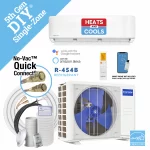
For South Texas homeowners, fast local support matters because heat and humidity do not give you much room to wait. An authorized dealer with real service capability can help determine whether the issue is maintenance-related, installation-related, or a warranty matter. That is where a company like Your Bargain Mart stands out by supporting MRCOOL systems, including DIY units that many contractors simply will not touch.
The best next step is not memorizing every possible code. It is knowing the difference between a basic homeowner check and a problem that needs trained diagnosis. When your mini-split flashes a warning, take the hint early – your comfort, and often your repair bill, will be better for it.