If your AC runs hard from April into October and your electric bill keeps reminding you about it, choosing the best heat pump for hot climate living is less about hype and more about match. In Corpus Christi and across South Texas, the right system has to cool efficiently, manage humidity, hold up in long cooling seasons, and still give you reliable heat on those colder winter stretches.
That is why a heat pump can make a lot of sense here. For many homeowners, it is not just an alternative to traditional central air and a furnace. It is a smarter fit for a region where cooling does the heavy lifting most of the year, but winter heating still matters enough that you cannot ignore it.
What makes the best heat pump for hot climate use?
In a hot climate, the best heat pump is usually the one that stays efficient under heavy cooling demand, keeps indoor humidity under control, and is sized correctly for the house. Those three factors matter more than marketing terms.
High efficiency is part of the story, but not the whole story. A unit with strong SEER2 and EER2 ratings can lower energy use during long cooling seasons. Still, if it is oversized, short cycles, or cannot handle humidity well, comfort suffers even if the efficiency rating looks impressive on paper.
Variable-speed and inverter-driven systems often stand out in hot climates because they can ramp up and down instead of running at full blast every time they turn on. That longer, steadier operation helps remove moisture better and keeps temperatures more even from room to room. In South Texas, that can make the house feel cooler without forcing the thermostat lower.
Durability matters too. Coastal air, salt exposure, and nonstop summer operation are hard on equipment. A dependable system with solid build quality and proper installation is usually a better long-term value than chasing the lowest sticker price.
Heat pump vs. straight AC in South Texas
For many homes in this region, a heat pump is a practical upgrade over a straight cool AC paired with electric heat. Since winters are generally mild compared with northern states, a heat pump can handle both cooling and heating efficiently for much of the year.
That does not mean every home should automatically switch. If you already have a well-performing gas furnace, the numbers may look different. But if you are replacing an all-electric system, building an addition, conditioning a garage, or upgrading a home that needs better year-round efficiency, a heat pump is often the better fit.
The key point is simple. In hot climates, the equipment spends most of its life cooling. So the best system is one that excels in cooling performance first, while still covering your heating needs when temperatures drop.
The features that matter most
If you are trying to narrow down choices, start with performance features that affect real comfort. A high SEER2 rating helps, especially in a cooling-dominant climate. But humidity control, staging, and airflow are just as important.
Variable-speed compressors are a strong option for hot and humid areas because they avoid the all-or-nothing cycle of basic single-stage systems. Two-stage units can also be a good middle ground if budget is tighter. They give better comfort than entry-level models without the full price jump of premium variable-speed equipment.
You should also look at how the indoor side of the system is matched. The air handler or coil has to work properly with the outdoor unit. A strong outdoor condenser alone will not deliver the results you expect if the indoor setup is mismatched or poorly sized.
Noise can matter more than people expect, especially with bedrooms near the outdoor unit or when the system serves a patio-adjacent wall. Better systems tend to run quieter, but placement and installation quality still make a big difference.
Best system types for a hot climate home
The best heat pump for hot climate homes is not always one specific model. It often comes down to which type of system fits the house.
Ducted heat pumps for whole-home replacement
If your home already has usable ductwork, a ducted central heat pump is often the most straightforward option. This works well for full-system replacement and can deliver even cooling throughout the house when the ducts are in good shape.
For many South Texas homeowners, a variable-speed or inverter-style central heat pump offers the best blend of comfort and efficiency. It helps with long cooling cycles, lower energy use, and better humidity control. If your old system struggles to keep up in the afternoon or leaves some rooms clammy, this type of upgrade is worth serious attention.
Ductless mini-splits for additions, garages, and problem rooms
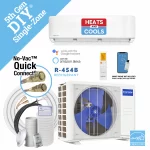
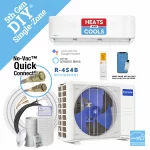
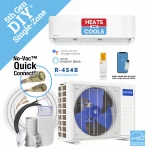
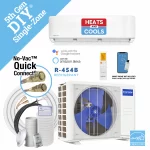
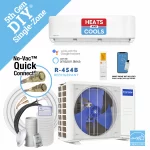
Ductless heat pumps are especially useful in room additions, converted garages, workshops, and homes with hot or cold spots. They are also a good choice when installing or extending ductwork would be expensive or impractical.
In a hot climate, mini-splits can be extremely efficient. They also let you cool only the spaces you actually use. That can be a smart move for homeowners who want lower operating costs without replacing the entire central system.
Multi-zone systems for flexible comfort
A multi-zone heat pump makes sense when different parts of the home need different temperature control. This is common in larger homes, homes with additions, or households where one room is always warmer than the rest.
The trade-off is complexity. Multi-zone systems are flexible, but proper design matters. Line lengths, indoor unit placement, and load calculations all have to be done carefully.
Why MRCOOL is worth a look in hot climates
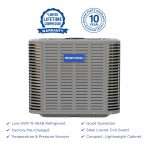
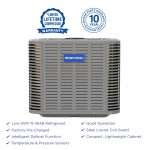
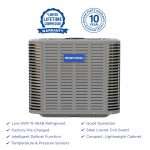
For homeowners looking for reliable, efficient options, MRCOOL systems deserve a close look. Their lineup includes central heat pumps, ductless systems, multi-zone options, and the Universal Series, which gives homeowners flexibility in retrofit applications.
That matters because there is no single answer for every South Texas property. Some homes need a full central replacement. Others need targeted comfort in a garage apartment or bonus room. Some homeowners want professional installation, while others are specifically looking at DIY-compatible ductless options with local support still available afterward.
That last part is where many buyers get stuck. A low price online is not much help if nobody will service the system later. Working with an authorized local dealer that understands product selection, sizing, installation, and ongoing support makes a big difference when you are choosing equipment meant to handle years of heavy cooling demand.
Sizing is where good choices go wrong
A lot of people shopping for the best heat pump for hot climate conditions assume bigger is safer. Usually, it is not. An oversized unit may cool the air quickly but shut off before removing enough humidity. That leaves the house feeling cold and damp at the same time.
Undersizing has its own problems. The system runs constantly, struggles during extreme heat, and may wear faster because it never catches up.
Proper sizing should account for square footage, insulation, ceiling height, duct condition, window exposure, occupancy, and sun load. In South Texas, those factors can shift the right equipment choice more than homeowners expect. Two homes with the same square footage can need very different solutions.
Installation quality matters as much as the equipment
Even a strong heat pump can disappoint if installation is rushed or sloppy. Airflow, refrigerant charge, duct sealing, drain setup, thermostat configuration, and equipment matching all affect performance.
This is especially important in a hot and humid climate. Poor installation can lead to weak dehumidification, uneven temperatures, higher bills, and avoidable service calls. It can also affect warranty coverage if the system is not installed to manufacturer standards.
That is one reason many local homeowners prefer to buy through a dealer that can support the full process. Your Bargain Mart works with licensed installation and service support, which gives customers a clear path from product selection to long-term maintenance instead of leaving them to figure it out after delivery.
How to choose the right one for your home
Start with the space you need to condition. If you are replacing a full central system and your ductwork is in decent shape, a ducted heat pump is often the strongest option. If you are trying to cool a detached room, garage, or addition, a ductless setup may be the better answer.
Then think about comfort priorities. If humidity, uneven temperatures, and long summer run times are your biggest complaints, higher-end inverter systems are often worth the investment. If upfront budget is the main concern, a simpler system can still work well if it is properly sized and installed.
Finally, think beyond the box itself. Warranty coverage, local parts access, service support, and whether someone will actually help if something goes wrong matter just as much as the product brochure.
The best heat pump is the one that fits your house, your budget, and the way South Texas weather really behaves. Get the sizing right, choose equipment built for heavy cooling demand, and make sure support is in place after the sale. That is how you end up with comfort that still feels like a good decision years from now.