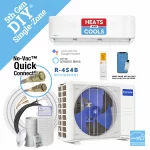
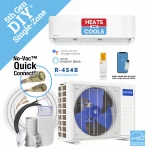
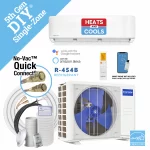
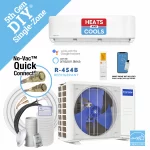


When a mini split not cooling properly starts blowing lukewarm air in the middle of a Corpus Christi summer, it goes from minor annoyance to real problem fast. In South Texas, poor cooling usually points to a specific issue, not random bad luck, and the sooner you narrow it down, the better your chances of avoiding a bigger repair.
Why a mini split is not cooling properly
A ductless system is usually very reliable, so if performance drops off, there is almost always a reason you can track. Sometimes the problem is simple, like a clogged filter or a remote setting that got changed without anyone noticing. Other times, the cause is more technical, such as low refrigerant, a frozen coil, a failing fan motor, or a unit that was undersized for the room from the start.
That last point matters more than many homeowners realize. A mini split can be installed correctly and still struggle if the room load is higher than expected. Garages, sunrooms, additions, workshops, and rooms with poor insulation often need more cooling power than people assume, especially in coastal Texas heat.
Check the easy things first
Before you assume something major has failed, start with the basics. Make sure the system is actually in cooling mode and that the set temperature is well below the room temperature. It sounds obvious, but mode settings, fan-only operation, sleep settings, and handheld remote changes cause a surprising number of service calls.
Next, look at the air filter in the indoor head. If it is covered in dust, airflow drops, and the unit cannot remove heat effectively. A dirty filter can also contribute to icing, which makes cooling even worse. Cleaning the filter is simple, but it should be done gently and fully dried before reinstalling.
Then check the outdoor unit. If the condenser is packed with grass, dirt, leaves, or coastal buildup, the system cannot reject heat the way it should. That means indoor comfort falls off even if the equipment is still technically running. Keep the area around the unit open and clear so it can breathe.
Poor airflow changes everything
Airflow issues are one of the most common reasons a mini split stops cooling the way it used to. If air is barely coming out of the wall unit, the system may have a dirty blower wheel, blocked coil, restricted filter, or fan problem. Even if the air feels cool, weak airflow means the room will take much longer to reach temperature.
In some homes, the issue is not the machine itself but the room layout. Ductless systems cool by moving air through the space. If doors are kept shut, furniture blocks the throw of the unit, or the head is trying to serve an awkward room shape, you can end up with hot spots and uneven comfort. That can make it seem like the mini split is failing when the real issue is air distribution.
If the coil is frozen, do not ignore it
A mini split that is not cooling properly may actually be icing up. You may notice little to no airflow, water dripping where it should not, or visible frost on the indoor unit or refrigerant line. Ice usually forms because of restricted airflow, low refrigerant, or sometimes a fan-related issue.
Running a frozen system without addressing the cause can strain the equipment and delay the repair. Turning the unit off and allowing it to thaw is a reasonable first step, but the underlying problem still needs to be identified. If the ice comes back, that is your sign that this is not just a one-time fluke.
Low refrigerant is a real possibility
If your mini split cooled well before and now cannot keep up, low refrigerant may be part of the problem. Refrigerant does not get used up like fuel, so if levels are low, there is usually a leak somewhere in the system or an installation-related issue that needs attention.
Typical clues include longer run times, reduced cooling, ice on the lines, hissing sounds, or air that never gets as cold as it should. This is not a DIY fix. Refrigerant work requires proper tools, leak detection, and correct charging procedures. Guesswork here usually leads to worse performance and more expense.
This is also where local support matters. Many homeowners with DIY mini-splits find out too late that not every HVAC company wants to service them. Working with a dealer and service team that supports both professional and DIY MRCOOL systems can save a lot of time when your equipment needs real diagnostic work.
Sizing problems can look like equipment failure
Not every cooling complaint means something is broken. In South Texas, an undersized mini split may run constantly and still never bring the room down to the set point during the hottest part of the day. High ceilings, west-facing windows, poor insulation, attic heat, and garage conversions all add load.
This is especially common when homeowners choose equipment based only on square footage. Square footage is a starting point, not the whole calculation. Window area, sun exposure, occupancy, and the type of space matter too. A detached workshop and a shaded bedroom can be the same size and need very different capacity.
Oversizing is not ideal either. A unit that is too large may short cycle, cool too fast near the head, and leave the room feeling clammy. Good performance depends on matching the equipment to the real conditions, not just buying the biggest system that fits the budget.
Drain problems can affect cooling too
Mini splits pull humidity from the air while they cool. That moisture has to drain properly. If the condensate line is clogged or the drain setup is not right, the unit may shut down, leak, or behave unpredictably.
Some homeowners first notice a water stain or dripping around the indoor head and assume the cooling problem is unrelated. In reality, drainage issues and cooling performance often show up together. High humidity, algae buildup, improper slope, or installation defects can all play a role.
Electrical and control issues are harder to spot
Sometimes the system powers on, but one part of it is not doing its job. The indoor fan may run while the outdoor unit fails to ramp up properly. A control board, sensor, capacitor, communication fault, or wiring issue can all lead to poor cooling without an obvious mechanical failure.
These problems are less visible than a dirty filter or frozen coil, which is why homeowners often describe them as the system running but not working. If you have already checked settings, filters, airflow, and the outdoor unit condition, this is usually the point where professional diagnosis makes the most sense.
When to troubleshoot and when to call for service
It is reasonable to handle basic maintenance yourself. Clean the filter, verify the mode and temperature settings, clear debris around the outdoor unit, and see whether airflow improves. If the issue is minor, that may be enough.
If the unit is freezing, leaking, making unusual noises, tripping breakers, showing error codes, or running nonstop without cooling, it is time to call for service. The same goes for any suspected refrigerant issue. Waiting too long can turn a manageable repair into compressor damage or repeated performance problems.
For homeowners comparing replacement versus repair, the age of the system matters. So does warranty status. Factory-backed warranties have real value, but only when the equipment was purchased through legitimate channels and serviced correctly. That is one reason many local homeowners prefer working with an authorized dealer instead of taking chances with unknown online sellers.
Preventing the same problem next season
The best way to avoid a mini split not cooling properly again is to stay ahead of maintenance and sizing issues. Clean filters regularly, keep the outdoor unit clear, and do not ignore early warning signs like weak airflow or longer run times. If a room has never cooled the way it should, ask whether the system was matched correctly in the first place.
If you are planning a new install in a garage, addition, or multi-zone setup, proper equipment selection matters just as much as installation quality. A good system with honest sizing guidance and real local support will usually cost less over time than the wrong system that keeps needing attention.
In Corpus Christi and across South Texas, cooling equipment does not get much of a break. If your mini split is struggling, treat it like a fixable problem, not something you just have to live with. The right diagnosis now can get your comfort back before the next heat wave settles in.