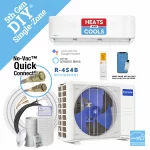
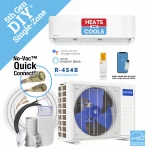
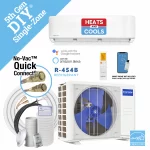
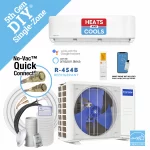

If you’re pricing comfort for more than one room, multi zone ductless system cost usually becomes the big question fast. A single-zone mini-split is easy to estimate. A multi-zone setup is different because the final number depends on how many rooms you want to condition, how the home is laid out, what capacity each zone needs, and how complex the installation will be.
For homeowners in Corpus Christi and across South Texas, that difference matters. The right system can cool bedrooms, additions, garages, offices, and other hard-to-condition spaces without the expense of adding ductwork. But there is no honest one-price-fits-all answer. The real value comes from understanding what drives the price and where it makes sense to spend more upfront.
What is a typical multi zone ductless system cost?
Most homeowners can expect a multi zone ductless system cost to land somewhere between about $6,000 and $16,000 installed, depending on system size, number of indoor units, brand tier, efficiency level, and labor conditions. Smaller two-zone systems usually fall at the lower end. Larger four- or five-zone systems with longer line runs, electrical upgrades, or more demanding installations move up quickly.
Equipment-only pricing is lower, of course, but that does not tell the full story. A homeowner may see a condenser and a few wall-mounted heads listed online and think the job is straightforward. In practice, the installed price often includes mounting hardware, line sets, control wire, drain line routing, pad or brackets, electrical disconnects, startup, testing, and labor. If the installation requires attic work, wall fishing, roof penetration, or a panel upgrade, the cost rises.
That is why comparing quotes based only on the outdoor unit model can be misleading. Two systems with the same condenser size can have very different installed totals.
What affects multi zone ductless system cost most?
Number of zones
The biggest price driver is the number of indoor units. Each zone adds equipment, refrigerant line, electrical connections, drain management, and labor. A two-zone system costs more than a single-zone setup, but the jump from two zones to four or five zones is where homeowners really feel it.
There is also a point where adding more zones stops being the most cost-effective option. Some homes are better served by a combination of systems rather than trying to connect every space to one outdoor unit. That depends on the load calculation, room usage, and physical layout.
Capacity and sizing
A larger home does not always need a larger multi-zone condenser, but every room needs to be sized correctly. Bedrooms, open living areas, converted garages, and workshops all have different cooling demands. High ceilings, west-facing glass, poor insulation, and South Texas heat can change the recommendation.
Oversizing is not a bargain. Neither is undersizing. A system that short cycles or struggles in peak summer conditions can cost more over time in comfort, efficiency, and service calls.
Installation difficulty
This is where price variation gets real. A clean install on a one-story home with short line runs is very different from routing multiple lines through a finished two-story home. The more difficult the access, the more labor is involved.
If indoor heads are spread far apart, line lengths increase. If drain routing is limited, a condensate pump may be needed. If the electrical service is already loaded, an upgrade may be necessary before the system can be installed safely. These are normal project variables, but they change the final price.
Equipment quality and efficiency
Not all ductless systems are built the same. Higher-end equipment may cost more upfront, but often brings better efficiency, quieter operation, stronger cold-weather performance, and more dependable warranty support. For many buyers, especially in a climate where cooling demand is heavy, that can be worth it.
Factory-backed warranties also matter. A lower sticker price loses appeal if parts support is limited or service options are hard to find locally.
Expected cost by zone count
A two-zone ductless system often lands around $6,000 to $9,000 installed. This is common for a home office and primary bedroom, an addition and living room, or two problem areas that need independent temperature control.
A three-zone system often ranges from $8,000 to $11,500 installed. This setup fits many smaller homes, room additions, or households that want flexible comfort in the most-used areas without replacing the entire HVAC system.
A four-zone system usually falls between $10,000 and $14,000 installed. This is where planning matters more because line routing, total load, and indoor unit placement have a bigger impact on labor and performance.
A five-zone system can run from $12,000 to $16,000 or more installed. At this level, the home layout, electrical capacity, and installation details become major cost factors. In some cases, splitting the project into separate systems may be the better path.
These are broad planning numbers, not fixed quotes. A professional assessment is still the only way to know what fits your home and your budget.
Why some homes cost more than others
Two houses with the same square footage can produce very different estimates. That surprises people, but it makes sense once you look at the details.
A newer home with accessible exterior walls and a strong electrical panel is usually simpler to work with. An older home with tight access, thick wall construction, limited exterior mounting options, or code-related electrical updates can add labor and materials. If one homeowner wants basic wall-mounted heads and another wants a mix of wall units and ceiling cassettes, the price changes again.
Usage matters too. A guest room that is rarely used may not need the same level of capacity or investment as a primary living area that stays occupied all day. The best system design is not always the one with the most zones. It is the one that matches how the home is actually used.
Equipment cost versus installation cost
Homeowners often ask what portion of the bill is equipment and what portion is labor. In many projects, equipment is a large share, but labor and install materials are far from minor. Multi-zone systems require more coordination than a basic replacement job because every indoor unit must be properly placed, connected, drained, tested, and balanced with the outdoor unit.
That is especially true when appearance matters. Clean line concealment, tidy wall penetrations, secure mounting, and properly routed drains take time. Good installation is not just about making the system run on day one. It is about reducing future issues like poor drainage, performance loss, vibration, and service headaches.
Is a multi-zone ductless system worth the cost?
For many South Texas homeowners, yes – if the home or project fits the application. Multi-zone ductless systems are often worth the cost when you need targeted comfort without extending or rebuilding ductwork. They also make sense when different rooms need different temperature settings, or when part of the house is hard to keep comfortable with a central system alone.
The trade-off is upfront price. A multi-zone ductless system can cost more initially than some homeowners expect, especially compared with a simple window unit or a basic central replacement quote. But those are not always equal comparisons. Ductless offers zone control, high efficiency, flexible installation, and the ability to serve spaces that traditional systems do not handle well.
If your goal is whole-home conditioning in a house that already has good ducts, another solution may be more cost-effective. If your goal is reliable comfort in several specific areas without major ductwork, ductless is often a smart investment.
How to keep multi zone ductless system cost under control
The best way to manage cost is to start with proper sizing and honest planning. Bigger is not better, and more zones are not automatically better either. A good design should match the home’s load and your daily use.
It also helps to think beyond the equipment price. Ask what is included in the quote, whether warranty support is clear, and who will service the system later. A lower initial number is not much of a bargain if support disappears after installation.
That is one reason local buyers often prefer working with an authorized dealer that can help with product selection, installation coordination, and long-term service. For homeowners comparing MRCOOL options in the Corpus Christi area, having real local support can remove a lot of the uncertainty from the buying process.
The smartest next step
If you are researching multi zone ductless system cost, the best next move is not chasing the cheapest advertised number. It is getting the system matched to your home, your rooms, and your budget by someone who understands both the equipment and the local conditions.
A good quote should feel clear, not vague. It should explain what you are paying for, what performance to expect, and whether the setup makes sense for your home long term. That kind of clarity usually saves money better than bargain shopping ever does.