
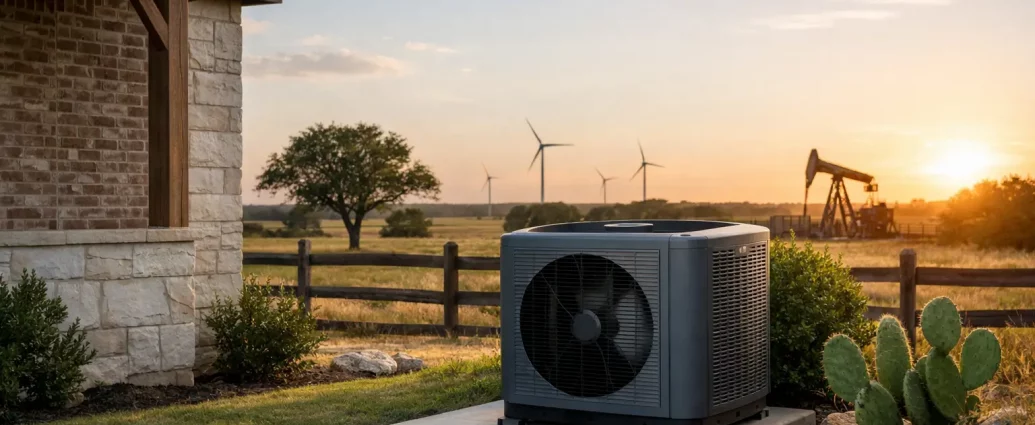
Truth is, If you live in South Texas, you probably care a lot more about surviving August than making it through a hard freeze. That’s exactly why homeowners keep asking, are heat pumps good in Texas? In many cases, yes. A properly selected heat pump can be an excellent fit for Texas homes because it handles both cooling and heating efficiently, and our climate gives it a real advantage.
- Are heat pumps good in Texas homes?
- Why heat pumps often make sense in South Texas
- Where the answer becomes more complicated
- Cooling performance matters most in Texas
- Are heat pumps good in Texas during freezes?
- The biggest benefits homeowners usually notice
- When a heat pump may not be the best fit
- What to look for if you're shopping in Texas
- So, are heat pumps good in Texas?
That said, not every home should get the same answer. A heat pump can be a smart, cost-saving upgrade, but the results depend on your insulation, ductwork, system sizing, and how far north you live. In Corpus Christi and the surrounding coastal region, heat pumps make more sense than they do in many colder parts of the country.
Are heat pumps good in Texas homes?
For a large share of Texas homeowners, they’re. A heat pump doesn’t create heat the way a furnace does. It moves heat from one place to another. In summer, it pulls heat out of your home. In winter, it brings outdoor heat inside. Because Texas winters are usually mild to moderate, a heat pump often works very efficiently here.
That matters for utility bills. In a climate where cooling season is long and heating season is relatively short, a heat pump gives you year-round use from one system. Instead of paying for separate air conditioning and gas heating equipment, many homeowners can simplify the setup and still stay comfortable.
In South Texas, this is especially appealing. Homes in Corpus Christi, Portland, Rockport, and nearby areas usually need reliable air conditioning far more often than they need extreme cold-weather heating. A heat pump is built for exactly that kind of workload.
Why heat pumps often make sense in South Texas
The biggest reason is climate. Heat pumps perform best where winters aren’t consistently severe. Texas is a big state, so conditions vary, but along the Gulf Coast and across much of the southern half of the state, winter temperatures usually stay in a range where a quality heat pump can operate efficiently.
Another reason is energy use. When installed correctly, a modern heat pump can lower operating costs compared with older, less efficient HVAC equipment. If you’re replacing an aging straight cool system with electric resistance heat, or an older unit that struggles to keep up, a newer heat pump can be a meaningful upgrade.
There’s also the convenience factor. One matched system handles both heating and cooling. That can make replacement decisions easier for homeowners who want dependable comfort without overcomplicating the equipment.
Where the answer becomes more complicated
Texas isn’t one climate zone. Conditions in Corpus Christi are different from conditions in Amarillo. If you’re in South Texas, heat pumps are usually easier to recommend. If you’re in North or West Texas, the decision needs a little more care.
In my experience, When temperatures drop hard for extended periods, some heat pumps lose efficiency and may need supplemental heat. That doesn’t mean they’re a bad choice. It means the system has to be chosen with local weather in mind. Some homes do well with a heat pump and auxiliary heat. Others may be better served by a dual-fuel setup that pairs a heat pump with a gas furnace.
The house itself also matters. A well-insulated home with solid ductwork and proper airflow gives a heat pump a better chance to perform the way it should. A leaky house with poor insulation can make any system struggle, including a heat pump.
Cooling performance matters most in Texas
A lot of homeowners focus on winter performance when they compare heat pumps, but in Texas, cooling is the bigger story. Your system is going to spend much more time removing heat and humidity than it’ll warming the house.
That’s one reason heat pumps are so practical here. They’re air conditioners with added heating capability. If your main concern is keeping your home comfortable through long, hot months, a good heat pump can absolutely do that. The key is choosing the right efficiency level and making sure the unit is sized correctly for your home.
Oversizing is a common mistake. A system that’s too large may cool too quickly without removing enough humidity. That leaves the house feeling cold and clammy instead of comfortable. Undersizing creates the opposite problem, with the unit running too long and still struggling on the hottest days. Proper sizing matters more than brand hype.
Are heat pumps good in Texas during freezes?
They can be, but this is where quality and planning matter.
Most Texas winters are mild enough for a heat pump to handle without much trouble. During unusual cold snaps, performance depends on the model, the outdoor temperature, and whether the system has backup heat. Standard systems can lose output as outdoor temperatures fall. Cold-climate and higher-performance models do better in lower temperatures.
If you want more confidence during winter weather events, there are ways to build that into the system design. Some homeowners choose equipment with stronger low-temperature performance. Others choose dual-fuel systems or make sure auxiliary heat is available when needed.
This is where honest guidance matters. A contractor or dealer shouldn’t just say yes or no to heat pumps in Texas. They should ask where you live, how your home is built, what you pay for electricity or gas, and what kind of comfort you expect when rare freezes hit.
The biggest benefits homeowners usually notice
For many Texas households, the first benefit is efficiency. Modern heat pumps can provide strong cooling performance while using less energy than older equipment. That can translate to lower monthly costs, especially when replacing an outdated unit.
The second benefit is all-in-one comfort. Heating and cooling from one system is simpler for many homeowners, especially in homes without natural gas service.
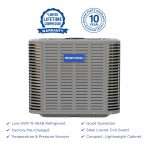
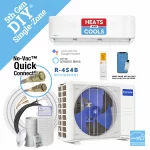
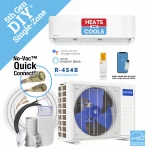
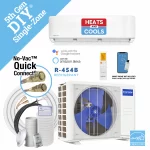
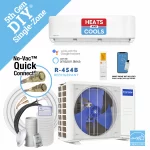
The third is flexibility. Heat pumps are available in ducted central systems, ductless mini-splits, and multi-zone configurations. That makes them useful for full-home replacements, room additions, garages, workshops, and homes with problem areas that never seem to stay comfortable.
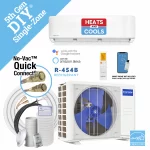
For South Texas homeowners, ductless heat pump systems can be especially useful in spaces where extending ductwork is expensive or impractical. A garage gym, detached office, sunroom, or shop can often be conditioned efficiently without reworking the whole house.
When a heat pump may not be the best fit
There are cases where another setup makes more sense. If you already have a well-functioning gas furnace and want strong heating performance during colder weather, a dual-fuel system may be worth considering. If your electrical setup is limited, installation costs and upgrade needs should also be part of the discussion.
Some homeowners also have expectations shaped by gas heat. A furnace often delivers hotter air at the vents, while heat pumps tend to provide gentler, steadier heat. That doesn’t mean the home won’t be comfortable. It just feels different, and some people notice that right away.
Budget can also affect the decision. While heat pumps often save money over time, the best answer depends on the equipment being replaced, the installation scope, and the quality of the existing duct system. Cheap equipment or rushed installation can erase the advantages fast.
What to look for if you’re shopping in Texas
Start with system sizing and local support. Those two factors matter more than flashy sales language. A heat pump should be selected based on your square footage, insulation, layout, and actual use of the space. A bonus room over a garage has different needs than a single-story house with good attic insulation.
Next, look at efficiency and heating performance together. In Texas, you want a system that cools well and still gives dependable winter operation for your area. For some homeowners, a high-efficiency central heat pump is the right call. For others, a ductless or multi-zone setup solves comfort problems more directly.
It also helps to buy from a local source that can support the equipment after the sale. That means real help with product selection, warranty questions, installation options, and future service. That kind of support matters even more if you’re considering a DIY-friendly product and want to know there’s still a path for service later. For homeowners in the Corpus Christi area, that local accountability is a big part of making the right HVAC decision.
So, are heat pumps good in Texas?
Most of the time, yes – especially in South Texas. They’re efficient, practical, and well matched to a climate where cooling does the heavy lifting and winter is usually manageable. But the best results come from matching the system to the home, not just picking a unit off a spec sheet.
If you’re comparing options, the smartest next step isn’t asking whether heat pumps are good in Texas in general. It’s asking whether the right heat pump is good for your house, your utility costs, and your comfort expectations. That’s where a good decision starts, and where long-term comfort usually follows.
Further reading: Are heat pumps good in texas on mayoclinic.org.
In short, are heat pumps good in texas rewards a careful, informed approach. Use this are heat pumps good in texas guide as a starting framework, adapt it to your situation, and re-check the facts whenever the topic moves.