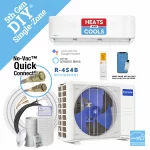
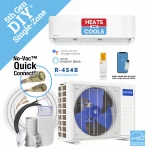
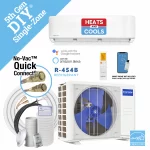
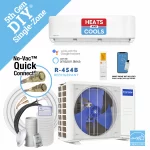

In my experience, A DIY mini split can run great for years, right up until it needs service and you start hearing the same answer from local contractors: no. That’s usually the real question behind can diy mini splits be serviced – not whether the equipment is serviceable in theory, but whether a qualified company will actually touch it when something goes wrong.
- Can DIY Mini Splits Be Serviced in Real Life?
- What HVAC Companies Will Actually Service
- The Most Common DIY Mini Split Service Needs
- When Service Turns Into Rework
- Can DIY Mini Splits Be Serviced Under Warranty?
- Should You Service a DIY Mini Split Yourself?
- Why Local Support Matters More With DIY Equipment
- How to Improve Your Chances of Getting a DIY Mini Split Serviced
A small confession: The short answer is yes, DIY mini splits can be serviced. The longer answer is that service depends on the brand, the original installation, the specific problem, and whether you have a local HVAC company willing to work on DIY equipment. That matters a lot in South Texas, where long cooling seasons put steady demand on mini splits in bedrooms, garages, additions, workshops, and whole-home applications.
Can DIY Mini Splits Be Serviced in Real Life?
Yes, but not every issue is handled the same way. Some service calls are straightforward. A dirty indoor coil, a clogged drain line, a failed control board, a bad fan motor, or a communication error may be diagnosable and repairable by a licensed technician. Those are normal HVAC service situations, even on a DIY system.
Where things get more complicated is when the root problem traces back to installation quality. If the line set was kinked, connections weren’t seated correctly, wiring was done improperly, the unit was oversized or undersized, or the mounting created drainage issues, a service company may have to correct installation defects before it can address the symptom. That adds time, cost, and sometimes parts replacement.
This is why some contractors avoid DIY mini splits altogether. They don’t want to inherit someone else’s installation problems, spend unpaid time sorting through them, or risk being blamed for an existing issue. So when homeowners ask if a DIY mini split can be serviced, the real-world answer is often less about the machine and more about local support.
What HVAC Companies Will Actually Service
A reputable contractor usually looks at three things first: safety, accessibility, and serviceability. If the equipment is installed in a way that allows proper testing and repair, there’s a much better chance it can be serviced. If the disconnect is missing, the wiring is questionable, the condensate setup is poor, or the outdoor unit is blocked in too tightly to work on, the first step may be correcting those conditions.
Brand support also matters. Equipment from a recognized manufacturer with available parts, technical documentation, and warranty pathways is easier to service than an off-brand unit with unclear specifications. That’s one reason many homeowners prefer established systems rather than taking a gamble on the cheapest online option.
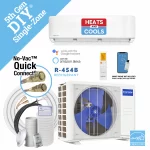
For MRCOOL DIY systems in particular, service is absolutely possible when there’s a local dealer and service-oriented support behind the product. That combination gives homeowners a better shot at getting both troubleshooting and repair instead of hearing, “we don’t work on those.”
The Most Common DIY Mini Split Service Needs
Most DIY mini split repairs aren’t dramatic compressor failures. More often, the problems are routine but annoying. Units stop draining properly and start dripping inside. Filters and coils get dirty, and airflow drops. Sensors misread temperatures. Boards fail after power issues. Fans wear out. Communication faults show up between indoor and outdoor units.
In Corpus Christi and across South Texas, salt air, humidity, and long run times can speed up wear on outdoor components and make regular maintenance more important. A unit installed in a garage or shop may also deal with more dust, which can clog filters and indoor coils faster than homeowners expect.
Sometimes the issue isn’t a failed part at all. It can be deferred maintenance. Mini splits are efficient, but they’re not maintenance-free. If the system has never been cleaned, the drain line hasn’t been checked, or the outdoor unit is packed with debris, performance will suffer. That kind of service is often the simplest way to restore cooling before assuming the system needs major repair.
What a technician may inspect
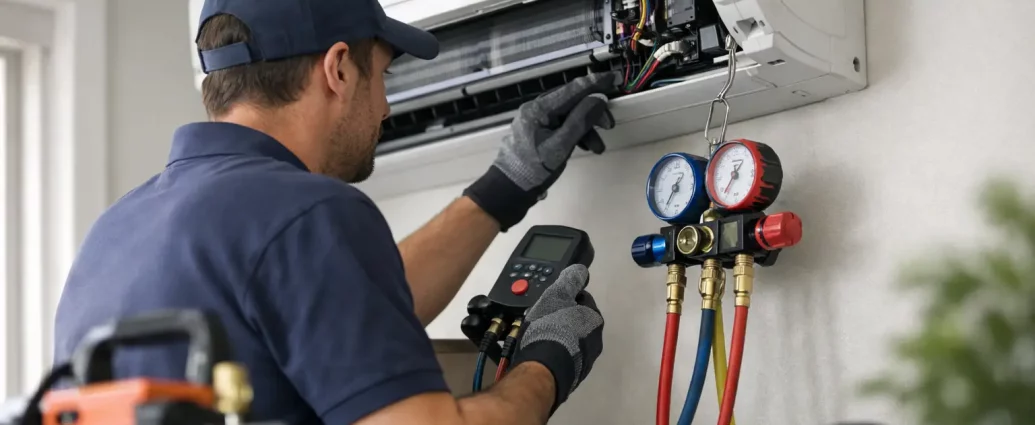
A proper service visit often includes checking temperature split, refrigerant performance, electrical components, condensate drainage, blower condition, coil cleanliness, controls, and fault codes. On a DIY system, a good technician may also spend extra time evaluating installation details because that’s where many recurring issues begin.
When Service Turns Into Rework
There’s an important difference between servicing a DIY mini split and rebuilding one. If a unit was installed with poor electrical work, bad flare connections, incorrect line routing, improper support, or drainage mistakes, the service call can quickly become a correction job. That’s where homeowners sometimes feel surprised by the estimate.
The equipment itself may be serviceable, but not in its current condition. A technician can’t responsibly diagnose performance issues without first making sure the basics are right. If the indoor unit isn’t pitched correctly and the condensate line can’t drain, fixing a leak may require remounting the head. If the wiring doesn’t meet code, repairs may need to pause until that’s corrected.
That’s not a sales tactic. It’s how legitimate HVAC work protects the system, the home, and the homeowner.
Can DIY Mini Splits Be Serviced Under Warranty?
This depends on the manufacturer, the proof of purchase, registration status, the nature of the failure, and whether the installation met requirements. Warranty coverage and labor coverage aren’t the same thing, either. A part may be covered while diagnosis, travel, or installation labor isn’t.
This is another area where buying through an authorized dealer matters. Homeowners want factory-backed warranties, but they also want a realistic path to using them. If a part fails in the middle of a South Texas summer, paperwork alone doesn’t cool the room. Local support makes the warranty more useful because there’s someone who can help identify the failed component, guide the claim, and complete the repair.
If the system was bought from a seller with no local service relationships, homeowners may still have warranty rights, but the process can feel a lot more difficult. That’s often when the true value of dealer-backed support becomes obvious.
Should You Service a DIY Mini Split Yourself?
Basic maintenance, yes. Technical repair, usually no.
Homeowners can and should handle simple upkeep such as cleaning filters, keeping the outdoor unit clear, checking for obvious drainage issues, and watching for signs like weak airflow, unusual noise, icing, or water leaks. Those are practical steps that help the system run better and help catch small problems early.
Once the issue involves electrical diagnosis, refrigerant circuit concerns, error codes that don’t clear, board replacement, or repeated performance problems, it’s time for a licensed HVAC technician. Mini splits are compact systems, but they’re still sophisticated HVAC equipment. Guessing your way through a repair can turn a minor issue into a much more expensive one.
Why Local Support Matters More With DIY Equipment
DIY systems appeal to homeowners for a good reason. They can lower installation costs, speed up comfort upgrades, and make ductless cooling more accessible for spaces like additions, garages, and converted rooms. But every HVAC decision has a trade-off. The trade-off with DIY is that future service can be harder if you don’t choose the right product source and local support network.
That’s where a service-minded dealer stands apart from a generic online seller. The sale is only one part of the decision. The more important question is what happens after the box arrives, after the system is mounted, and especially after the first service issue shows up.
Your Bargain Mart is one of the few local options in the Corpus Christi area that openly supports MRCOOL DIY systems with honest pricing, authorized product guidance, and real post-purchase service access. For homeowners who want the flexibility of DIY without giving up local accountability, that makes a major difference.
How to Improve Your Chances of Getting a DIY Mini Split Serviced
Start with a recognizable brand that has parts availability. Keep your paperwork, model numbers, and installation details. Register the warranty if required. Take clear photos during installation so a technician can understand how the line, set, wiring, and drains were run. Stay on top of filter cleaning and basic maintenance.
Most importantly, buy from a source that understands both the equipment and the local service side. A low upfront price loses its appeal fast if nobody will work on the unit later.
If you’re asking, can diy mini splits be serviced, the best answer is this: yes, when the system is installed properly, supported locally, and backed by people who are willing to stand behind it after the sale. That’s the kind of support worth planning for before you need it.
Further reading: Can diy mini splits be serviced on nytimes.com?
In short, can diy mini splits be serviced with a careful, informed approach? Use this can diy mini splits be serviced guide as a starting framework, adapt it to your situation, and re-check the facts whenever the topic moves.