

A mini split that is too small will run hard, struggle in South Texas heat, and leave you uncomfortable. One that is too large can short cycle, waste energy, and control humidity poorly. If you’re asking, what size mini split do I need, the right answer starts with square footage – but it should never end there.
In Corpus Christi and across South Texas, sizing matters more than many homeowners realize. Our climate puts real demand on cooling systems for much of the year, and factors like ceiling height, sun exposure, insulation, and how the room is used can change the answer fast. A quick online calculator can get you in the ballpark, but proper sizing is what protects your comfort, efficiency, and equipment life.
What size mini split do I need for my space?
Mini split sizing is usually discussed in BTUs, or British Thermal Units. In plain terms, BTUs measure how much heating or cooling capacity the system can deliver. Most residential mini splits come in common sizes such as 9,000, 12,000, 18,000, 24,000, and 36,000 BTUs.
A rough starting point looks like this: a small bedroom or office may need 9,000 BTUs, an average bedroom or small living area may need 12,000 BTUs, a larger room may need 18,000 BTUs, and open living spaces or garages may need 24,000 BTUs or more. That said, square footage alone is only a starting estimate.
If your room gets intense afternoon sun, has older insulation, includes large windows, or opens frequently to the outdoors, the load goes up. If the room is shaded, well insulated, and lightly occupied, the load may be lower than the chart suggests.
A quick BTU sizing guide
Here is a practical rule of thumb many homeowners use when estimating mini split size:
- 150 to 250 square feet – 6,000 to 9,000 BTUs
- 250 to 400 square feet – 9,000 to 12,000 BTUs
- 400 to 550 square feet – 12,000 to 18,000 BTUs
- 550 to 800 square feet – 18,000 to 24,000 BTUs
- 800 to 1,200 square feet – 24,000 to 36,000 BTUs
This can help you narrow your options, but it should not replace a real sizing review. A 400-square-foot bonus room in inland heat with west-facing windows may need something very different than a 400-square-foot guest room in a well-insulated home near the bay.
Why mini split sizing is not just about square footage
This is where many people get tripped up. Two rooms with the same square footage can have very different comfort demands.
Ceiling height is one reason. A room with a vaulted ceiling contains more air volume to condition than a standard 8-foot room. Window area is another. Large glass surfaces bring in heat, especially on sunny South Texas afternoons.
Insulation also matters. Newer construction with good insulation and tight windows tends to hold conditioned air better. Older homes, converted garages, workshops, and room additions often have more heat gain and air leakage.
Then there is occupancy and equipment load. A bedroom used mostly at night is different from a home office with computers running all day. Kitchens, sunrooms, and workout spaces also create added heat that changes sizing.
What happens if your mini split is too small?
Undersizing usually shows up first in extreme weather. The system runs longer and longer, but the room still feels warm in summer or slow to heat in winter. That constant strain can increase energy use and wear on the equipment.
In South Texas, an undersized system can also leave you frustrated during long hot stretches when you need dependable cooling most. You may save a little upfront by choosing the smaller unit, but if it cannot handle the load, that savings disappears fast in comfort problems and operating costs.
What happens if your mini split is too large?
Oversizing sounds safer, but it creates its own problems. A unit with too much capacity can cool the room too quickly and shut off before it removes enough humidity from the air. The temperature may look fine on paper, but the space can still feel damp or clammy.
Frequent starts and stops, often called short cycling, can also reduce efficiency and put unnecessary stress on system components. Bigger is not automatically better, especially in humid coastal conditions where moisture control is part of real comfort.
What size mini split do I need for common room types?
Bedrooms usually fall on the lower end, often in the 9,000 to 12,000 BTU range depending on size and sun exposure. A primary bedroom with tall ceilings and large windows may need more than a secondary bedroom of the same square footage.
Living rooms and open-concept areas often require 18,000 to 24,000 BTUs or more. These rooms usually have more traffic, more windows, and more connected space, which increases the load.
Garages, workshops, and additions are often where sizing mistakes happen. Many of these spaces were not built with comfort cooling in mind, so insulation levels can be poor and heat gain can be high. A garage mini split may need more capacity than homeowners expect.
For small offices, hobby rooms, and enclosed patios, a 9,000 or 12,000 BTU system may work well, but only if the room is properly enclosed and insulated. If not, moving up in capacity may be the better choice.
Single-zone vs. multi-zone sizing
If you are conditioning one room, a single-zone mini split is usually the simplest path. You size the indoor unit and outdoor unit around that one space.
If you want to heat and cool multiple rooms, a multi-zone system may be a better fit. In that case, sizing gets more technical. Each indoor head must be matched to the room load, and the outdoor condenser must be sized to support the total demand.
This is where professional guidance becomes especially valuable. Multi-zone systems offer flexibility, but they need a smart layout and proper load matching. Guessing can lead to uneven performance from room to room.
Should I use a DIY sizing calculator?
A calculator can be useful for early research. It helps you estimate whether you are likely looking at 12,000 BTUs or 24,000 BTUs, which is helpful when comparing equipment options.
But calculators have limits. They usually cannot fully account for local climate, room orientation, ductless head placement, insulation quality, or unusual layouts. They also do not tell you whether the space might be better served by a different configuration altogether.
If you are spending real money on a mini split, especially for a primary living space, sizing support is worth it. The goal is not just to buy a unit. The goal is to buy the right one the first time.
Getting the right mini split size in South Texas
South Texas homes deal with serious cooling demands, long run seasons, and humidity that can make a borderline system feel worse than it looks on paper. That is why local sizing guidance matters. What works in a mild climate may not be the right answer for a home in Corpus Christi, a garage in Portland, or an addition in Rockport.
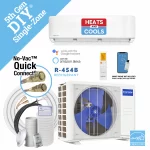
If you are considering an MRCOOL system, it helps to work with a local authorized dealer that can support product selection, installation, and future service. That is especially important if you are comparing DIY mini splits with pro-grade systems or trying to choose between single-zone and multi-zone equipment.
At Your Bargain Mart, we help homeowners sort through those decisions with honest pricing, factory-backed product confidence, and local support that does not end after the sale. That includes guidance for customers who want licensed installation and those who need support for MRCOOL DIY systems many contractors will not touch.
The smartest next step
If you are still wondering, what size mini split do I need, start with the room size, then look hard at the details that change the load – insulation, windows, ceiling height, sun exposure, and how the space is actually used. A close estimate is helpful, but a properly sized system is what keeps your home comfortable, efficient, and easier to live with when South Texas weather is doing its worst.
A mini split is one of the best comfort upgrades you can make when it is sized correctly. Take a little extra time before you buy, and you are far more likely to get quiet performance, lower energy costs, and the kind of dependable comfort that feels right every day.