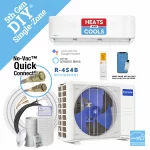
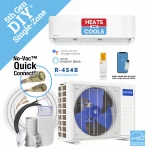
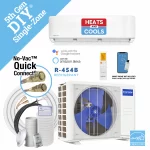
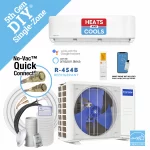


I’ll be straight with you — A heat pump that looks like a bargain on paper can turn into an expensive mistake once it meets a South Texas summer. If you’re trying to figure out how to choose heat pump equipment for your home, garage, addition, or shop, the right answer usually comes down to three things: proper sizing, the right system type, and knowing who will support it after the sale.
That matters more than most homeowners expect. A unit can have a strong efficiency rating and still disappoint if it’s oversized, poorly matched to the space, or installed without attention to airflow, insulation, and local climate demands. In Corpus Christi and across South Texas, cooling performance, humidity control, and service support are just as important as the price tag.
How to choose heat pump equipment for your space
The first question isn’t which brand or model looks best. It’s what problem you’re trying to solve. Replacing a full central system in a primary residence is different from conditioning a detached garage, a workshop, or a room addition that never stays comfortable.
Honestly, If your home already has ductwork in good shape, a central heat pump may make the most sense. If you’re dealing with a single hot room, a converted garage, or a space where adding ducts would be costly, a ductless mini-split may be the better fit. Multi-zone systems can work well when you need separate temperature control in several rooms, but they’re not always the cheapest option up front.
This is where many buyers get stuck. They compare equipment types before confirming what the building actually needs. A good selection process starts with the layout, insulation level, number of rooms, sun exposure, and whether the existing duct system is worth keeping.
Start with sizing, not sticker price
A heat pump that’s too small will run hard and struggle during peak heat. A system that’s too large can short cycle, wear out components faster, and leave humidity behind even while the room feels cool for a few minutes.
That’s why square footage alone isn’t enough. Ceiling height, window area, shade, insulation quality, air leakage, and occupancy all affect load. In South Texas, solar gain and humidity can change the recommendation more than homeowners expect.
If you’re shopping for a whole-home system, proper load calculations matter. If you’re choosing a mini-split for a garage or bonus room, the same principle still applies. It’s better to size the system to the real demand than to assume bigger is safer.
Match the system to the way you use the space
Not every area of your property needs the same kind of comfort solution. A main residence usually benefits from consistent, whole-home performance. A shop or garage may need quicker response, simpler installation, and zoned use rather than nonstop operation.
That’s one reason ductless systems have become popular. They give homeowners a practical way to heat and cool areas that central systems don’t handle well. But if you want one unit to serve an entire ducted home, a universal or central heat pump setup may be a better long-term choice.
Efficiency matters, but so does real-world performance
Most buyers look at SEER ratings first, and that makes sense. Higher efficiency can reduce operating costs. But efficiency shouldn’t be the only factor driving the decision.
A high-efficiency system still needs proper installation and correct application. If the refrigerant charge is off, airflow is restricted, or the indoor and outdoor components aren’t matched correctly, you may never see the energy savings you expected. The same goes for poorly insulated spaces where conditioned air escapes as fast as the equipment produces it.
For South Texas homeowners, humidity control is part of comfort. A system that cools quickly but doesn’t remove enough moisture can leave the house feeling damp and uncomfortable. That’s why the best choice isn’t always the model with the biggest number on the spec sheet. It’s the one that fits the home and will be installed and supported correctly.
Pay attention to heating needs, too
Even in a warm climate, heating performance still matters. Most winters in the Corpus Christi area are mild, but we do get colder stretches. If the heat pump is serving as your primary heating source, make sure the system is suited to local winter conditions and paired with the right backup strategy if needed.
Some homeowners are surprised to learn that the ideal setup depends on their priorities. If low upfront cost is the main goal, one option may fit. If year-round efficiency, cold-weather performance, and long-term flexibility matter more, another may be the better investment.
Ducted vs. ductless heat pumps
If you’re comparing system styles, the right answer often comes down to the building itself.
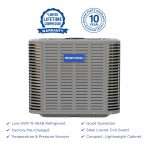
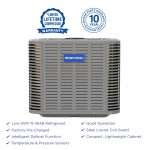
A ducted heat pump is usually the best fit when the home already has sound ductwork, you want a more traditional central setup, and you need whole-home comfort from a single system. It keeps the look familiar and can be a strong option for replacing an aging central air conditioner and furnace combination.
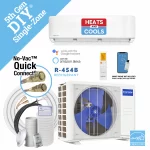
A ductless heat pump makes sense when ducts are missing, damaged, or impractical to add. It’s also a strong choice for room additions, garages, workshops, detached spaces, and homes where certain rooms are never comfortable. The trade-off is that indoor wall units are visible, and larger homes may need multiple zones, which can raise the total project cost.
Neither option is automatically better. The better choice is the one that matches the structure, the comfort problem, and your budget.
How to choose heat pump installation support
Equipment is only part of the purchase. The other half is who helps you size it, install it, and service it later.
This is where homeowners can save money or create headaches. Buying from an unknown source may look cheaper at checkout, but that savings can disappear fast if warranty issues, sizing problems, or installation questions come up. Local accountability matters, especially when you need fast service during extreme weather.
An authorized dealer offers more than a box on a pallet. You want guidance on matching indoor and outdoor components, confidence that the equipment is genuine, and a clear path for warranty support. If you’re buying a DIY-friendly system, it also helps to know whether local professionals will service it later. Many won’t. That’s a bigger issue than most people realize until a repair is needed.
For homeowners who want product confidence and local backup, working with a dealer that understands both the equipment and the service side can make the process much smoother. In South Texas, that practical support matters just as much as the model number.
Budgeting for the full cost
The cheapest heat pump is rarely the lowest-cost option over time. Your real cost includes equipment, installation, accessories, electrical upgrades if needed, maintenance, and how efficiently the system runs for years.
Sometimes spending a bit more upfront gets you better comfort, lower utility bills, and fewer service issues. Other times, a simpler system is the smarter buy because the space is used occasionally and doesn’t justify a premium setup. That’s why honest pricing matters. You need a recommendation based on your property, not a push toward the highest-ticket model.
A realistic budget should also account for the condition of the rest of the system. Old ductwork, poor insulation, or thermostat compatibility can affect performance. If those issues are ignored, even a good heat pump may not deliver the results you expect.
Common mistakes to avoid
One common mistake is choosing by tonnage alone. Bigger isn’t automatically better. Another is assuming all heat pumps work the same in every application. A whole-home replacement, a single-zone ductless install, and a multi-zone project each need a different selection approach.
Another problem is focusing only on the equipment and not on service after the sale. If no one local will help with startup, repairs, or warranty questions, that low online price may not feel like a bargain for long.
It also helps to be realistic about DIY versus professional installation. Some systems are designed to make self-install more practical, but that doesn’t mean every homeowner should do it. Comfort with tools, electrical requirements, line routing, mounting location, and code compliance all matter.
The best heat pump choice is the one that fits your home
If you’re trying to choose wisely, start with the space, the load, and the kind of support you want after purchase. Then compare system type, efficiency, and installation path based on those facts instead of marketing claims.
For many homeowners in Corpus Christi and surrounding areas, the smartest move is to work with a local dealer that can help size the system correctly, explain the trade-offs clearly, and stay available if something needs attention later. Your Bargain Mart takes that practical approach because the goal isn’t just to sell equipment. It’s to help you end up with a heat pump that actually keeps your space comfortable, runs efficiently, and makes sense for the way you live.
Further reading: How to choose heat pump on investopedia.com.
In short, how to choose heat pump rewards a careful, informed approach. Use this how to choose heat pump guide as a starting framework, adapt it to your situation, and re-check the facts whenever the topic moves.