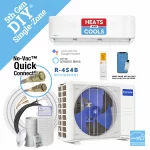
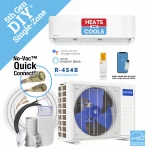
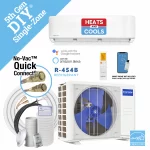
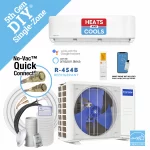

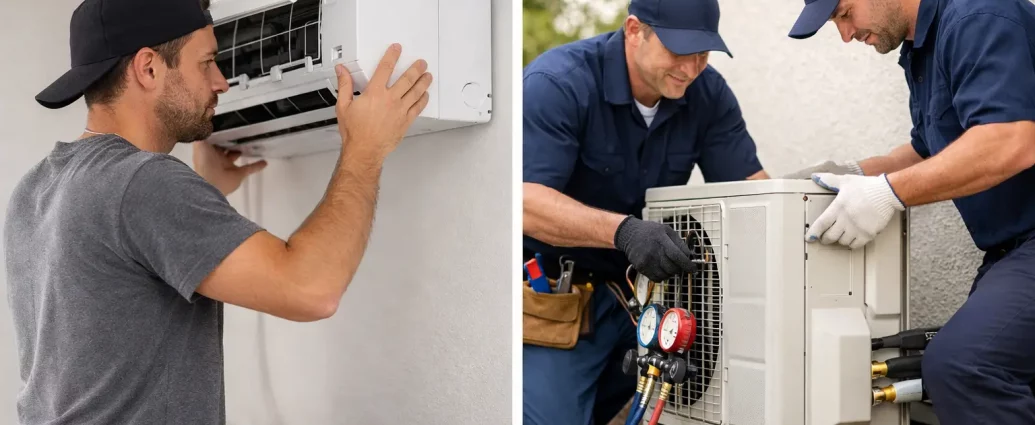
From what I have seen, A mini split can look simple on the box and feel a lot more complicated once you’re staring at a wall bracket, a line set, and a South Texas attic in July. That’s exactly why diy mini split vs professional installation is such a common question for homeowners in Corpus Christi and surrounding areas. The right answer depends on your budget, your skill level, and how much risk you want to take on for startup, performance, and long-term service.
- DIY mini split vs professional installation: what really changes?
- Where DIY mini splits make sense
- Why professional installation still wins for many homes
- Cost is important, but so is the full cost of getting it wrong
- Warranty and service support matter more than most buyers expect
- Which option is better for your specific project?
- A practical way to make the decision
DIY mini split vs professional installation: what really changes?
At a glance, both options can get you to the same place – efficient heating and cooling without adding ductwork. But the path matters. A true DIY mini split is designed to reduce specialized labor, while a professional installation is built around precision, code compliance, and system protection from day one.
That difference shows up in more than just the install bill. It affects sizing, refrigerant handling, electrical work, drainage, wall placement, appearance, warranty details, and what happens if something stops working six months later.
For some homeowners, DIY is a smart money-saving option. For others, it becomes expensive the moment the unit is oversized, underpowered, poorly mounted, or tied into electrical service the wrong way.
Where DIY mini splits make sense
DIY mini splits have a real place in the market, especially for straightforward single-zone applications. If you’re cooling a garage, workshop, home office, detached room, or smaller addition, a DIY-ready system can be a practical solution when the location is accessible and the installation path is clean.
The biggest reason people choose DIY is cost. You can save on labor, move on your own schedule, and avoid waiting for a contractor’s calendar to open up. For homeowners who are comfortable with measuring, drilling, mounting equipment, and following instructions carefully, that can be appealing.
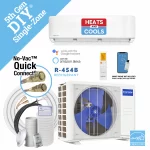
Brands like MRCOOL have made this route more realistic by offering systems specifically designed for self-installation. Pre-charged line sets and simplified setup remove some of the traditional complexity that used to make mini splits a pro-only product.
Still, DIY doesn’t mean effortless. You’re still responsible for selecting the right capacity, choosing a proper indoor and outdoor location, making sure condensate drains correctly, providing the correct electrical setup, sealing wall penetrations, and confirming the unit runs as intended. A mistake in any one of those areas can hurt comfort and efficiency.
The hidden challenge is system sizing
Many homeowners focus on installation difficulty and overlook sizing. That’s often the costliest mistake. A mini split that’s too small may run constantly and never quite control the room. A unit that’s too large can short cycle, leave humidity behind, and wear itself out faster.
In South Texas, humidity changes the conversation. Cooling a space here’s not just about temperature. Moisture removal matters too. That’s one reason equipment selection should be based on the real conditions of the room, not just square footage pulled from a quick chart.
Why professional installation still wins for many homes
Professional installation costs more upfront, but it buys down risk. A licensed installer brings load calculation experience, proper electrical coordination, clean line routing, secure mounting, condensate management, and startup procedures that help the system operate the way it was designed to.
That matters more in whole-home applications, multi-zone systems, or any installation where access is difficult. If the indoor head needs to be placed for even airflow, the outdoor unit needs a stable pad and correct clearance, or the line set run is longer and more involved, experience shows.
A professional installation also tends to look better when the job is finished. Lines are better planned, wall penetrations are cleaner, drain routing is more intentional, and the overall installation usually feels less like an add-on and more like part of the home.
There’s also the issue of accountability. If a trained technician installs the system and something is wrong at startup, there’s a clear path to fix it. That peace of mind matters for homeowners who don’t want to troubleshoot electrical, drainage, or performance issues on their own.
Professional installation is often the better fit when:
- You’re conditioning multiple rooms or a larger living area
- The job requires new breakers, disconnects, or other electrical upgrades
- The wall location, drain path, or line routing is complicated
- You want maximum warranty protection and cleaner installation results
- You simply don’t want to risk a callback problem becoming your problem
Cost is important, but so is the full cost of getting it wrong
Most buyers start with price, and that’s fair. DIY installation usually lowers the initial ticket because you’re removing labor from the equation. But a lower upfront cost is only a better value if the system is selected correctly and installed correctly.
A bad DIY install can lead to water leaks, poor airflow, nuisance shutdowns, reduced efficiency, and a shorter equipment life. If you later need a technician to diagnose a preventable issue, the savings can disappear quickly. Some HVAC companies also avoid servicing self-installed systems altogether, which can leave homeowners stuck.
That’s where local support matters. Buying from an authorized dealer that understands both DIY and professionally installed systems gives you a better experience before and after the sale. In a market like Corpus Christi, where summer demand can be intense, having access to real local help isn’t a small detail.
Warranty and service support matter more than most buyers expect
This is one of the biggest differences in diy mini split vs professional installation, and it often gets missed during online shopping.
Equipment warranties can vary based on product type, registration, and installation requirements. Some systems are specifically built for homeowners to install, while others are clearly intended for licensed professionals. If you buy the wrong type of system for the way you plan to install it, you may create warranty headaches before the unit is even turned on.
Service support matters just as much. A warranty is only useful if you can actually get help when needed. Many homeowners discover too late that some contractors aren’t interested in working on DIY equipment, even for routine repair. That can turn a budget-friendly purchase into a frustrating one.
This is why many South Texas homeowners prefer to buy from a local source that can help with product selection, explain warranty expectations clearly, and provide a path to service after the sale. Your Bargain Mart stands out here because it supports both MRCOOL DIY systems and professional installations, which is still not common in the HVAC market.
Which option is better for your specific project?
If your project is a simple single-room application and you’re comfortable handling the physical work, a DIY mini split can be a smart choice. It’s especially attractive for garages, hobby spaces, bonus rooms, or detached buildings where a ductless upgrade solves a clear problem without a major remodel.
If your project affects daily comfort in your main living space, involves multiple zones, or leaves little room for error, professional installation is usually the better investment. The same goes for homeowners who want one point of responsibility from equipment selection through final startup.
There’s also a middle ground that makes sense for many buyers. Some homeowners want the lower product cost and flexibility of a DIY-capable system but still want expert advice before purchase or service access after installation. That approach can work well when you buy from a dealer that offers sizing help, honest guidance, and local follow-through.
A practical way to make the decision
Ask yourself three things. First, is the installation actually straightforward, or does it only look straightforward in photos? Second, if the system doesn’t perform right, are you prepared to diagnose whether the issue is sizing, electrical, drainage, setup, or equipment? Third, how important is local service support if something goes wrong during peak cooling season?
If your answers lean toward simplicity, confidence, and a basic one-room project, DIY may be the right fit. If they lean toward long-term peace of mind, code-compliant workmanship, and full-service accountability, professional installation is probably the smarter move.
Either way, the best mini split isn’t just the one with the lowest price. It’s the one that’s sized correctly, installed properly, and backed by people who will still answer the phone after the sale. For South Texas homeowners, that kind of support is often what turns a good purchase into lasting comfort.
Further reading: Diy mini split vs professional installation on cnbc.com.
In short, diy mini split vs professional installation rewards a careful, informed approach. Use this diy mini split vs professional installation guide as a starting framework, adapt it to your situation, and re-check the facts whenever the topic moves.