
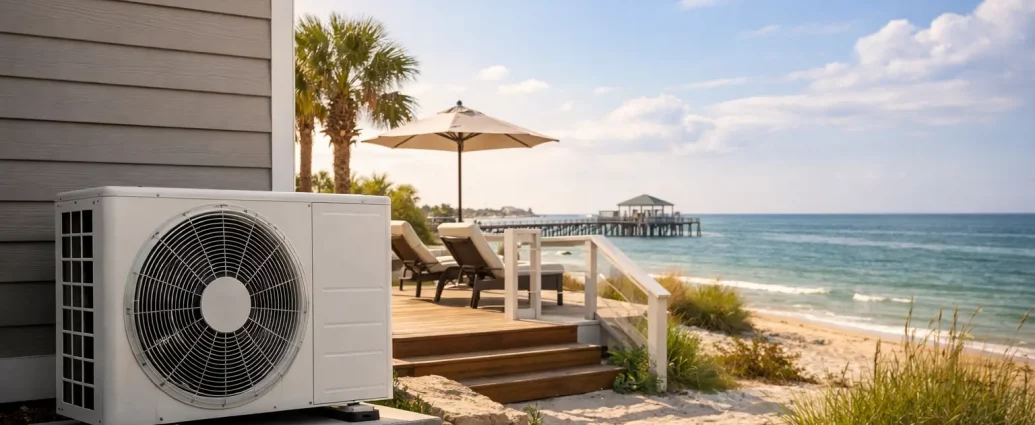
A heat pump can perform well for years in Corpus Christi, even a few blocks from the water – but only if the equipment, installation, and maintenance plan account for salt air from the start. The best heat pumps for coastal homes are not simply the units with the highest efficiency number. They are properly sized systems with quality outdoor components, thoughtful placement, professional electrical and drainage work, and a service plan that does not disappear after installation.
For South Texas homeowners, the right choice often comes down to your home’s ductwork, the rooms you need to condition, and how exposed the outdoor unit will be to coastal wind and salt spray. Here is how to choose with fewer surprises.
Why coastal heat pumps need extra attention
Salt air is hard on metal. It can speed up corrosion on outdoor coils, cabinet panels, fasteners, wiring connections, and the small components that keep a condenser operating correctly. Humidity adds another layer of stress, particularly when a system runs long hours through a Corpus Christi summer.
That does not mean a heat pump is a poor fit for the coast. In fact, modern heat pumps are an efficient way to provide both cooling and heating in South Texas. It means the outdoor unit cannot be treated like an afterthought. A system installed in an open, wind-exposed spot near the bay faces different conditions than one located inland or protected by the home.
Coastal performance also depends on installation quality. Poor refrigerant line protection, inadequate elevation, weak drainage planning, or an improperly sized unit can shorten equipment life and make comfort inconsistent. A lower upfront price is not a bargain if the system is difficult to service or begins corroding prematurely.
What makes the best heat pumps for coastal homes
There is no single heat pump that is right for every coastal property. Still, the strongest choices share several practical characteristics.
A matched system sized for the actual home
Sizing should be based on more than square footage. Ceiling height, insulation, window exposure, duct condition, number of occupants, and the way you use each room all affect the load. Oversizing is especially common in hot climates because people assume bigger equipment will cool faster.
An oversized heat pump may bring down the temperature quickly but shut off before it removes enough moisture. That can leave rooms cool yet clammy. An undersized unit may run constantly, struggle during peak heat, and place unnecessary strain on components. A proper load calculation and equipment match are worth the time.
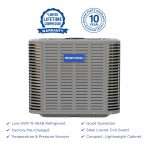
For a whole-home replacement with usable ductwork, a ducted central heat pump such as an MRCOOL Universal Series system can be a practical option. These systems can work with compatible air handlers, coils, and furnaces, allowing homeowners to select a configuration that fits the existing home rather than forcing a one-size-fits-all replacement.
Strong efficiency without chasing a label
Higher SEER2 ratings generally mean lower cooling energy use, while HSPF2 helps describe heating efficiency. Those ratings matter, but the best value is not always the unit with the highest number on the product sheet.
In Corpus Christi, cooling use usually drives more of the annual utility cost than heating. Homeowners should look for an efficient system that is correctly sized, installed to manufacturer requirements, and realistically priced for the home. Spending more for top-tier efficiency can make sense for a long-term residence with heavy runtime. For a garage, workshop, guest room, or occasional-use space, a dependable mid-range system may be the smarter investment.
Outdoor-unit protection and sensible placement
Ask about the outdoor unit’s coil coating, cabinet construction, approved coastal applications, and manufacturer maintenance requirements before making a final decision. Some systems offer enhanced corrosion protection, while others may require additional field-applied protection or more frequent care in salt-air conditions. The details vary by model, so avoid assuming that every painted cabinet offers the same level of protection.
Placement matters just as much. The condenser needs clearance for airflow and service access, but it should not sit where direct salt spray, roof runoff, lawn sprinklers, or standing water can attack it. A raised, stable pad or properly engineered wall bracket can help keep the equipment above splash zones and improve access for cleaning. Do not box the unit into a tight enclosure in an effort to protect it. Restricted airflow raises operating pressure and can create another expensive problem.
Inverter technology for variable South Texas loads
Variable-speed inverter heat pumps are often a strong match for coastal homes because they can adjust output instead of cycling only fully on and fully off. That longer, lower-speed operation can improve temperature stability and humidity control when conditions are changing throughout the day.
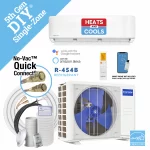
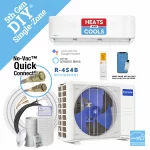
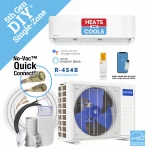
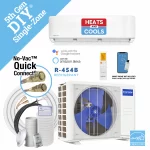
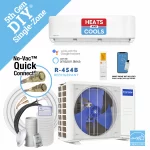
Ductless and multi-zone mini-splits are particularly useful for homes without ducts, additions, converted garages, workshops, or rooms that never stay comfortable on the central system. A single-zone system can target one problem area. A multi-zone design can condition several rooms while avoiding major duct renovation. The trade-off is that each indoor head needs a sensible location, condensate drainage, electrical planning, and routine filter cleaning.
Serviceability and warranty support
A heat pump should be selected with future service in mind. Factory-backed warranty coverage has real value, but homeowners should understand registration rules, installation requirements, and what local support is available if a part is needed.
This is where buying from an authorized local dealer can make a difference. Your Bargain Mart helps South Texas homeowners select MRCOOL systems, arrange licensed installation through Precision Air, and obtain ongoing service support for both professionally installed and DIY MRCOOL equipment. That continuity matters when a coastal unit needs inspection, cleaning, repair, or help diagnosing an issue years after purchase.
Best system types for common coastal-home situations
A ducted central heat pump is usually the best fit when the home already has reasonably sound ductwork and you want one system to serve most or all living areas. Before replacing equipment, have the ducts checked for leakage, poor insulation, restricted returns, and uneven airflow. New equipment cannot fully overcome failing ductwork.
A ductless mini-split often makes the most sense for a room addition, detached office, garage, shop, or bedroom that is far from the central system. It can deliver efficient comfort without extending ducts, and many homeowners appreciate room-by-room temperature control. DIY-capable systems can reduce installation steps for qualified homeowners, but electrical work, refrigerant connections, mounting, drainage, and local code requirements still deserve careful attention. DIY does not mean maintenance-free.
A multi-zone ductless heat pump can work well in smaller homes, remodels, and properties where ducts are impractical. It is not automatically cheaper than central equipment, especially when several indoor zones are needed. Compare total installed cost, appearance, maintenance needs, and how independently each area needs to be controlled.
For homes that need reliable heating during the occasional cold snap, a heat pump with stronger low-ambient heating performance may be worthwhile. South Texas winters are generally mild, so extreme cold-climate capacity is not always necessary. Still, homeowners who dislike supplemental heat or have unusual exposure should discuss heating performance instead of focusing only on summer cooling ratings.
Coastal maintenance protects your investment
No heat pump is immune to the coast. Regular maintenance is part of owning one. At minimum, keep plants, mulch, and stored items away from the outdoor unit; replace or clean indoor filters on schedule; and make sure condensate drains freely during humid weather.
In salt-air areas, gentle fresh-water rinsing of the outdoor coil and cabinet can help remove salt residue. Follow the manufacturer’s guidance and do not use a pressure washer, harsh chemicals, or a stiff brush that can damage delicate coil fins. A qualified technician should inspect the electrical connections, coil condition, refrigerant performance, drainage, and mounting hardware at least annually. Homes closest to the water may benefit from more frequent checks.
Watch for warning signs between visits: unusual noise, weak airflow, rising electric bills, water around the indoor equipment, ice on refrigerant lines, or rooms that feel humid even when the thermostat is satisfied. Early service is usually less costly than waiting for a complete failure in August.
Questions to ask before you buy
Before choosing a coastal heat pump, ask whether the proposed capacity comes from a load calculation, how the outdoor unit will be protected from salt exposure, and whether your existing ductwork is part of the plan. Confirm the exact model’s efficiency rating, warranty requirements, electrical needs, and recommended maintenance schedule.
Also ask who will service the unit after installation. This question is especially valuable for ductless and DIY equipment, since some contractors will install or repair only the brands and systems they supplied. Clear answers before purchase protect both your budget and your comfort.
The right coastal heat pump is one you can maintain, service, and trust through the longest South Texas cooling season. Choose equipment that fits the home, give its outdoor unit the protection it needs, and keep a local service partner involved long after installation day.