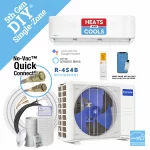
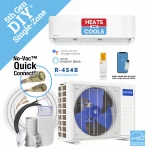
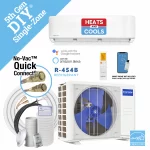
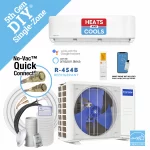

A back bedroom that never cools down, a garage that feels like an oven, and an aging duct system can all lead to the same question: mini split vs central air? For Corpus Christi homeowners, the right answer depends less on what is popular and more on how your home is built, which rooms need comfort, and how much of your budget should go toward long-term efficiency.
Both options can provide dependable cooling in South Texas. The better system is the one sized correctly for your space, installed properly, and supported after the sale.
Mini Split vs Central Air: The Core Difference
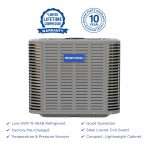
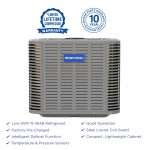
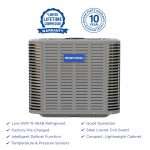
Central air moves cooled air through a network of ducts. One outdoor condenser works with an indoor air handler or furnace and evaporator coil to condition the home as a whole. A central heat pump can also provide heating during our generally mild winters.
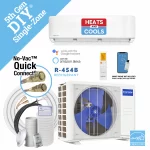
A ductless mini-split system uses an outdoor condenser connected to one or more indoor air handlers. Each indoor unit serves a specific room or zone, often with its own temperature setting. Instead of forcing air through ductwork, the system delivers conditioned air directly where it is needed.
That difference affects nearly every buying decision. Central air is usually the natural fit for a home with serviceable existing ducts and a need for consistent whole-home comfort. A mini-split is often the practical choice for a room addition, detached shop, converted garage, sunroom, or area where running ductwork would be difficult or expensive.
Neither system is automatically the “better” one. A mini-split will not solve a poorly insulated room, and a central system will not perform well if the ducts leak, the return air is inadequate, or the equipment is oversized.
Upfront Cost Is Only Part of the Decision
Central air can be cost-effective when a home already has a usable duct system. Replacing an existing outdoor unit, indoor coil, and air handler is usually more straightforward than building a new ducted system from scratch. But old ductwork deserves an honest inspection. Leaks, crushed runs, poor insulation, and improper sizing can add cost and reduce comfort before the new equipment ever starts.
A single-zone mini-split can be an economical way to cool one problem area. It avoids the expense of extending ducts across an attic or opening walls to reach a new addition. For a garage, workshop, or one-bedroom suite, that can make a meaningful difference.
Multi-zone mini-splits deserve a closer look before assuming they are the budget option. Adding several indoor heads, line sets, electrical connections, condensate drains, and installation labor can narrow the price gap with central air. They are valuable when independent room control matters, but they are not always the least expensive way to cool an entire house.
The lowest equipment price also is not the same as the lowest ownership cost. Consider electrical upgrades, duct repairs, installation quality, maintenance access, efficiency ratings, and the availability of local repair support. A system that saves money on day one but is difficult to service later is rarely a bargain.
Efficiency and Humidity in Corpus Christi
High-efficiency equipment matters in South Texas because air conditioners run hard and often run for long stretches. Mini-splits commonly use variable-speed inverter technology, allowing them to adjust output instead of cycling only fully on and fully off. In a properly selected application, that can reduce energy use and keep temperatures steadier.
Central systems are also available with high-efficiency, variable-speed options. A properly designed central heat pump or air conditioning system can deliver excellent comfort, especially when paired with sealed, insulated ducts and the right thermostat settings.
Humidity is where the conversation needs more nuance. Air conditioning removes moisture while it cools, but neither a mini-split nor central air should be selected by square footage alone. Equipment that is too large may cool a room quickly and shut off before removing enough humidity. The result can be a home that reaches the set temperature but still feels clammy.
Proper load calculations account for insulation, windows, ceiling height, sun exposure, occupants, appliances, and local weather. In coastal Corpus Christi, that work is essential. Right-sizing helps equipment run long enough to manage moisture without wasting energy or wearing itself out through constant short cycles.
When Central Air Makes the Most Sense
Central air is often the strongest choice for a primary residence with existing ducts that are in good condition. It keeps the appearance of the home simple, distributes air throughout connected living areas, and can serve multiple rooms without placing a wall-mounted unit in each one.
It is also a sensible option for homeowners replacing an older split system. If the ducts, returns, electrical service, and indoor equipment layout are already suitable, a new central system can improve reliability and efficiency without redesigning the home’s comfort system.
Central air does have limits. Duct losses can reduce efficiency, and some homes have rooms that were never balanced correctly. A far bedroom, enclosed patio, or second-floor room may receive less airflow than the rest of the house. In those cases, addressing duct design may help, but a separate ductless zone can sometimes be the more direct solution.
When a Mini-Split Is the Better Fit
Mini-splits shine in spaces that do not connect well to the home’s existing HVAC system. A converted garage, room addition, backyard office, workshop, or casita can gain dedicated cooling without putting extra demand on the main central unit.
They also work well for homeowners who want room-by-room control. If one person prefers a cooler bedroom while another wants a warmer office, separate zones can prevent thermostat arguments and avoid conditioning unused rooms as heavily.
For a whole-home ductless design, placement matters. Indoor heads need clear airflow paths, sensible locations for condensate drainage, and enough capacity for the rooms they serve. A system with too few heads or poorly placed heads may leave hallways, bathrooms, or closed bedrooms less comfortable than expected.
Wall-mounted heads are the most familiar option, but other indoor configurations may be available depending on the system and application. The right choice should fit the room layout, not just the equipment catalog.
Installation Quality Changes the Outcome
The difference between a good system and a frustrating one often comes down to installation. Central air needs correctly sized refrigerant lines, reliable electrical connections, proper airflow, sealed ducts, and a correctly matched indoor and outdoor system. Mini-splits require careful line-set routing, secure mounting, drainage planning, pressure testing, evacuation, and startup verification.
DIY mini-splits can be appealing for capable homeowners who want to save on labor in a simple single-zone project. However, the project still involves electrical work, equipment placement, local code requirements, structural mounting, drainage, and safe setup. A DIY installation is not a reason to skip sizing support or professional guidance.
That is especially relevant when choosing MRCOOL equipment. Your Bargain Mart can help South Texas homeowners sort through system options, sizing considerations, and installation support, including licensed work through Precision Air. Just as important, local service remains available after the purchase, including for MRCOOL DIY systems that many contractors prefer not to touch.
Choose Based on the Space You Actually Have
Start with the condition of your existing ductwork. If it is sound and your goal is whole-home replacement, central air may offer the cleanest path. If ducts are missing, inaccessible, or impractical to extend, a mini-split can deliver targeted comfort with less disruption.
Then consider how you use the space. A family home occupied throughout the day has different needs than a garage used only on weekends. A whole-house system may be the better value for the first situation. A dedicated single-zone mini-split may be smarter for the second.
Finally, think past installation day. Ask who will size the equipment, handle warranty questions, perform repairs, and be available when a July afternoon exposes a problem. Honest pricing matters, but dependable local support and factory-backed warranty coverage matter too.
The most useful next step is not choosing a system from a photo or a price tag. It is matching the equipment to your home, your comfort priorities, and the South Texas heat you expect it to handle for years.