

A ductless system usually gives a clear warning before it quits completely. One room starts running warmer than the others. The indoor head drips water. The unit makes a sound it did not make last season, or it runs for long stretches without reaching the temperature on the remote. Prompt ductless repair can often keep a manageable problem from becoming a damaged compressor, a failed circuit board, or a full system replacement.
For homeowners in Corpus Christi and across South Texas, fast diagnosis matters. Our long cooling season puts mini-splits and multi-zone systems to work for months at a time. Salt air, humidity, clogged drainage, electrical wear, and neglected maintenance can all affect performance. The right repair starts with finding the actual cause, not replacing parts based on a guess.
Signs You May Need Ductless Repair
A mini-split does not have to stop working entirely to need professional attention. Reduced cooling is one of the most common concerns. If the system blows air but the room stays uncomfortable, the issue may involve a dirty filter or coil, low refrigerant from a leak, a failing fan motor, incorrect settings, or a system that was never sized correctly for the space.
Water around the indoor air handler deserves attention as well. A clogged condensate drain line is often the source, especially in humid South Texas weather. But water can also point to an improperly pitched drain line, a dirty coil, a damaged drain pan, or an installation issue. Letting it continue can lead to wall damage, mold concerns, and avoidable repairs.
Other signs include repeated error codes, ice on the line set or indoor coil, unusual rattling or grinding, burning odors, breaker trips, and a remote that no longer communicates reliably with the unit. A musty smell when cooling begins may be a cleaning issue, but it should not be ignored. Mold and buildup inside an air handler can affect airflow, efficiency, and indoor comfort.
Why Accurate Diagnosis Matters
Ductless equipment is efficient because it uses variable-speed technology, electronic controls, and dedicated indoor and outdoor components. That efficiency also means a symptom can have more than one possible cause. A system that short cycles, for example, might have an airflow restriction, a sensor problem, an oversized capacity for the room, a communication fault, or an electrical issue.
Replacing a part without checking the full system can waste time and money. A qualified technician should evaluate operating pressures where appropriate, electrical connections, airflow, drainage, filters, coil condition, error codes, control settings, and the condition of the line set. On a multi-zone system, each indoor head should be considered in the context of the outdoor condenser and the other zones.
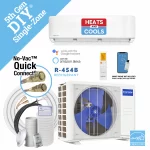
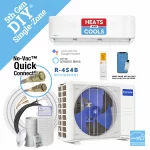
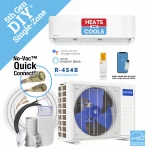
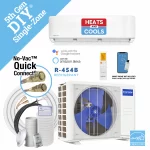
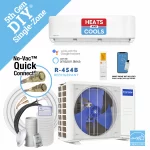
This is especially relevant with MRCOOL systems. DIY models are designed to make installation more accessible, but they are still HVAC equipment with electrical, refrigerant, drainage, and performance requirements. Some providers will not work on DIY equipment at all. Your Bargain Mart supports MRCOOL homeowners with practical local guidance and service options, including help for professionally installed and DIY ductless systems.
Common Ductless Problems and What They Can Mean
Dirty filters, coils, and blowers
A washable filter is simple to overlook, but restricted airflow makes a mini-split work harder and can reduce cooling output. In homes with pets, renovation dust, heavy cooking, or frequent use, filters may need attention more often than expected. If cleaning the filter does not restore performance, the evaporator coil or blower wheel may need a deeper professional cleaning.
This is a repair worth handling early. Dirt on internal components does not just affect comfort. It can increase energy use, contribute to ice formation, and place extra strain on the system.
Refrigerant leaks
A ductless system does not normally use up refrigerant. If the charge is low, there is usually a leak that needs to be located and corrected. Simply adding refrigerant without finding the leak may provide temporary cooling, but it does not solve the underlying problem.
Signs can include weak cooling, longer run times, ice, or error codes. The repair depends on where the leak is located and the condition of the equipment. A loose flare connection may be a more direct fix than a damaged coil, but both require proper testing and repair procedures.
Drainage failures
When an indoor unit cools, it removes moisture from the air. That moisture has to drain correctly. Algae, dust, and debris can clog the drain path, while poor installation angles can keep water from moving as intended. In Corpus Christi’s humidity, drainage problems can show up quickly.
A technician can clear the line, inspect the pan and pump if one is installed, and confirm the drain is routed and sloped properly. If you see water, turn the system off if possible until the source is checked. Continuing to run it can make a small leak inside the wall much more expensive.
Electrical and communication faults
Mini-splits rely on communication between the indoor head and outdoor unit. A damaged wire, loose connection, power issue, failed board, or surge-related damage can interrupt that communication. The result may be an error code, a unit that will not start, or an indoor head that runs while the outdoor system does not.
Electrical repairs should not be treated as a trial-and-error project. Correct diagnosis protects the equipment and helps prevent repeat failures. If your unit has recently experienced power interruptions or lightning activity, mention that during service scheduling.
When a Simple Fix Is Reasonable
Homeowners can safely handle a few basic checks before scheduling service. Confirm that the remote is set to cooling or heating mode as needed, the temperature setting is reasonable, batteries are fresh, and the filter is clean and fully dry before reinstalling it. Make sure the outdoor unit is not blocked by leaves, grass clippings, or stored items.
Those checks are useful, but they have limits. Do not open electrical panels, add refrigerant, bypass a safety switch, or continue resetting a breaker that trips. Do not assume an error code identifies one exact failed part. Codes are valuable diagnostic clues, but a technician still needs to confirm the source of the fault.
Repair or Replace? The Decision Depends on the System
Not every ductless repair should lead to replacement. A newer, properly sized system with a repairable drain, fan, sensor, wiring, or control issue can often provide many more years of reliable service. Keeping a quality system in service is usually the most budget-conscious choice when the repair is sound and the equipment is otherwise in good condition.
Replacement becomes a more serious conversation when there are repeated major failures, extensive coil damage, a failed compressor outside practical warranty coverage, or a system that has never adequately served the space. Capacity matters, too. A unit installed in a garage, addition, shop, or large open room may struggle because the original load calculation did not account for insulation, sun exposure, ceiling height, or frequent door use.
An honest recommendation should explain the repair cost, likely outcome, warranty considerations, and whether a better-sized MRCOOL system would improve comfort and efficiency. The lowest immediate price is not always the best value if it leaves you with the same performance problem next month.
Protect Your Ductless System Between Service Visits
Regular care is one of the best ways to avoid unexpected breakdowns during a South Texas heat wave. Clean filters on schedule, keep the outdoor condenser clear, and pay attention to changes in noise, drainage, and cooling time. Have the system inspected before peak summer use, particularly if it has been operating heavily or has gone through storm season.
For multi-zone equipment, check every room rather than judging the system by one indoor head. A zone with weak airflow or water leaks can signal a local issue that is easier to repair before it affects comfort throughout the home.
If your mini-split is no longer keeping up, do not wait for a complete shutdown to ask questions. A clear diagnosis and timely ductless repair can protect your comfort, your equipment investment, and your peace of mind when South Texas temperatures rise.