





Heat pump vs furnace,corpus christi,cooling season,combustion heat,inverter driven heat pump,energy efficient upgrades,central ac,gas service,dual fuel system,gas furnace,heating and cooling system,central equipment,cooling versus heating,high efficiency heat pump,furnace and ac combination — this guide covers everything you need to know about heat pump vs furnace,corpus christi,cooling season,combustion heat,inverter driven heat pump,energy efficient upgrades,central ac,gas service,dual fuel system,gas furnace,heating and cooling system,central equipment,cooling versus heating,high efficiency heat pump,furnace and ac combination, with practical tips and the latest updates.
- Heat pump vs furnace,corpus christi,cooling season,combustion heat,inverter driven heat pump,energy efficient upgrades,central ac,gas service,dual fuel system,gas furnace,heating and cooling system,central equipment,cooling versus heating,high efficiency heat pump,furnace and ac combination: Heat pump vs furnace in South Texas
- Why heat pumps make sense in Corpus Christi
- When a furnace may still be the right call
- Upfront cost vs monthly cost
- Installation matters more than most buyers expect
- What about dual fuel systems?
- Which system is better for your home?
- How to make the right choice without overpaying
- Need help choosing between a heat pump and a furnace in Corpus Christi?
A small confession: If you’re comparing heat pump vs furnace options for a home in Corpus Christi or anywhere in South Texas, the local climate changes the conversation immediately. Long cooling seasons, short cold snaps, and year‑round humidity mean the heat pump vs furnace decision is less about raw heating power and more about how each system performs in real Gulf Coast conditions. What works well in the Midwest doesn’t always make sense on the Texas coast, where homeowners spend far more on cooling than heating each year.
That’s why the real question isn’t which system is stronger on paper — it’s which one delivers dependable comfort, lower operating costs, and fewer surprises over time. The heat pump vs furnace comparison depends heavily on your home’s ductwork, insulation, and how you want to balance upfront cost with long‑term efficiency.
I’ll be straight with you — A furnace generates heat through combustion or electric resistance, pushing hot air through your ducts. A heat pump works differently — it moves heat instead of creating it, which is why it can cool your home in summer and heat it in winter from the same system. That difference matters in South Texas, where winters are mild enough that a heat pump can handle the heating load in many homes without struggling for most of the season.
Because of this, the heat pump vs furnace decision in Corpus Christi often comes down to climate fit, comfort preference, and how efficiently each system can operate in a region where cooling dominates the utility bill.
Heat pump vs furnace,corpus christi,cooling season,combustion heat,inverter driven heat pump,energy efficient upgrades,central ac,gas service,dual fuel system,gas furnace,heating and cooling system,central equipment,cooling versus heating,high efficiency heat pump,furnace and ac combination: Heat pump vs furnace in South Texas
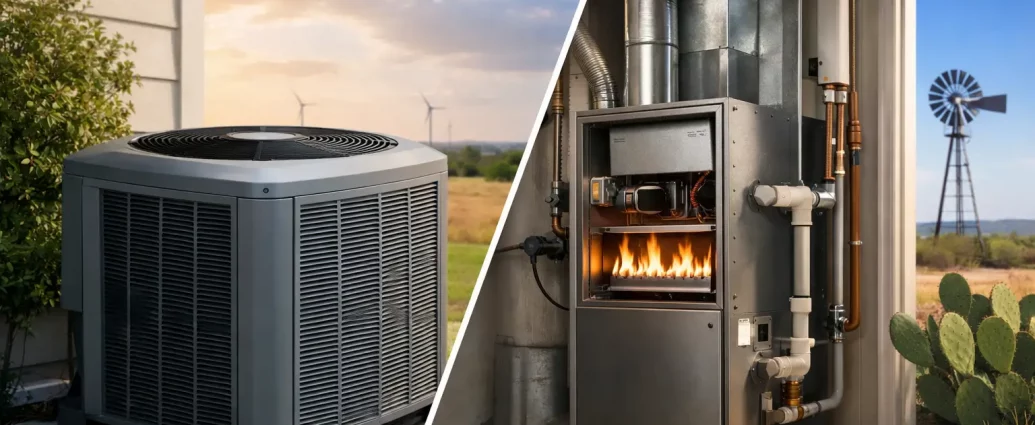
A furnace creates heat, usually by burning gas or using electric resistance heat, and pushes that warm air through your duct system. A heat pump works differently. It moves heat instead of generating it directly, which is why it can cool your home in summer and heat it in winter from the same system.
That difference matters in South Texas. Because our winters are generally mild, a heat pump can handle the heating load in many homes without struggling for most of the season. You also get air conditioning built in, so one system covers both jobs.
A furnace still has its place. If you already have gas service, prefer hotter supply air, or live in a home with heating expectations shaped by colder climates, a furnace may feel more familiar. But comfort preference and climate fit aren’t always the same thing.
Why heat pumps make sense in Corpus Christi
In this market, heat pumps often line up well with how people actually use their HVAC systems. Most homeowners here spend far more on cooling than on heating over the course of a year. That means a system that handles both efficiently can be a strong value.
A heat pump is usually the more efficient choice in mild winter conditions. Since it transfers heat rather than creating it through combustion, it can deliver lower heating costs than many furnace setups when outdoor temperatures stay within a moderate range. That’s a big reason so many homeowners looking for energy-efficient upgrades start with heat pumps.
There’s also a practical side. Fewer households in our area want to maintain separate heating and cooling equipment when one properly sized system can do both. If you’re replacing an aging central AC and heating setup at the same time, a heat pump can simplify the equipment decision.
Modern systems have also come a long way. Variable-speed and inverter-driven heat pumps offer more even temperatures, quieter operation, and better humidity control than older single-stage equipment. For South Texas homes where indoor moisture can be just as frustrating as heat, that matters.
When a furnace may still be the right call
A furnace isn’t outdated. It’s just more situational here.
If your home already has a dependable gas line and a furnace-friendly setup, replacing like for like can sometimes keep installation simpler. In some houses, especially older ones, homeowners also prefer the feel of furnace heat because the air coming from the vents tends to feel hotter than air from a heat pump.
That warmer supply air can make a difference in perceived comfort during a cold front. Even if a heat pump is maintaining the thermostat setting, some people still describe furnace heat as more immediate. That’s not necessarily a performance issue. It’s often about preference.
There’s also the cold-weather argument. In regions with long freezing winters, furnaces often have a clear advantage. In Corpus Christi, that advantage is smaller because hard freezes aren’t the norm. Still, if you want a system centered primarily on heating strength and you’re less concerned about year-round efficiency, a furnace can be a reasonable fit.
Upfront cost vs monthly cost
This is where heat pump vs furnace usually gets real for homeowners.
A furnace by itself doesn’t solve cooling, so if you’re comparing full-home comfort systems, you need to look at the whole setup. A furnace paired with central AC isn’t the same purchase as a standalone furnace replacement in a home that already has working cooling equipment. A heat pump combines heating and cooling in one matched system, which can change the cost picture.
In many cases, the furnace may look cheaper at first if you’re only looking at heating equipment. But over time, a properly sized heat pump can reduce energy use, especially in a climate where cooling season dominates and winter temperatures are moderate.
That’s why the cheapest option up front isn’t always the best value. Equipment efficiency, installation quality, duct condition, and thermostat controls all affect what you actually pay month to month.
Installation matters more than most buyers expect
Two homes on the same street can get different results from the same equipment. That usually comes down to design and installation.
A heat pump that’s oversized can short cycle, lose efficiency, and leave humidity problems behind. A furnace installed on undersized ductwork may deliver uneven temperatures and poor airflow. In both cases, the system gets blamed when the real problem is sizing or setup.
That’s why load calculations, duct evaluation, and product matching matter before anyone talks about brand, tonnage, or efficiency ratings. Honest guidance should start with how your house performs, not with whatever unit happens to be in stock.
For South Texas homes, humidity control deserves special attention. If your system cools too fast without running long enough to remove moisture, comfort drops even when the thermostat says the house is cool. A well-selected heat pump system can do a strong job here, especially with variable-speed equipment, but only if it’s chosen and installed correctly.
What about dual fuel systems?
There’s a middle ground that deserves attention. A dual fuel system combines a heat pump with a gas furnace. The heat pump handles the lighter heating load and cooling, while the furnace takes over during colder outdoor temperatures.
For some homeowners, this offers the best of both worlds. You get the efficiency of a heat pump during typical South Texas weather and the stronger heat output of a furnace when a winter front moves in. It can be a smart option for larger homes, households sensitive to comfort swings, or buyers who want flexibility.
The trade-off is cost and complexity. You’re combining two technologies, so the system design and installation need to be right. It’s not necessary for every home, but it’s worth discussing when comfort expectations are high or gas service is already available.
Which system is better for your home?
If your priority is year-round efficiency, lower energy use in a mild climate, and one system that can both heat and cool, a heat pump is often the stronger choice in South Texas.
If your priority is warmer-feeling air from the vents, you already have gas infrastructure, or you’re replacing an existing heating setup where a furnace keeps the project straightforward, a furnace may still make sense.
If you want a balance of efficiency and cold-weather backup, dual fuel deserves a look.
That’s the honest answer. There’s no single winner for every house. But in Corpus Christi, heat pumps usually deserve serious consideration first because they fit the local climate so well.
How to make the right choice without overpaying
The best buying decision usually starts with three questions. First, how much of your annual HVAC use is really tied to cooling versus heating? Second, is your current duct system in good enough shape to support new equipment properly? Third, are you buying for the lowest upfront number or the best long-term value?
Those answers point the project in the right direction quickly. A budget-conscious homeowner may still choose a high-efficiency heat pump if the monthly savings justify it. Another homeowner may choose a furnace and AC combination because of existing gas service and household comfort preferences. Neither choice is wrong when it matches the home and the expectations.
For buyers who want trusted local guidance, factory-backed warranties, and support after the sale, it helps to work with a dealer that understands product selection and service, not just transactions. That’s especially true when comparing options like MRCOOL heat pump systems, central equipment, or ductless upgrades for garages, additions, and hard-to-condition spaces.
A good HVAC decision should feel clear by the time you sign off on it. If it feels rushed or vague, ask more questions. The right contractor or dealer won’t mind.
If you’re stuck on heat pump vs furnace, think less about what sounds familiar and more about what fits your house, your utility bills, and the way South Texas weather actually behaves. The right system should make your home easier to live in, not harder to figure out later.
When homeowners start comparing heat pump vs furnace options in Corpus Christi, the biggest surprise is how differently these systems behave in a Gulf Coast climate. A furnace is traditionally seen as the stronger heating system, but in South Texas, the conversation shifts because heating demand is low and cooling demand dominates. That’s why the heat pump vs furnace decision is less about raw heating power and more about how each system fits the way local homes actually use energy throughout the year.
In a warm, humid region like ours, a heat pump often delivers better day‑to‑day comfort because it runs longer, steadier cycles that help control indoor moisture. This is something a furnace can’t do, because a furnace only heats — it doesn’t manage humidity. When comparing heat pump vs furnace performance in real Corpus Christi homes, humidity control becomes one of the biggest comfort differences, especially in older houses with leaky ducts or insulation gaps.
Another factor in the heat pump vs furnace debate is operating cost. Furnaces can feel powerful, but they rely on combustion or electric resistance heat, both of which cost more to run during mild winters. A heat pump, on the other hand, transfers heat instead of generating it, which is why it can heat efficiently even when outdoor temperatures drop into the 40s. For most South Texas homeowners, this means lower winter bills and fewer surprises on the utility statement.
There are still situations where a furnace makes sense, especially in homes with existing gas lines or homeowners who prefer hotter supply air. But when you look at the full picture — climate, comfort, efficiency, and long‑term cost — the heat pump vs furnace comparison usually leans toward the heat pump for Corpus Christi and the surrounding coastal areas. It’s not that furnaces are outdated; it’s that they’re designed for climates with long, harsh winters, not regions where the cooling season lasts most of the year.
For homeowners replacing both heating and cooling equipment at the same time, the heat pump vs furnace choice becomes even clearer. A heat pump simplifies the system by handling both jobs in one unit, reducing maintenance and eliminating the need for separate heating equipment. When paired with modern inverter technology, a heat pump can deliver quieter operation, more even temperatures, and better year‑round comfort than many furnace‑based setups.
When homeowners start researching the heat pump vs furnace question in Texas, they often expect the furnace to be the obvious winner for heating. But in reality, the climate in Corpus Christi and the surrounding coastal counties flips the script. The heating load is so small compared to the cooling load that the entire heat pump vs furnace debate becomes more about year‑round comfort, humidity control, and operating cost than about raw heating power. This is why so many South Texas homes are shifting toward heat pumps, even in neighborhoods that traditionally relied on gas furnaces.
One of the biggest advantages heat pumps have in the heat pump vs furnace comparison is how they handle humidity. Corpus Christi is humid almost year‑round, and a furnace does nothing to remove moisture from the air. A heat pump, especially a modern inverter model, runs longer, steadier cycles that naturally pull moisture out of the home. This creates a more comfortable indoor environment, reduces the workload on the cooling system, and helps prevent mold and musty odors — issues that are common in older South Texas homes. When comparing heat pump vs furnace performance in real-world Corpus Christi houses, humidity control is often the deciding factor.
Another major point in the heat pump vs furnace discussion is energy efficiency. Furnaces generate heat through combustion or electric resistance, which is inherently less efficient than transferring heat. Heat pumps move heat from outdoors to indoors, even when temperatures drop into the 40s. Because Corpus Christi rarely experiences long stretches of freezing weather, a heat pump can operate at high efficiency all winter long. This is why the heat pump vs furnace cost comparison almost always favors the heat pump in South Texas — homeowners simply don’t need the extreme heating power that furnaces are designed for.
That said, furnaces still have their place in the heat pump vs furnace decision. Some homeowners prefer the hotter supply air that a furnace produces. Others already have natural gas lines installed and want to keep their existing setup simple. And in larger homes with older ductwork, a furnace may provide more stable airflow if the system was originally designed around high‑temperature heating. These are valid reasons to choose a furnace, even in a warm climate. The key is understanding that the heat pump vs furnace choice isn’t about which system is “better,” but which system fits the home’s design and the homeowner’s comfort preferences.
When evaluating long‑term value, the heat pump vs furnace comparison becomes even more interesting. A heat pump replaces both the furnace and the air conditioner, simplifying the system and reducing the number of components that can fail. This can lead to lower maintenance costs over time. Furnaces, on the other hand, often last longer because they run only during the winter. But in Corpus Christi, where cooling season dominates, the combined efficiency of a heat pump often outweighs the longevity advantage of a furnace. This is why many HVAC professionals in South Texas recommend heat pumps for full system replacements.
Another factor in the heat pump vs furnace debate is indoor air quality. Furnaces can dry out the air during winter, which can cause discomfort for some homeowners. Heat pumps maintain more balanced humidity levels, which can improve comfort and reduce the need for humidifiers. In a coastal climate where humidity is already high, this balance becomes important. The heat pump vs furnace choice affects not just temperature, but the overall feel of the home.
Finally, the heat pump vs furnace decision often comes down to future‑proofing. As energy standards tighten and electric heating becomes more common nationwide, heat pumps are becoming the default choice in many regions. They offer high efficiency, lower emissions, and compatibility with modern smart thermostats and zoning systems. For homeowners in Corpus Christi looking to upgrade their HVAC system, choosing a heat pump can be a smart long‑term investment that aligns with both climate and technology trends.
Choosing between a heat pump vs furnace in Corpus Christi comes down to understanding how each system performs in a warm, coastal climate where cooling dominates the utility bill and winter cold snaps are short‑lived. A furnace can still deliver strong, hot air when a front moves in, but the long‑term comfort and efficiency advantages of a heat pump line up better with how South Texas homes actually use their HVAC systems. When you compare heat pump vs furnace performance across a full year of Gulf Coast weather, the heat pump often provides steadier temperatures, better humidity control, and lower operating costs during the mild winter season.
That doesn’t mean a furnace is the wrong choice. In homes with existing gas service, older ductwork, or homeowners who simply prefer hotter supply air, a furnace can still be the right fit. The key is matching the system to the house, not forcing the house to match the system. The heat pump vs furnace decision becomes clearer once you look at your duct condition, insulation, comfort expectations, and how much of your energy use truly comes from cooling versus heating.
For many Corpus Christi homeowners, the heat pump vs furnace comparison ends with the heat pump taking the lead because it handles both heating and cooling in one efficient package. But the best choice is always the one that fits your home’s design, your comfort preferences, and the way South Texas weather behaves. When the system is sized correctly, installed correctly, and matched to your home’s needs, either option can deliver reliable comfort — the difference is how well it aligns with your climate and your long‑term goals.
Need help choosing between a heat pump and a furnace in Corpus Christi?
Every home in South Texas is different — and the right system depends on your ductwork, insulation, comfort preferences, and budget. If you want a clear, honest recommendation based on your home’s layout and the way our Gulf Coast climate behaves, we can help.
Your Bargain Mart — Authorized MRCOOL Dealer Serving Corpus Christi, Portland, Rockport, Aransas Pass, Ingleside, and all of South Texas.
✔ Free system replacement estimates ✔ Heat pump and furnace installation ✔ Honest guidance based on your home and climate ✔ 30+ years HVAC experience
Call or text: (361) 271‑3513 Visit us: 325 N Staples St, Corpus Christi, TX 78401
u003cstrongu003eIs a heat pump or a furnace better for homes in Corpus Christi?u003c/strongu003e
For Corpus Christi and most of South Texas, a heat pump is usually the better fit. Winters are mild, and the cooling season dominates. A heat pump handles both heating and cooling in one system, which matches how homes in this region actually use HVAC equipment.
u003cstrongu003eDo heat pumps work well in South Texas winters?u003c/strongu003e
Yes. South Texas rarely sees extended freezing temperatures, and modern heat pumps easily maintain indoor comfort. A properly sized heat pump can heat a home in Corpus Christi without needing backup heat strips most of the year.
u003cstrongu003eDoes a furnace heat faster than a heat pump?u003c/strongu003e
Yes — furnaces deliver hotter supply air, which feels more intense. Some homeowners prefer this “blast of heat,” even though a heat pump can maintain the same thermostat temperature. It’s a comfort preference, not a performance issue.
u003cstrongu003eWhich system is cheaper to run in Texas: a u003c/strongu003eheat pump or a u003cstrongu003efurnace?u003c/strongu003e
A heat pump is usually cheaper to operate because it transfers heat instead of generating it. In mild winter climates like Corpus Christi, a heat pump’s efficiency makes it more cost‑effective than gas or electric furnaces.
u003cstrongu003eIs a furnace still a good choice in Texas?u003c/strongu003e
Yes — especially if:u003cbru003eYou already have a gas lineu003cbru003eYou prefer hotter supply airu003cbru003eYour home was designed around furnace airflowu003cbru003eYou want a heating‑focused system rather than year‑round efficiencyu003cbru003eFurnaces aren’t outdated; they’re just less necessary in warm climates.
u003cstrongu003eDo heat pumps control humidity better than furnaces?u003c/strongu003e
Yes. Modern inverter heat pumps run longer, steadier cycles that improve humidity control — a major benefit in Corpus Christi’s humid climate. Furnaces don’t remove moisture; they only heat the air.
u003cstrongu003eWhich lasts longer: a heat pump or a furnace?u003c/strongu003e
Both can last a long time when installed correctly. Furnaces often have fewer moving parts, but heat pumps run year‑round. The real difference comes from installation quality, duct condition, and proper sizing — not the equipment type.
u003cstrongu003eWhat about dual‑fuel systems in Texas?u003c/strongu003e
u003cstrongu003eIs a heat pump better for energy efficiency in Corpus Christi?u003c/strongu003e
Yes. Because cooling is the dominant energy use in South Texas, a heat pump’s year‑round efficiency often results in lower utility bills compared to a furnace/AC combination.
u003cstrongu003eHow do I choose between a heat pump and a furnace for my home?u003c/strongu003e
Ask yourself:u003cbru003eDo you want the lowest operating cost? → Heat pumpu003cbru003eDo you prefer hotter air from the vents? → Furnaceu003cbru003eDo you want one system that handles heating and cooling? → Heat pumpu003cbru003eDo you already have natural gas installed? → Furnace may be simpleru003cbru003eClimate, comfort preference, and existing equipment all matter.
People also asked:
u003cstrongu003eIs a heat pump vs furnace better for Texas homes?u003c/strongu003e
In Texas, a heat pump is usually the better choice because winters are mild and the cooling season dominates. The u003cstrongu003eheat pump vs furnaceu003c/strongu003e comparison shifts in warm climates, where efficiency and humidity control matter more than extreme heating power.
u003cstrongu003eDoes a heat pump vs furnace cost more to run in South Texas?u003c/strongu003e
u003cstrongu003eHow long does a heat pump vs furnace last in a warm climate?u003c/strongu003e
Both systems can last a long time, but usage patterns differ. A furnace runs only in winter, while a heat pump runs year‑round. In the u003cstrongu003eheat pump vs furnaceu003c/strongu003e lifespan comparison, installation quality and duct condition matter more than the equipment type.
Which is more efficient: a heat pump vs furnace?
u003cstrongu003eDoes a heat pump vs furnace provide better humidity control?u003c/strongu003e
u003cstrongu003eIs a heat pump vs furnace better for older homes?u003c/strongu003e
It depends on ductwork and insulation. Older homes with leaky ducts may benefit from a furnace’s hotter supply air, but many still perform well with a modern heat pump. The u003cstrongu003eheat pump vs furnaceu003c/strongu003e choice depends on airflow design and home condition.
u003cstrongu003eWhich system heats faster: heat pump vs furnace?u003c/strongu003e
A furnace heats faster because it produces hotter air. In the u003cstrongu003eheat pump vs furnaceu003c/strongu003e heating speed comparison, the furnace wins — but the heat pump still maintains thermostat temperature efficiently in mild climates.
u003cstrongu003eIs a heat pump vs furnace better for long‑term value?u003c/strongu003e
Sources:
U.S. Department of Energy — Heat Pump Basics
ENERGY STAR — Furnaces & Heating Efficiency
In short, heat pump vs furnace,corpus christi,cooling season,combustion heat,inverter driven heat pump,energy efficient upgrades,central ac,gas service,dual fuel system,gas furnace,heating and cooling system,central equipment,cooling versus heating,high efficiency heat pump,furnace and ac combination rewards a careful, informed approach. Use this heat pump vs furnace,corpus christi,cooling season,combustion heat,inverter driven heat pump,energy efficient upgrades,central ac,gas service,dual fuel system,gas furnace,heating and cooling system,central equipment,cooling versus heating,high efficiency heat pump,furnace and ac combination guide as a starting framework, adapt it to your situation, and re-check the facts whenever the topic moves.