
Honestly, A ductless unit that’s too small will run hard and still leave hot spots behind. One that’s too large can short cycle, waste energy, and miss the comfort balance you expected. That’s why a solid guide to ductless system sizing matters before you buy, especially in Corpus Christi and across South Texas where heat, humidity, and room use can change the answer fast.
I’ll be straight with you — For many homeowners, sizing looks simple at first. You measure the room, check the square footage, and match it to a BTU chart. That can be a useful starting point, but it’s not the full picture. Ductless systems respond to more than floor area, and the difference between a system that feels right and one that becomes a constant frustration usually comes down to the details.
Why a guide to ductless system sizing matters
Ductless sizing affects comfort, efficiency, noise, and equipment life. When the indoor unit is matched properly to the room and the outdoor unit is matched properly to the full load, the system can maintain steady temperature without constantly ramping up and down.
That matters even more in South Texas. A bonus room with west-facing windows in Corpus Christi doesn’t behave like an interior bedroom with good insulation. A garage gym, a detached shop, and a sunroom may all have similar square footage, but their cooling needs can be completely different.
A lot of buyers assume bigger is safer. In HVAC, that’s often the wrong move. Oversized ductless equipment can cool the air quickly without running long enough to remove moisture well. You may get a colder room, but not a more comfortable one. In humid climates, that trade-off is a real problem.
Start with room size, but don’t stop there
The most common first step in any guide to ductless system sizing is square footage. That’s fine as a baseline. Smaller bedrooms and offices may need a lower BTU range, while open living areas, garages, and larger additions usually need more capacity.
Still, square footage alone can miss the mark. Ceiling height changes the air volume in the room. Large windows add heat gain. Older insulation lets more outdoor heat push inside. A kitchen creates more internal heat than a guest room. Even how many people regularly use the space affects the load.
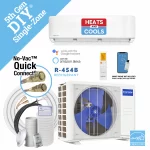
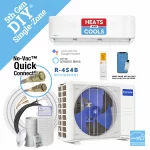
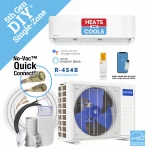
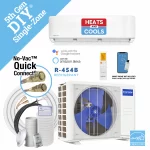
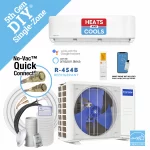
If you’re comparing systems for a single-zone mini-split, think beyond the room dimensions on paper. Ask how the room actually lives during the hottest part of the day. Does afternoon sun hit one full wall? Is the space above a garage? Does it stay occupied for long stretches? These factors matter because ductless comfort is about load, not just size.
Factors that change BTU needs
Sun exposure is a major one in South Texas homes. Rooms facing west or south often need more cooling capacity than shaded rooms of the same size. Window count matters too, especially with older glass.
Insulation and air leakage also shift the answer. A newer addition with tight construction may hold comfort better than an older room with thin insulation and gaps around doors. If the room has a lot of infiltration, the system has to work harder to keep up.
Then there’s room function. Bedrooms tend to have lower internal heat loads. Home offices with computers, workshop spaces, and rooms with frequent door openings may need a different approach. Garages are especially tricky because they often lack the insulation quality of the main house.
Single-zone vs multi-zone sizing
One of the biggest mistakes people make is assuming that adding up indoor unit sizes gives the whole answer for the outdoor unit. With multi-zone systems, the relationship is more nuanced.
A single-zone system is usually more straightforward. One indoor unit serves one area, and the outdoor unit is selected to match that load closely. If you’re conditioning a bedroom, office, or detached room, this can be the cleanest and most efficient setup.
A multi-zone system serves several indoor units from one outdoor unit. That can be a smart solution when you want comfort in multiple rooms without extending ductwork. But each room still needs to be sized correctly, and the outdoor unit has to be selected based on the expected combined demand, not just the total nameplate numbers.
This is where professional guidance saves money. Not every room will call for full output at the same time, but that doesn’t mean you can undersize the outdoor section and hope for the best. The correct match depends on layout, room usage, occupancy patterns, and manufacturer specs.
Why bedroom counts can be misleading
Homeowners sometimes shop by house size or number of bedrooms. That’s understandable, but ductless design doesn’t work like a one-size-fits-all central system estimate. A three-bedroom home with open living space may need a very different ductless layout than another three-bedroom home with chopped-up rooms, higher ceilings, and more sun exposure.
The same issue comes up with additions. A 500-square-foot addition might sound like it needs one standard answer, but if it has vaulted ceilings and three large windows facing the afternoon sun, the actual load can land much higher than expected.
Sizing mistakes that cost homeowners later
Undersizing usually shows up first in extreme weather. The system may seem acceptable on mild days, then struggle during peak summer heat. The room takes longer to cool, the unit runs constantly, and utility savings never really appear.
Oversizing is less obvious at first, but it can be just as frustrating. The system cools fast, shuts off often, and leaves humidity hanging in the air. People describe the room as cold but clammy. Over time, short cycling can also add wear.
Another common mistake is ignoring the building envelope. If the room has poor insulation, leaky windows, or heavy solar gain, replacing a correctly sized unit with a larger one may not solve the real issue. Sometimes the best result comes from pairing proper sizing with basic room improvements.
There’s also the placement issue. Even the right capacity can perform poorly if the indoor head is installed where airflow is blocked or unevenly distributed. Sizing and installation work together.
How pros actually size a ductless system
A proper sizing process looks at the room and the home, not just the sales chart. It considers square footage, ceiling height, insulation values, window area, orientation, occupancy, and use of the space. In more complex jobs, the full home layout and zone interaction matter too.
That’s why manufacturer-backed recommendations and local HVAC experience matter. South Texas cooling demands aren’t theoretical. Salt air, long cooling seasons, humidity, and room-by-room comfort expectations all affect what works well here.
For homeowners choosing between DIY mini-splits and professionally installed systems, this part is worth slowing down for. DIY-friendly equipment can be a great option in the right application, but sizing still needs to be right from the start. A simple room may be easy to match. A multi-room plan, garage conversion, or mixed-use property usually benefits from expert review.
What to have ready before you shop
If you want a faster and more accurate recommendation, gather the basics first. Room dimensions are the starting point, but include ceiling height, window count, sun exposure, insulation condition, and the intended use of the room. Photos help too, especially for unusual spaces like workshops, enclosed patios, and upstairs bonus rooms.
If you’re considering more than one indoor unit, sketch the layout and identify which rooms stay occupied most often. That helps determine whether a single-zone or multi-zone approach makes more sense.
You should also be honest about your priorities. Some buyers want the lowest upfront cost. Others care more about quiet operation, better humidity control, or room-by-room flexibility. The right size isn’t separate from those goals. It supports them.
Getting the right fit for South Texas homes
In this market, ductless systems are a strong option for room additions, older homes, detached spaces, garages, and targeted comfort upgrades. But the equipment only performs as well as the sizing behind it.
That’s where working with a local, service-oriented dealer makes a difference. Your Bargain Mart helps homeowners sort through MRCOOL options with honest sizing support, real product guidance, and local follow-through if installation or service is needed later. That kind of support matters because buying the box is only part of the decision. Getting the right system for the room is what protects comfort, efficiency, and long-term value.
If you’re comparing ductless options right now, treat sizing as the first real decision, not the last one. A few extra questions up front can save you from years of uneven comfort, high humidity, or a system that never feels quite right.
Further reading: Guide to ductless system sizing on mayoclinic.org.
In short, guide to ductless system sizing rewards a careful, informed approach. Use this guide to ductless system sizing guide as a starting framework, adapt it to your situation, and re-check the facts whenever the topic moves.