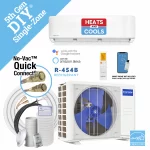
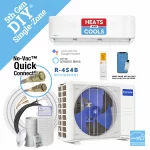
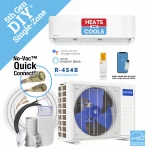
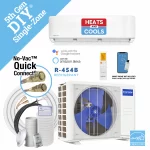
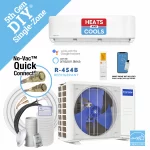
In my experience, if you’re pricing out cooling for a garage, addition, shop, or a room that never seems comfortable, the question usually gets real fast: is MRCOOL DIY worth it, or is it just a way to trade installer costs for future headaches? For many South Texas homeowners, it can absolutely be worth it. But only if the space is a good fit, the sizing is right, and you go in knowing where DIY saves money and where it doesn’t.
In my experience, MRCOOL DIY systems became popular for a reason. They give homeowners a way to add ductless heating and cooling without committing to a full traditional install. That appeals to budget-conscious buyers, people improving detached spaces, and anyone tired of waiting on expensive quotes just to cool one problem room. Still, a smart purchase isn’t just about the price on the box. It’s about how the system performs, what support is available after the sale, and whether the install is actually within your comfort level.
Is MRCOOL DIY worth it for most homeowners?
The honest answer is that it depends on your project.
If you need efficient heating and cooling for a single room, garage apartment, workshop, enclosed patio, or small addition, MRCOOL DIY is often a strong value. The equipment is designed to reduce installation complexity, and compared with many traditional mini-split setups, it can lower your total project cost in a meaningful way.
If you’re trying to condition an entire home, solve major airflow issues, or replace a complex central system, DIY may not be the best fit. At that point, equipment selection, load calculation, and installation details matter more, and a professionally installed system may give you better long-term results.
The key point is simple: MRCOOL DIY isn’t a gimmick, but it’s not a universal answer either.
Where MRCOOL DIY gives you real value
The biggest reason people consider MRCOOL DIY is labor savings. Traditional HVAC installation can be a major part of the total cost. A system that’s engineered for homeowner installation can reduce that burden, especially on straightforward single-zone applications.
That matters in South Texas, where comfort isn’t optional for much of the year. If you have a bonus room that stays hot, a garage gym you actually want to use in July, or a home office that never gets enough cooling from the main system, a ductless unit can solve a focused problem without forcing a whole-home replacement.
There’s also the efficiency angle. Mini-splits are popular because they avoid duct losses and offer targeted comfort. Instead of overcooling the entire house to make one room bearable, you can condition only the area you use. Over time, that can make the investment easier to justify.
Another point that gets overlooked is accessibility. Some homeowners are comfortable handling mounting, line routing, electrical coordination, and startup steps. For them, a DIY-friendly system offers control over the timeline and can speed up the project.
The cost question isn’t just equipment vs installation
When people ask whether MRCOOL DIY is worth it, they usually mean one thing: will I actually save money?
Often, yes. But the savings depend on doing the right project with the right system.
If you buy a DIY mini-split for a properly sized single room and install it correctly, the value can be excellent. You avoid a large chunk of labor cost and still get a modern, energy-efficient comfort solution.
If you guess on sizing, mount the unit in the wrong location, underestimate the electrical work, or run into drainage problems, your “savings” can disappear quickly. The same goes for buyers who choose DIY when what they really need is a multi-zone design or a different product category entirely.
This is why product guidance matters. The cheapest path upfront isn’t always the best value over five or ten years. A slightly better-matched system usually beats an impulse purchase that ends up undersized, oversized, or unsupported.
What are the trade-offs?
MRCOOL DIY earns attention because it’s more approachable than many HVAC products, but homeowners should still treat it like real HVAC equipment, not a weekend gadget.
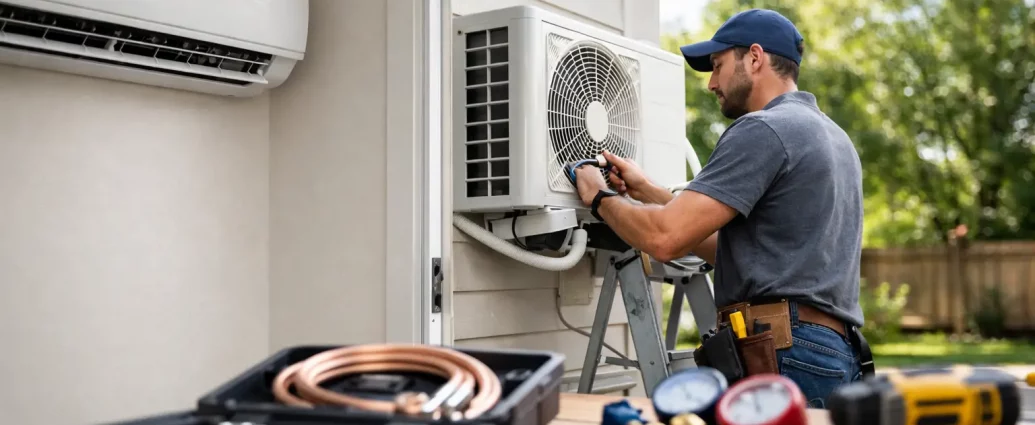
The first trade-off is installation confidence. Even with a DIY-oriented design, you still need to be comfortable reading instructions, planning line routing, mounting indoor and outdoor components, and making sure the electrical side is handled correctly. Some buyers enjoy that. Others start strong and then realize halfway through that they’d rather have a licensed pro finish the job.
The second trade-off is troubleshooting. With any heating and cooling system, service support matters. Not every HVAC company wants to work on self-installed equipment, and that becomes a problem when you need diagnostics, maintenance, or repairs later. That issue alone can change the value equation.
The third trade-off is application limits. DIY mini-splits shine in certain spaces. They’re less ideal when the project involves complicated zoning, difficult layouts, or broader system design concerns. In those cases, professional-grade solutions usually make more sense.
Is MRCOOL DIY worth it in South Texas?
For many local homeowners, yes – especially when the goal is targeted comfort in a hot climate.
Corpus Christi and the surrounding areas put a serious demand on air conditioning systems. Equipment has to handle long cooling seasons, humidity, and real-world daily use. That makes reliability and proper sizing more important than marketing promises.
A well-chosen MRCOOL DIY unit can be a practical answer for spaces that central air doesn’t serve well. Garages, converted rooms, shops, and detached buildings are common examples. These are exactly the kinds of projects where homeowners often want a cost-effective option without sacrificing comfort.
That said, South Texas conditions also punish bad installs. Poor drainage planning, weak mounting, incorrect placement, and sizing mistakes become obvious quickly. In a mild climate, you might get away with a few shortcuts. Here, you usually won’t.
When MRCOOL DIY is probably worth it
It’s usually a smart buy when you have a clearly defined space, realistic expectations, and a plan for proper setup. A single-zone application with good access and a homeowner who’s comfortable with hands-on work is often the sweet spot.
It’s also worth serious consideration if local support exists after the sale. That piece matters more than most people realize. Buying equipment is one decision. Living with it for years is another.
This is one reason many buyers prefer working with an authorized local dealer instead of ordering from a faceless seller. Help with sizing, product selection, warranty questions, and service options can make the difference between a good experience and a frustrating one. In our market, that support is especially valuable because many contractors simply don’t want to touch DIY systems. Your Bargain Mart stands apart by helping homeowners with product guidance and ongoing support for MRCOOL DIY units, which gives buyers a level of confidence that online-only sellers can’t match.
When it may not be worth it
If you’re not confident in handling the installation details, DIY may stop being a bargain pretty quickly. The same is true if your project requires electrical work, wall penetrations, condensate planning, and equipment placement that feel outside your comfort zone.
It may also not be worth it if your home needs a larger comfort strategy, not just a single-room fix. If several areas are uncomfortable, humidity control is poor, or your existing system is failing across the whole house, a DIY mini-split could end up treating the symptom instead of the problem.
And if you’re choosing DIY solely because it looks cheaper than every other option, slow down. Price matters, but fit matters more. The right system for the wrong application is still the wrong purchase.
How to decide before you buy
Start with the space itself. What are you trying to heat and cool, and how often will you use it? A garage workshop used every weekend has different needs than a guest room used a few times a year.
Next, get serious about sizing. Bigger isn’t automatically better, and smaller isn’t a bargain if it can’t keep up. If you’re unsure, ask for guidance before ordering equipment.
Then be honest about installation. Can you manage the project with confidence, or would you rather have help? There’s no shame in choosing professional installation. A good outcome is what matters.
Finally, think past day one. If the system ever needs service, who will support it? That question should be answered before you buy, not after the unit is on the wall.
MRCOOL DIY is worth it for a lot of homeowners because it fills a real need: efficient comfort without the full cost of a traditional install. But the best value comes from matching the system to the space, the budget, and the level of support behind it. If you make that decision carefully, a DIY mini-split can be one of the more practical upgrades you make to your home.
Further reading: Is mrcool diy worth it on nytimes.com?
In short, is mrcool diy worth it rewards a careful, informed approach. Use this is mrcool diy worth it guide as a starting framework, adapt it to your situation, and re-check the facts whenever the topic moves.