
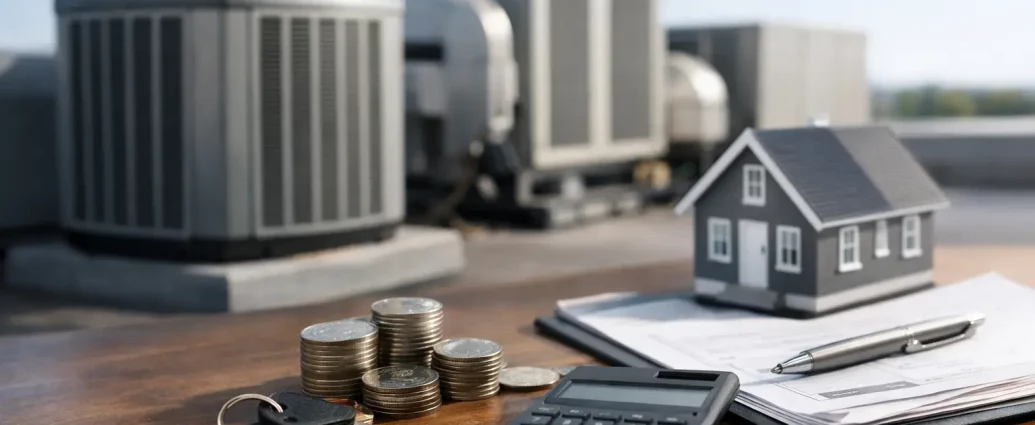
That old system usually picks the worst time to fail – right before a South Texas heat wave, in the middle of a humidity spike, or when the electric bill is already running high. A good guide to HVAC equipment financing can help you move faster, choose better equipment, and avoid settling for a short-term fix that costs more later.
For many homeowners, financing is not about stretching beyond their means. It is about protecting cash flow while getting the right system for the home. Whether you are replacing a worn-out central unit, adding comfort to a garage or shop, or upgrading to a high-efficiency mini-split, the financing side matters just as much as the equipment choice.
Why a guide to HVAC equipment financing matters
HVAC is one of those purchases where waiting can get expensive. A struggling system can drive up energy bills, cool unevenly, and put more stress on components that are already near the end of their life. If you delay too long, you may end up paying for repeated service calls and still need replacement soon after.
Financing gives homeowners room to make a smarter decision. Instead of choosing the cheapest unit available just to get cold air back on, you may be able to consider a better fit for the space, stronger efficiency, or a system with features that improve long-term comfort. That could mean a heat pump instead of a straight cool system, a properly sized air handler, or a ductless setup for a room addition where extending ductwork makes little sense.
That said, financing is only useful when the terms are clear and the monthly payment fits your real budget. Low monthly numbers can look attractive until you account for the full repayment amount, interest, or fees.
What HVAC equipment financing usually covers
In most cases, HVAC financing can apply to more than just the outdoor condenser. Depending on the program and the dealer, it may include the full equipment package, installation labor, accessories, and related components needed to complete the job correctly.
That is important because HVAC systems work as a system, not as isolated parts. If your condenser is replaced but the indoor equipment, coil, controls, or line set are not matched properly, performance can suffer. Financing can make it easier to handle the whole project at once instead of patching around the problem.
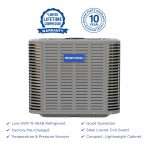
For homeowners in Corpus Christi and across South Texas, that may include central air systems, heat pumps, furnaces, coils, air handlers, and ductless mini-splits for spaces that need targeted comfort. In some situations, accessories like thermostats or other supporting components may also be part of the financed amount.
The most common financing options
The right financing path depends on your timeline, credit profile, and how long you plan to stay in the home. There is no single best option for everyone.
Dealer financing
Dealer financing is often the most direct route because it is tied to the purchase process. You choose the equipment, review available payment options, submit an application, and see what terms you qualify for. For homeowners trying to replace a failed unit quickly, this can be much more practical than shopping for outside funding first.
The biggest advantage is convenience. The trade-off is that available terms, rates, and promotions vary. Some plans work well for short repayment periods, while others are better for spreading the cost over a longer term.
Credit cards
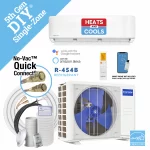
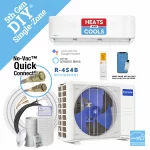
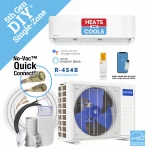
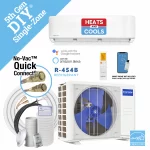
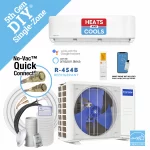
A credit card can make sense for smaller HVAC purchases, such as a single-zone mini-split or an accessory upgrade, especially if you already have a promotional rate and a clear payoff plan. The risk is obvious: if the balance lingers, interest can turn a manageable purchase into a costly one.
For major system replacements, credit cards are usually the more expensive path unless the homeowner has a very specific repayment strategy.
Personal loans
Some homeowners prefer personal loans because they can compare terms independently and keep the equipment purchase separate from dealer-offered financing. That can be useful if you want to arrange funding before you start shopping.
The downside is that approval, funding time, and rates depend heavily on your credit and lender requirements. If your AC is out in July, extra steps may not be ideal.
Home equity options
For larger projects, some homeowners use home equity financing. This can offer competitive rates, but it is generally slower and involves more paperwork. It is often better suited for planned upgrades than emergency replacements.
What affects your approval and terms
Lenders typically look at a few basic factors: credit score, income, existing debt, and the amount being financed. They may also consider payment history and overall credit usage.
A stronger credit profile may help you qualify for lower rates or better promotional terms, but approval is not the only question. You also need to look at whether the payment makes sense month to month. A plan that technically fits on paper can still strain your household budget if you are already carrying other large obligations.
It also helps to know that financing terms may differ based on the size of the project. A simple replacement may be easier to structure than a more complex install involving multiple zones, upgraded electrical work, or a full system redesign.
How to compare financing without getting distracted by the monthly payment
The monthly payment gets the most attention, but it should not be your only benchmark. A lower payment often means a longer term, and a longer term can mean paying much more overall.
When comparing financing offers, ask for the total amount financed, the interest rate if one applies, the repayment period, and the total expected cost over the life of the loan. Also ask whether there are penalties, deferred interest conditions, or fees that only show up after the promotional period ends.
This is where honest pricing matters. If the equipment quote is inflated, even a decent financing plan can still leave you overpaying. Good financing should support a fair equipment purchase, not hide a bad one.
Financing and equipment choice should happen together
One of the biggest mistakes homeowners make is separating the financing conversation from the equipment conversation. They decide on a unit first, then scramble to make the numbers work. That approach can lead to poor sizing, rushed decisions, or choosing a system based only on sticker price.
A better approach is to look at both at the same time. If a higher-efficiency system costs more upfront but lowers monthly utility bills, the difference may be easier to justify when spread over manageable payments. On the other hand, not every home needs the top-tier option. It depends on square footage, insulation, duct condition, usage patterns, and whether you are conditioning one room or the entire house.
For example, a homeowner cooling a garage apartment may be better served by a properly sized ductless system than by forcing a central solution into a space that does not need it. A family replacing an aging split system in a primary residence may benefit more from a matched central setup with installation handled correctly from the start.
Why local support matters when financing HVAC equipment
Financing helps you buy equipment. It does not guarantee proper sizing, installation quality, warranty support, or future service. That is why the dealer matters.
A local, service-oriented seller can help you sort through system types, explain what is actually needed for your home, and support the equipment after the sale. That is especially valuable if you are looking at DIY-friendly systems and want to know there is still help available if service is needed later.
For South Texas homeowners, local knowledge matters too. Coastal heat, humidity, salt air exposure, and long cooling seasons put real demands on HVAC equipment. Financing the wrong system is still the wrong system. The goal is to pair a workable payment with equipment that fits the climate and the home.
That is one reason homeowners often prefer working with a company like Your Bargain Mart. Authorized product access, honest pricing, and local service support make the financing decision feel less risky because you are not just buying a box – you are buying accountability.
When financing makes sense and when it may not
Financing often makes sense when the existing system is unreliable, repair costs are stacking up, or the home needs a comfort solution now. It can also be a practical move when stepping up to a more efficient system that may reduce operating costs over time.
It may not be the best choice if the payment will leave no margin in your monthly budget or if a short-term repair can reasonably carry you through while you prepare for replacement. The key is being honest about urgency. Some systems are worth repairing. Others are simply buying time at a poor value.
If you are unsure, ask for both paths: the cost to repair and the cost to replace, along with realistic expectations for future performance. That side-by-side view usually makes the decision clearer.
A good financing decision should leave you with more than approved credit. It should leave you with a system that fits your home, a payment you can live with, and local support you can count on after the install is done.
Further reading: Guide to hvac equipment financing on cnbc.com.
- Why a guide to HVAC equipment financing matters
- What HVAC equipment financing usually covers
- The most common financing options
- What affects your approval and terms
- How to compare financing without getting distracted by the monthly payment
- Financing and equipment choice should happen together
- Why local support matters when financing HVAC equipment
- When financing makes sense and when it may not
In short, guide to hvac equipment financing rewards a careful, informed approach. Use this guide to hvac equipment financing guide as a starting framework, adapt it to your situation, and re-check the facts whenever the topic moves.