If your house feels cool but still sticky, the system is missing the mark. In South Texas, choosing the best heat pumps for humid climates is not just about lowering the temperature. It is about pulling moisture out of the air, holding steady comfort through long cooling seasons, and doing it without driving up your electric bill.
- What makes the best heat pumps for humid climates different
- The features worth paying for
- Best heat pump types for humid climates
- Why sizing matters more than most buyers think
- Where MRCOOL fits for humid-climate homeowners
- Installation can make or break performance
- What homeowners in South Texas should prioritize
That matters in places like Corpus Christi, where heat and humidity can push HVAC equipment harder than many homeowners expect. A heat pump that looks good on paper can still leave rooms damp, short cycle on mild days, or struggle to keep up when outdoor conditions stay hot for weeks at a time. The right choice usually comes down to system design, sizing, and humidity performance more than raw marketing claims.
What makes the best heat pumps for humid climates different
In a humid climate, sensible cooling and latent cooling both matter. Sensible cooling lowers the air temperature. Latent cooling removes moisture. A heat pump that cools fast but does not run long enough can leave indoor air clammy, even when the thermostat says the house is comfortable.
That is why variable-speed and inverter-driven systems often make more sense than basic single-stage equipment. They can run at lower output for longer periods, which helps the coil stay cold and remove more humidity from the air. Instead of blasting on and off, they adjust. That usually means steadier indoor temperature, better moisture control, and less wear from constant cycling.
The air handler and thermostat settings matter too. Humid climates reward systems that are matched correctly and configured for longer, lower-speed operation. Even a strong heat pump can underperform if the blower speed is set too high or the unit is oversized.
The features worth paying for
Not every upgrade is worth the money, but some features make a real difference in humid regions.
Variable-speed compressors are near the top of the list because they allow the system to modulate rather than cycle at full blast every time. Multi-speed or variable-speed indoor blowers also help by slowing airflow when needed to improve dehumidification.
A good SEER2 rating matters, but efficiency alone should not be the deciding factor. In South Texas, comfort complaints often come from moisture, not just heat. A unit with strong part-load performance can be a better fit than one that simply posts a high efficiency number.
A communicating or smart control setup can also help if it is paired with the right equipment. Better controls can manage fan speed and compressor output more precisely. That said, more technology does not automatically mean better results. Reliable equipment, correct sizing, and proper setup still matter more.
Best heat pump types for humid climates
Variable-speed central heat pumps
For whole-home comfort, variable-speed central heat pumps are usually the strongest option. They are especially effective in homes with existing ductwork that is in decent shape. The biggest advantage is consistent runtime at lower speeds, which helps remove moisture without overcooling the house.
This type of system fits many South Texas homeowners because it handles long cooling seasons efficiently and gives a more even feel from room to room. If your current system leaves the home cold in one area and muggy in another, moving to a variable-speed setup can solve more than one problem at once.
Ductless mini-split heat pumps
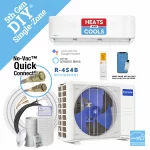
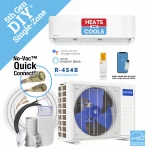
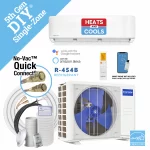
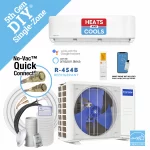
Mini-splits can be an excellent choice for room additions, garages, shops, and areas with no usable ductwork. They are also a smart option when you want zoned comfort without reworking the entire home. Many inverter-driven mini-splits perform well in humid conditions because they can run steadily and adjust output very precisely.
The trade-off is that they work best when the system design matches the space. One oversized wall unit can cool a room too quickly and leave humidity behind. Proper sizing is still the difference between a smart upgrade and a frustrating one.
Multi-zone ductless systems
For homes with several problem areas or households that want more room-by-room control, a multi-zone ductless heat pump can make sense. These systems are useful when parts of the home need different cooling levels or when extending ductwork would be inefficient.
They can work well in humid climates, but planning matters. The number of zones, indoor unit styles, and actual room loads all affect performance. More zones are not always better if the equipment ends up mismatched to how the home is used.
Why sizing matters more than most buyers think
One of the biggest mistakes in humid climates is oversizing. Homeowners often assume bigger means better because they want strong cooling in extreme heat. In reality, an oversized heat pump may satisfy the thermostat too quickly and shut off before removing enough moisture.
That creates a common complaint: the house reaches the set temperature, but it still feels damp. A correctly sized unit often runs longer and feels better, even if it does not sound as powerful on paper.
This is where local guidance matters. South Texas homes deal with high outdoor humidity, salt air in some areas, sun exposure, insulation differences, and mixed construction styles. Square footage alone is not enough to size a system properly.
Where MRCOOL fits for humid-climate homeowners
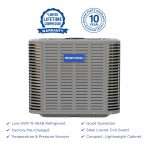
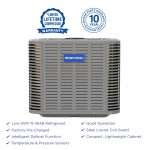
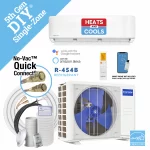
For many homeowners looking at the best heat pumps for humid climates, MRCOOL deserves a close look because the product range covers several real-world situations. The Universal Series makes sense for buyers who want a flexible, energy-efficient central solution, especially when replacing older equipment in a full-home setup. MRCOOL DIY mini-splits are also popular for garages, add-ons, and spaces where homeowners want a practical ductless option without unnecessary complexity.
What matters is not just the badge on the unit. It is choosing the right configuration for the home and knowing you can get support after the sale. That is one reason local buyers often prefer working with an authorized dealer instead of rolling the dice on a box shipped from somewhere with no real service connection.
Installation can make or break performance
Even the best equipment can disappoint if the install is rushed or poorly matched. Refrigerant charge, airflow, drain setup, duct condition, line set length, and thermostat configuration all affect how well a heat pump handles humidity.
In humid climates, drainage is especially important. If condensate is not managed correctly, you can end up with water issues, mold concerns, or nuisance shutdowns. Duct leakage can also pull humid air into the system and undermine performance.
This is why low upfront pricing is not always the bargain it appears to be. A cheaper install that leaves you with comfort problems, service calls, and higher operating costs usually costs more in the long run.
What homeowners in South Texas should prioritize
If you are shopping in this region, focus on comfort over hype. Look for a heat pump with inverter or variable-speed capability, strong humidity control, and a setup that fits your house rather than a generic rule of thumb.
Ask whether the system is being sized for your actual conditions. Ask how the airflow will be configured for dehumidification. Ask who will service the equipment later if something needs attention. Those questions tell you a lot about whether you are getting real guidance or just a quick sale.
It also helps to think about how you use the space. A primary residence, a workshop, a detached garage, and a room addition may all need different answers. The best heat pump is not always the most expensive one. It is the one that fits the load, controls humidity well, and comes with dependable support.
For homeowners who want honest pricing, product guidance, and local help with both professional installation and MRCOOL system support, that practical side of the decision matters just as much as the equipment specs. A good system should keep your home comfortable in August, not just look impressive in a brochure.
The right heat pump for a humid climate should make your house feel dry, even, and easy to live in. When the air feels right the moment you walk through the door, you know the system is doing its job.
Further reading: Best heat pumps for humid climates on bbc.com.
In short, best heat pumps for humid climates rewards a careful, informed approach. Use this best heat pumps for humid climates guide as a starting framework, adapt it to your situation, and re-check the facts whenever the topic moves.