
Table of Contents
A two-story house in Corpus Christi can feel fine downstairs and sticky upstairs by late afternoon. A garage conversion may never cool the way the rest of the home does. And an older central unit might still run, but your electric bill tells a different story. That is why choosing HVAC systems is not just about replacing a box outside. It is about matching the equipment to how your home actually handles heat, humidity, and daily use in South Texas.
For most homeowners, the hard part is not knowing that they need heating and cooling. The hard part is knowing which system makes sense, what size is right, and whether the lower upfront price will really save money once summer arrives. Good answers come from looking at the house, the ductwork, the rooms that struggle, and the kind of support you can count on after the sale.
What HVAC systems really include
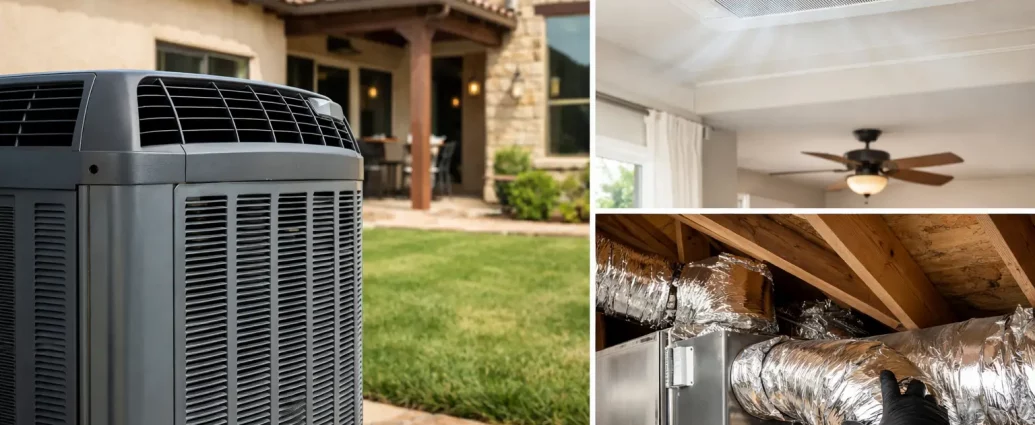
HVAC stands for heating, ventilation, and air conditioning, but in real life, homeowners usually think about it as the full comfort system inside and outside the house. That can include a condenser, furnace or air handler, evaporator coil, thermostat, refrigerant lines, filters, and ductwork if the home uses ducts. In a ductless setup, it may include an outdoor unit and one or more indoor air handlers.
The key point is this: equipment works as a system. A high-efficiency outdoor unit paired with the wrong coil, undersized ductwork, or poor installation will not deliver the comfort or efficiency you expected. That is where many buyers get frustrated. They compare one model number to another when the real performance depends on the full setup.
Which HVAC systems make sense for your home?
There is no single best answer for every property. The right choice depends on your layout, insulation, existing ducts, budget, and whether you are cooling the whole house or just one area.
Central HVAC systems for whole-home comfort
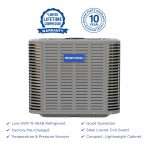
A central system is still the standard choice for many homes because it can cool and heat the entire house through ductwork. If your ducts are in good shape and the layout is straightforward, central air or a heat pump system can be a practical, efficient solution.
For homeowners replacing older equipment, this option often feels familiar. The thermostat stays in one place, airflow is distributed through the home, and the equipment is mostly out of sight. But the ductwork matters more than people think. Leaks, poor design, or undersized returns can leave rooms uncomfortable, no matter how good the equipment is.
Heat pump HVAC systems for efficiency
Heat pumps have become a strong option for South Texas homes because they handle both cooling and heating in one system. Since winters here are usually mild compared with colder parts of the country, a heat pump can be a very efficient fit.
That does not mean every heat pump is the same. Some perform better in temperature swings, some offer variable-speed operation for better humidity control, and some are better suited for homes that need an all-electric setup. If lowering utility costs is high on your list, a well-matched heat pump deserves a close look.
Ductless mini-splits for problem areas and additions
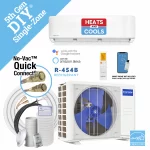
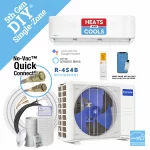
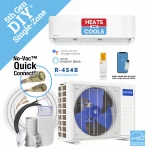
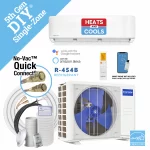
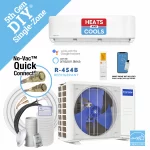
Ductless systems are especially useful when a room addition, garage apartment, shop, enclosed patio, or bonus room never seems to stay comfortable. They are also a smart option when adding ductwork would be expensive or impractical.
Mini-splits give you targeted control, and multi-zone systems can handle several areas independently. That is a major advantage if one family member likes the bedroom colder than the rest of the house, or if a guest space is only used part of the time. The trade-off is that equipment placement matters, and some homeowners prefer the look of hidden ducted systems. Still, when comfort in a hard-to-condition space is the goal, ductless can solve a problem that central systems often cannot fix cleanly.
Why sizing matters more than most shoppers expect
Bigger is not better with HVAC. An oversized system may cool the house quickly, but that quick cycle can leave humidity behind. The temperature on the thermostat looks right, yet the house still feels clammy. An undersized system has the opposite problem – it runs too long, struggles on the hottest days, and wears itself out trying to keep up.
Proper sizing looks at square footage, yes, but it also considers insulation, ceiling height, window exposure, duct design, and how the space is used. A sunny room addition with large windows is not the same as an interior bedroom of the same size. That is one reason online tonnage charts can only get you so far.
For South Texas homes, humidity control is part of comfort. A system that hits the temperature but misses on moisture removal will never feel quite right. That makes proper sizing and system matching especially important in this region.
Energy efficiency is about more than the rating
Efficiency ratings matter, but they are not the whole story. A higher-SEER system can reduce operating costs, especially in a climate where air conditioning works hard for much of the year. But the best return depends on how long you plan to stay in the home, how well the house is sealed, and whether your current system is failing badly enough to justify a larger upgrade.
Sometimes a homeowner benefits most from stepping into a more efficient unit with better staging or variable-speed performance. Other times, the smarter move is a balanced system with honest pricing and reliable support instead of paying top dollar for features that will not make a noticeable difference in that specific home.
That is why practical guidance matters. Efficiency should be measured in real comfort, realistic savings, and dependable operation, not just the biggest number on a brochure.
Not sure which HVAC system actually fits your home’s layout, ductwork, or South Texas humidity? At Your Bargain Mart, we match equipment to real‑world conditions — not generic charts. Whether you’re considering a heat pump, a high‑efficiency central system, or a ductless setup for problem rooms, we’ll help you choose the option that delivers the comfort you’ve been missing. Call (361) 271‑3513 for a quick, no‑pressure system recommendation based on your home, not guesswork.
Installation quality can make or break HVAC systems
A lot of equipment complaints trace back to installation issues rather than the brand itself. Incorrect refrigerant charge, weak airflow, poor drain setup, bad electrical work, and mismatched components can all shorten system life or reduce performance.
For homeowners, this is where local accountability matters. If something is off after installation, you need a real path to service, not finger-pointing between a seller and a separate contractor. Factory-backed warranties have value, but support is what turns that warranty into something useful.
This is also where DIY and professionally installed systems differ. Some homeowners are comfortable with a DIY-friendly ductless solution, especially for a garage or workshop. That can be a good fit when the product is designed for it. But many buyers still want licensed installation and someone local who will service the equipment later. In South Texas, that kind of support is often the difference between a good purchase and a frustrating one.
How to choose between repair and replacement
If your current system is not cooling well, replacement is not always the first answer. Some issues are straightforward, such as a failed capacitor, low refrigerant from a leak, or a blower problem. If the system is otherwise in decent shape, repair may be the more economical move.
Replacement starts making more sense when the unit is older, repairs are stacking up, energy bills keep rising, or key components are failing. It is also worth considering when your current system was never a good fit to begin with. No amount of repairs will fix a unit that is consistently too large, too small, or paired with poor duct performance.
A good contractor should be able to explain both options clearly. If the recommendation jumps straight to replacement without addressing the condition of the overall system, it is fair to ask more questions.
What homeowners should look for from a local HVAC partner
When you are comparing options, product selection matters, but so does what happens after you buy. Homeowners should look for honest pricing, clear sizing help, warranty-backed equipment, and service that does not disappear once the invoice is paid.
That is especially true for shoppers considering MRCOOL products, whether they want a Universal Series system, a central setup, or a DIY mini-split for a targeted space. Working with an authorized local dealer like Your Bargain Mart can simplify the process because the guidance, equipment access, and service support are tied together instead of split across multiple companies.
For many South Texas homeowners, the real goal is simple. They want a system that cools properly, keeps costs reasonable, and comes with support from people who know the local climate and stand behind the work.
The best HVAC systems are the ones that fit your real life
The right system is not always the biggest, the cheapest, or the one with the longest feature list. It is the one that matches your house, your comfort goals, and your budget without leaving you stuck when service is needed later.
If your home has hot spots, high bills, aging equipment, or a space that has never been comfortable, that is usually a sign to look closer at the full system instead of just the thermostat setting. A well-chosen HVAC upgrade should make daily life easier every time the weather turns brutal, and in South Texas, that is reason enough to get it right.
If your home has hot spots, rising energy bills, or rooms that never feel quite right, the right HVAC system can change your day‑to‑day comfort. At Your Bargain Mart, we match equipment to the way South Texas homes actually handle heat and humidity — not just what a brochure says. Whether you need better airflow, proper sizing, or a full system upgrade, we give you clear guidance and local support you can count on. Call (361) 271‑3513 to get a system that finally fits your home.
What HVAC systems make the most sense for South Texas homes?
South Texas homes deal with extreme heat, heavy humidity, and long cooling seasons, so the HVAC systems that make sense here are the ones designed to handle moisture control, steady airflow, and long run times. Heat pumps, high‑efficiency central systems, and ductless mini‑splits all perform well when properly matched to the home’s layout and ductwork.
Why do South Texas homes need HVAC systems with strong humidity control?
Humidity is one of the biggest comfort challenges in South Texas. HVAC systems that fit South Texas homes must remove moisture consistently, or the house will feel sticky even when the thermostat says it’s cool. Two‑stage and variable‑speed systems are especially effective because they run longer and pull more humidity from the air.
How do I know if my current HVAC system is the right fit for my home?
If you have hot rooms, uneven airflow, or the system struggles during peak heat, it may not be the right fit for South Texas conditions. Many homes here have ductwork or sizing issues that prevent the system from performing the way it should, even if the equipment is newer.
Are heat pumps a good HVAC systems option for South Texas?
Yes. Because winters are mild, heat pumps are one of the HVAC systems that make sense for South Texas homes. They cool efficiently in summer and provide affordable heating in winter, especially when paired with proper airflow and humidity control.
When does a ductless mini‑split make more sense than a central HVAC system?
Mini‑splits make sense for South Texas homes with bonus rooms, garage conversions, additions, or areas that never stay comfortable. They’re also ideal when ductwork is undersized, leaking, or too expensive to repair.
Does the size of the HVAC systems matter more in South Texas than in other regions?
Absolutely. Oversized HVAC systems cool too fast and leave humidity behind, while undersized systems run nonstop and still struggle. HVAC systems that fit South Texas homes must be sized for heat load, sun exposure, insulation, and room‑by‑room airflow — not just square footage.
Can the wrong HVAC system increase my energy bills?
Yes. A system that doesn’t fit your home or South Texas climate will run longer, cycle incorrectly, or fail to remove humidity. This leads to higher energy use and more wear on the equipment.
What’s the best way to choose the right HVAC systems for my South Texas home?
Work with a local dealer who understands how South Texas heat, humidity, and ductwork affect performance. A proper evaluation of your home’s layout, airflow, and insulation will determine which HVAC systems actually make sense — not just what’s on sale.
Related:
Where to Buy MRCOOL Mini Split Right
The MRCOOL DIY Mini-Split: Features and Benefits Explained
How MRCOOL Products Improve Indoor Air Quality
Sources:
U.S. Department of Energy – Central Air Conditioning & Heat Pump Basics