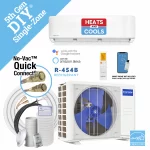
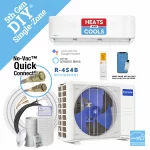
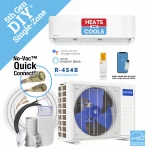
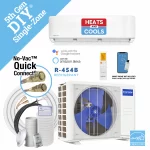
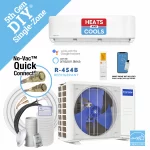

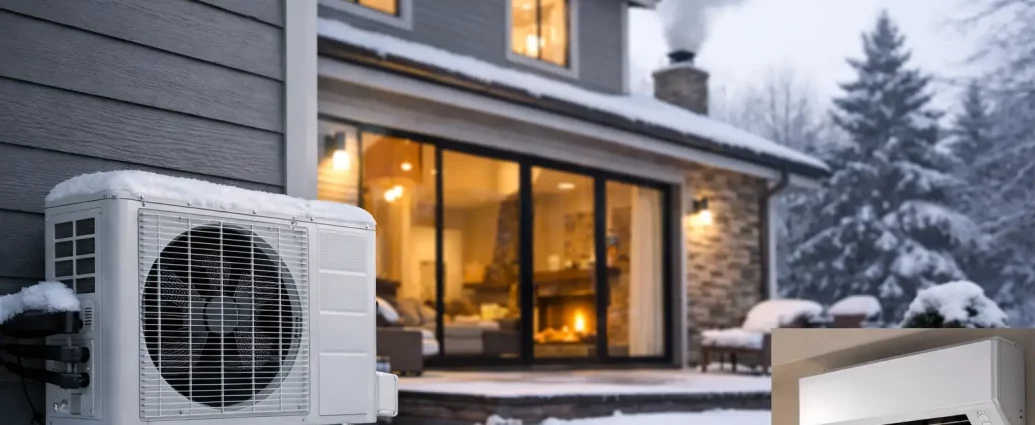
A Corpus Christi cold snap may not last long, but it is long enough to expose an undersized or poorly planned heating system. So, can MRCOOL DIY heat a house? Yes, it can – when the system is correctly sized, the home layout works with ductless heating, and the installation is handled with the same care you would expect from a professional HVAC project.
MRCOOL DIY mini-splits are heat pumps. That means the outdoor unit moves heat rather than creating it through electric resistance strips or fuel combustion. In South Texas, where winter temperatures are generally mild, that is an efficient way to heat many homes, additions, garages, and workshops. The bigger question is not whether the equipment has a heat mode. It is whether its capacity, indoor-unit placement, electrical setup, and zoning match your home.
When MRCOOL DIY Can Heat an Entire House
A properly designed multi-zone MRCOOL DIY system can serve an entire house. One outdoor condenser connects to multiple indoor air handlers, with each indoor unit conditioning a separate room or zone. This approach works particularly well in smaller homes, open floor plans, casitas, additions, and homes without existing ductwork.
For a whole-house setup, each regularly occupied area needs a realistic path for warm air to reach it. An indoor head in the living room can often help warm nearby open spaces, but it cannot reliably heat a closed bedroom down a hallway. Doors, ceiling height, insulation, sun exposure, and room layout all affect how heat travels.
Single-zone systems are often the better choice for a targeted comfort problem. A bedroom that stays chilly, a converted garage, a detached shop, or a room addition can gain efficient heating and cooling without changing the central system. A multi-zone system makes more sense when several separate rooms need independent temperature control.
In a compact, well-insulated home with an open layout, ductless heating can be a primary solution. In a larger home with many enclosed rooms, a traditional ducted heat pump, a MRCOOL Universal system, or a combination of central HVAC and ductless zones may provide more even whole-home comfort.
Sizing Is What Decides Whether It Works
The most common mistake is choosing a mini-split based only on square footage. Square footage is a starting point, not a load calculation. A 1,200-square-foot home with shaded windows, quality insulation, and a tight building envelope has very different heating needs than a 1,200-square-foot older home with high ceilings, leaky doors, and west-facing glass.
Heating capacity is measured in BTUs. More BTUs are not automatically better. An oversized unit may cycle more often, create uneven temperatures, and cost more than necessary. An undersized system may run continuously during the coldest weather without bringing rooms up to the desired temperature.
Before selecting a system, consider the home’s insulation level, ceiling height, window area, number of occupants, layout, and whether the space is conditioned year-round. For South Texas homeowners, cooling demand usually drives the equipment selection, but the heating performance still needs to cover the lowest temperatures you expect during winter weather.
A room-by-room load assessment is especially valuable for multi-zone systems. It helps determine how many indoor heads are needed, where they should go, and whether the outdoor unit has enough combined capacity. Your Bargain Mart can help homeowners compare MRCOOL equipment options and avoid guessing at system size before purchase.
Do Not Add Indoor Head Sizes Without Checking the Outdoor Unit
Multi-zone systems have a maximum connected capacity and operating limits. For example, selecting several large indoor heads because each room looks sizable can exceed what the outdoor condenser is designed to support. Even when the system allows a certain connected total, it may not deliver every indoor unit’s maximum output at the same time.
That is not necessarily a problem. Most homes do not have every room calling for full heating capacity at once. But it does mean system design matters. Bedrooms, living areas, kitchens, and sun-facing rooms do not all have the same load or usage pattern.
South Texas Weather Favors Heat Pumps, With a Few Exceptions
MRCOOL DIY heat pumps are a strong fit for Corpus Christi and much of South Texas because winter conditions are usually moderate. Heat pumps operate efficiently in mild weather, often using less electricity than resistance heaters. They also give you cooling in summer, which is the larger comfort concern for most local homes.
During a rare hard freeze, any heat pump works harder because there is less available heat in the outdoor air. Performance depends on the specific model, outdoor temperature, system sizing, and defrost cycles. A correctly selected unit may still heat effectively, but homeowners should understand that extreme weather is different from a typical 45-degree winter morning.
Backup heat may be worth considering when the home has high heat loss, occupants need dependable warmth during every weather event, or the system is replacing a furnace in a larger, ducted house. Backup can mean retaining an existing central system, using a compatible auxiliary heat arrangement where appropriate, or having a safe emergency plan for unusual freeze conditions. It should never mean relying on unsafe portable heating practices.
DIY Installation Does Not Mean Skipping the Important Parts
The appeal of MRCOOL DIY systems is real. Their precharged line sets reduce the refrigerant work involved in installation, which can make ductless comfort more accessible for capable homeowners. Still, a successful installation requires more than hanging an indoor unit and connecting lines.
The outdoor unit needs a stable, level location with proper airflow and drainage. Indoor heads need to be mounted where they can distribute air across the room without blowing directly into an obstruction. The line set must be routed carefully, protected from damage, and kept within the manufacturer’s allowable length and elevation limits.
Electrical work is also a serious part of the job. The system needs the correct dedicated circuit, disconnect, wire sizing, and code-compliant installation. In many cases, a licensed electrician is the right person for this portion of the project. Local permit requirements and manufacturer instructions should be followed from the beginning, not treated as an afterthought.
Condensate drainage deserves the same attention. In our humid climate, mini-splits remove a lot of moisture while cooling. A poorly pitched drain line can cause water leaks, wall damage, algae buildup, or nuisance shutdowns. Heating performance may be the reason you buy the system, but cooling-season drainage can determine how satisfied you are with it over time.
Ductless Heating Has Clear Advantages and Real Trade-Offs
A MRCOOL DIY mini-split can offer efficient heating, individual room control, quiet operation, and no duct losses. It is often an excellent answer for homes where extending ducts would be expensive or impractical. It can also reduce the need to heat unused rooms to the same temperature as occupied spaces.
The trade-off is visibility and zoning. Indoor wall-mounted heads are part of the room, and each major enclosed area may need its own unit. Some homeowners prefer a concealed ducted or central solution for a more traditional appearance. Others appreciate that each family member can set a comfortable temperature in their own zone.
Existing ductwork also changes the decision. If a home already has sound ducts and needs a full HVAC replacement, a central heat pump or MRCOOL Universal Series system may be a more straightforward whole-house option. If the ductwork is damaged, undersized, or absent, ductless equipment becomes much more compelling.
A Practical Way to Decide
Start by deciding whether you are trying to heat one problem area or replace whole-home heating. Then look at the home room by room, not just as one total square-footage number. Identify closed bedrooms, high-load rooms, garage conversions, and spaces with poor insulation.
Next, choose between a single-zone, multi-zone, or ducted approach based on how air can move through the home. Plan the electrical and drainage work before ordering equipment. Finally, make sure you have local support available if you need installation assistance, diagnostics, maintenance, or future repair service.
The right MRCOOL DIY system can be a practical primary heat source for many South Texas homes, especially where mild winters and ductless zoning work in its favor. A little upfront planning is what turns a good equipment purchase into dependable comfort when the temperature drops.