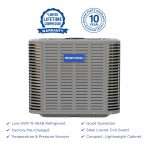






A room addition should not become the hottest room in the house every July. Whether you are finishing a garage, adding a primary suite, enclosing a patio, or building a backyard office, the best ductless systems for additions provide independent comfort without forcing an older central system to carry a load it was never sized to handle. For many Corpus Christi homeowners, a properly selected ductless heat pump is the practical answer: efficient cooling, useful heating on cool winter mornings, and room-by-room temperature control.
The right system is not always the biggest system or the lowest-priced box. It needs to match the addition’s size, insulation, windows, sun exposure, electrical capacity, and how the room will actually be used. That is where a local equipment dealer and service team can save you from an expensive mismatch.
Why Ductless Is a Strong Fit for Room Additions
Extending existing ductwork into an addition can be more complicated than it first appears. Your current air handler, furnace, condenser, and ducts may not have the capacity to serve another 300, 500, or 800 square feet. Even if a contractor can run new ducts, the project may require larger equipment, duct modifications, and balancing work throughout the home.
A ductless mini-split avoids much of that disruption. An outdoor heat pump connects to an indoor air handler through a compact line set, so there is no need to build a full duct network into the new space. The indoor unit responds to the temperature in that addition instead of relying on a thermostat located down the hall.
That independence matters in South Texas. A west-facing bonus room, a garage conversion with less insulation, and a sunroom with large windows all gain heat differently from the main house. A ductless system lets the addition receive the cooling it needs without making the rest of the home feel too cold.
Best Ductless Systems for Additions: Start With the Layout
The best configuration depends on how many rooms you are adding and whether those rooms need separate temperature control.
Single-Zone Mini-Splits for One Open Addition
A single-zone ductless system is usually the best value for one open room or connected area. It pairs one outdoor condenser with one indoor head, making it a solid choice for a new bedroom, converted garage, detached office, workshop, or media room.
For example, a properly sized 9,000 or 12,000 BTU system may work well for a modest, well-insulated bedroom addition. Larger spaces, rooms with high ceilings, or additions with significant afternoon sun may require 18,000 BTU or more. The exact capacity should come from a load calculation, not a square-footage guess alone.
Single-zone systems keep equipment and installation simpler. They also give homeowners straightforward control through a handheld remote, wall control, or compatible app features, depending on the model. If the addition is truly one shared space, there is usually little reason to pay for a more complicated multi-zone setup.
Multi-Zone Systems for Additions With Separate Rooms
A multi-zone ductless system makes more sense when an addition includes several enclosed spaces. Think of a primary suite with a bedroom, bathroom, and sitting room, or a garage apartment with a living area and separate bedroom. One outdoor unit can serve multiple indoor air handlers, with each zone controlled independently.
This setup costs more upfront than a single-zone system and requires careful design. The outdoor condenser has a total capacity limit, and the connected indoor units must be selected to work within that limit. It is not as simple as adding up the largest available heads and hoping for the best.
Multi-zone equipment is worthwhile when the rooms have different schedules or comfort needs. A home office can stay cool during the day while a guest room remains at a higher setpoint until someone uses it. For a two-room addition that will always have open doors, though, two zones may be unnecessary.
DIY Mini-Splits for Qualified Homeowners
MRCOOL DIY ductless systems are a compelling option for homeowners who are comfortable handling the mounting, electrical preparation, condensate routing, and other project details. Their pre-charged line sets reduce the need for conventional refrigerant charging during installation, which can make a small addition project more approachable.
DIY does not mean every part of the job is casual. The indoor unit must be mounted securely and level, the line set must be protected from damage, the condensate drain must flow correctly, and the electrical circuit must meet code. A poorly routed drain can lead to water damage. Incorrect electrical work can create safety issues and put equipment reliability at risk.
Before purchasing a DIY system, confirm the permit requirements for your location and consider which portions of the work you can complete confidently. Some homeowners handle the equipment installation but use a licensed professional for electrical connections or troubleshooting. Service access after the sale matters, especially when a system develops an issue during a South Texas heat wave.
Professional-Grade Mini-Splits for Installed Additions
For larger additions, complex layouts, or homeowners who want a fully managed installation, professional-grade ductless equipment is often the better route. These systems are designed for installation by trained HVAC technicians who can pressure-test the line set, evacuate the system properly, verify refrigerant performance, and commission the equipment before turning it over to the homeowner.
A professionally installed MRCOOL system can be a particularly smart fit when the addition has a long line-set run, multiple zones, difficult wall access, or a location that calls for a ceiling cassette or concealed ducted air handler instead of a wall-mounted head. Wall heads are efficient and common, but they are not the only choice. A concealed ducted unit can serve a small suite with short duct runs while keeping the equipment out of sight.
Sizing Matters More Than the Model Name
BTU ratings are useful, but they are not a complete sizing method. In Corpus Christi and across the Coastal Bend, high outdoor temperatures, humidity, roof exposure, large glass areas, and insulation quality can change an addition’s cooling load substantially.
A 400-square-foot room with insulated walls, a shaded roof, and efficient windows may need far less capacity than a 400-square-foot garage conversion with uninsulated doors and direct western sun. Oversizing is not a harmless safety margin. An oversized system can cool the air too quickly, cycle more often, and remove less moisture than it should. The result can be a room that feels cool but clammy.
A proper load calculation considers the room dimensions, ceiling height, construction materials, window orientation, insulation, occupancy, appliances, and air leakage. It also checks whether the room’s purpose will change. A quiet guest room has a different load profile from a workshop with equipment, a home gym, or a gaming room with several people and electronics.
Installation Details That Protect Your Investment
Ductless systems are efficient because the installation is precise. The outdoor unit needs stable mounting, clear airflow, and protection from standing water. In coastal areas, placement should also account for salt air exposure and allow for routine cleaning and service.
Indoors, the air handler should be located where it can distribute air across the space rather than blowing directly into one corner. The condensate drain needs a continuous path to drain safely. The line set should be sized correctly, insulated fully, and routed neatly to avoid kinks and damage.
Electrical planning is equally important. Most ductless systems require a dedicated circuit and outdoor disconnect. Do not assume the addition’s existing outlets or an old garage circuit can support new HVAC equipment. A licensed installation team can address these details before they turn into a delay or an avoidable repair call.
Your Bargain Mart helps local homeowners select genuine MRCOOL equipment, coordinate licensed installation through Precision Air, and access ongoing support for both professionally installed and DIY systems. That local accountability is valuable when choosing equipment meant to serve your home for years, not just get through one summer.
Choosing the Right System for Your Addition
If you are cooling one open room, start by comparing single-zone ductless heat pumps sized through a real load calculation. If the project includes multiple rooms with closed doors, compare a multi-zone design against separate single-zone systems. Separate systems can sometimes offer better redundancy and simpler operation, while a multi-zone system can reduce the number of outdoor units. The best answer depends on the layout, budget, and available outdoor space.
Also consider the addition’s appearance and use. A wall-mounted head is often the most economical choice for a bedroom or office. A ceiling cassette may suit a finished space where wall area is limited. A concealed ducted unit can make sense when you want a more traditional look and have room above the ceiling for short ducts.
The practical next step is to gather the room dimensions, ceiling height, window details, photos of the exterior wall and electrical panel, and a clear description of how the space will be used. With that information, you can choose a ductless system that keeps the new addition comfortable without creating new problems for the rest of the home.