
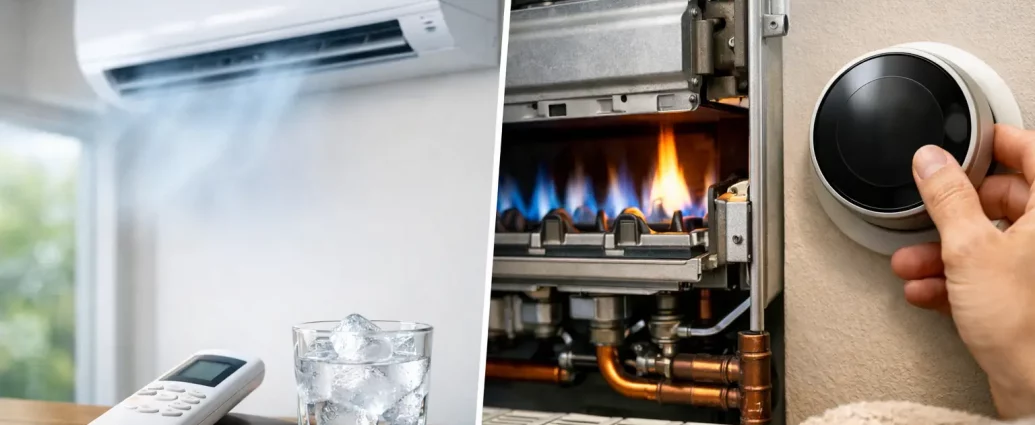
If your electric bill spikes every summer and you barely touch the heat in winter, it is fair to ask: is heating or cooling more efficient? For most homeowners in Corpus Christi and across South Texas, cooling usually puts more strain on the system over the course of a year simply because it runs longer and harder. But the real answer depends on the equipment you have, how your home holds temperature, and what kind of comfort you are asking the system to deliver.
That is where a lot of homeowners get tripped up. They compare heating and cooling like they are mirror-image jobs. They are not. The physics are different, the equipment can be different, and the local climate changes the math in a big way.
Is heating or cooling more efficient in South Texas?
In South Texas, cooling is usually the bigger energy story, even when the heating side of your system is technically less efficient on paper. That sounds backwards at first, but it makes sense once you look at runtime.
A Corpus Christi home may need air conditioning for a large stretch of the year, especially during long humid seasons where daytime highs and sticky nights keep the system cycling constantly. Heating demand is lighter and shorter. So even if your furnace or electric heat strips are not the most efficient way to produce heat, they may still cost you less over the full year simply because you use them far less.
That is why local homeowners should not focus on one question alone. The better question is which mode uses more energy in your actual home, with your insulation, your ductwork, your thermostat habits, and your equipment type.
The short answer depends on the system
When people ask whether heating or cooling is more efficient, they are often mixing up two different ideas: efficiency and operating cost. They matter, but they are not the same.
Efficiency is about how well equipment turns energy into heating or cooling. Operating cost is about what you pay to get the result. A system can be highly efficient and still cost plenty to run if it runs for long hours. A less efficient system may cost less over a year if demand is low.
Electric resistance heat
This includes baseboard heat and heat strips in some air handlers. These systems are close to 100 percent efficient at turning electricity into heat, but electricity is an expensive fuel source for that job. So while the conversion looks efficient, the bill can still be high if the heat runs often.
Gas furnaces
A gas furnace can be very effective and often cheaper to operate than electric resistance heat in colder climates. But in South Texas, many homeowners do not use heat enough for furnace efficiency to dominate the annual energy picture.
Central air conditioners
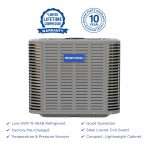
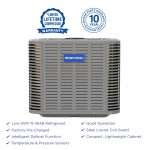
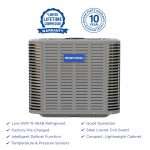
Cooling systems do not create cold air from nothing. They move heat from inside your home to the outside. That heat transfer process can be efficient, but air conditioners still work hard in hot, humid weather. If your system is oversized, undersized, or connected to leaky ducts, efficiency drops fast.
Heat pumps and mini-splits
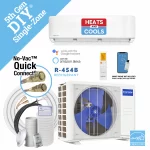
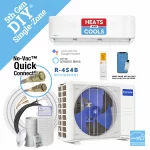
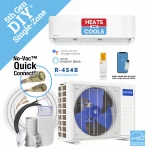
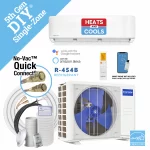
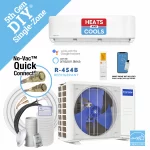
This is where the conversation gets more interesting. A heat pump moves heat in both directions. In cooling mode, it works like an air conditioner. In heating mode, it pulls heat from outdoor air and brings it inside. Because it is moving heat instead of generating it directly, heating with a heat pump can be far more efficient than electric resistance heat.
That is one reason many South Texas homeowners see strong value in high-efficiency heat pumps and ductless systems. In our climate, they can handle both seasons efficiently without the fuel and airflow limitations of older setups.
Why cooling often costs more here
Even if heating can be the less efficient process in some homes, cooling often wins the annual cost battle in South Texas for a simple reason: weather.
Your AC is fighting both heat and humidity. It is not just lowering temperature. It is also pulling moisture from indoor air, which adds workload. If your attic is underinsulated, your windows leak heat, or your ducts run through a hot attic, your cooling system has to make up that difference every day.
Then there is thermostat behavior. A lot of homeowners set cooling lower than necessary because they want the house to feel crisp. In winter, they may tolerate a wider temperature range and wear a sweatshirt. That comfort behavior changes efficiency in real life.
Sun exposure matters too. Homes with west-facing windows, poor shading, or older insulation tend to feel the afternoon heat hardest. In those homes, the cooling side is almost always the bigger energy user.
Is heating or cooling more efficient with a heat pump?
With a modern heat pump, heating is often surprisingly efficient, especially in a mild winter climate. That is because the system is transferring heat rather than producing it through combustion or resistance.
For South Texas homeowners, this can be a strong fit. Winter temperatures are usually moderate enough that a quality heat pump can deliver effective heat without relying heavily on backup strips. That means the heating side may actually perform very efficiently for most of the season.
Cooling still may account for more total energy use over the year because of longer runtime, but a well-matched heat pump gives you a balanced, efficient system in both directions. If you are comparing options for a primary residence, garage conversion, room addition, or shop, this is where proper sizing and product selection matter. A good unit on paper can still disappoint if it is not matched to the space.
What hurts efficiency the most
Homeowners sometimes assume the equipment itself is the whole story. It is not. Installation quality and home conditions can matter just as much.
Duct leaks are a major problem in many homes. Conditioned air escapes into the attic, and your system runs longer to make up for it. Dirty coils, clogged filters, low refrigerant, and poor airflow all drag down performance. An oversized system can short-cycle, leaving humidity behind and wasting starts and stops. An undersized system may run nonstop and still struggle.
This is also why honest sizing support matters. Bigger is not automatically better. A properly sized central system or mini-split has a much better chance of delivering efficient comfort than a unit chosen by guesswork.
How to tell which side of your system is costing you more
The clearest clue is seasonal usage. If your bills surge from late spring through early fall, cooling is likely your main energy load. If winter bills jump sharply during cold snaps and you have electric backup heat, the heating side may deserve a closer look.
You can also look at system behavior. If the house cools slowly, feels humid, or has hot rooms, your cooling side may be losing efficiency. If winter air feels lukewarm for long periods or the system switches to auxiliary heat often, heating may be costing more than it should.
A lot of homeowners benefit from stepping back and asking a practical question instead of a technical one: where is my home wasting energy? Sometimes the answer is the equipment. Sometimes it is the ductwork, insulation, controls, or installation quality.
The best way to improve both heating and cooling efficiency
If you want lower operating costs in both seasons, the biggest wins usually come from matching the right equipment to the space and making sure the system can actually deliver what it is rated to do.
For some homes, that means replacing an aging central system with a higher-efficiency heat pump. For others, it means adding a ductless mini-split to a garage, addition, or problem room instead of overworking the main system. In homes with older ductwork, a properly planned ductless setup can avoid some of the airflow losses that make central systems less efficient.
It also pays to think beyond the equipment cabinet. Air sealing, insulation upgrades, clean filters, and regular service help any system perform better. If you are investing in new HVAC equipment, local support matters too. Having access to licensed installation, warranty-backed products, and service after the sale can make the difference between a system that looks efficient on paper and one that actually stays efficient.
For homeowners in Corpus Christi, that local piece is especially important. Coastal heat, humidity, salt air, and long cooling seasons put real demands on HVAC equipment. Choosing a system built for efficiency is smart. Choosing one with local support behind it is smarter.
If you are still weighing whether heating or cooling is more efficient, the most honest answer is this: cooling usually drives more annual energy use in South Texas, but the right heat pump or mini-split can make heating extremely efficient when winter arrives. The goal is not to win a debate between hot and cold. The goal is to get dependable comfort without paying for wasted energy month after month.