
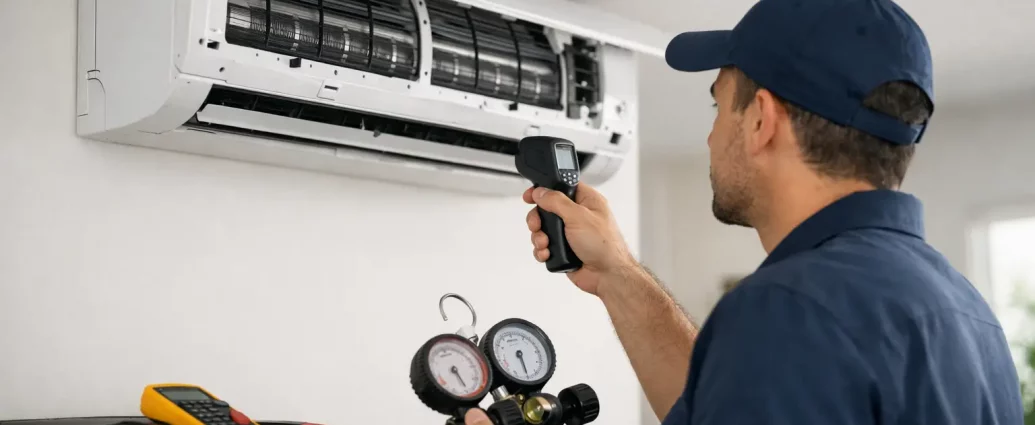
When a mini split starts blowing warm air in a Corpus Christi summer, you usually do not need a long diagnosis process to know something is wrong. You need cool air back, and you need a clear plan. If you are wondering how to troubleshoot mini split issues without making the problem worse, start with the simple checks that solve the most common failures first.
- How to troubleshoot mini split issues step by step
- When the mini split runs but does not cool
- Water leaks and drain problems
- Strange noises, smells, and error codes
- How to troubleshoot mini split power and communication faults
- What you can fix yourself and what you should not
- Preventing the next mini split problem
Mini splits are efficient and dependable, but they are still mechanical systems. A clogged filter, a tripped breaker, a blocked drain line, or a bad remote setting can make a working system look broken. The goal is to separate homeowner-safe fixes from problems that need licensed service, especially if you want to protect performance and factory-backed warranty coverage.
How to troubleshoot mini split issues step by step
Start with what the system is telling you. Is it not turning on at all? Is it running but not cooling? Is water leaking from the indoor unit? Is it making a new noise? Those symptoms point you in different directions, and chasing the wrong cause wastes time.
Check the power first. If the unit will not respond, inspect the breaker panel and the disconnect. A mini split can lose power after a surge or brief outage, and South Texas weather does not always play nice with electrical equipment. If the breaker is tripped once, reset it and test the system. If it trips again, stop there. Repeated breaker trips usually mean an electrical or mechanical issue that should not be ignored.
Next, confirm the settings. It sounds basic, but it fixes more service calls than most homeowners expect. Make sure the unit is in cooling mode, not fan or heat. Set the temperature well below room temperature and replace weak remote batteries if the system is not responding correctly. Some homeowners also run into timer settings they forgot were enabled, which can make the unit shut off or delay operation.
Then look at airflow. A mini split that runs but does not cool properly often has restricted airflow at the indoor head or the outdoor condenser. Washable filters should be clean and dry before reinstalling. Furniture, curtains, storage boxes, or yard debris can also choke off performance. If the system cannot move enough air, it cannot transfer heat the way it is supposed to.
When the mini split runs but does not cool
This is probably the most common complaint, and it can have a few different causes. Dirty filters are the easy answer, but not the only one. If airflow is weak, the evaporator coil can get too cold and start icing. Once that happens, cooling drops fast.
If you see ice on the indoor unit or the refrigerant line, turn the system off and let it thaw. Running it longer usually makes the problem worse. After it thaws, check the filters and make sure nothing is blocking airflow. If icing returns, the issue may be low refrigerant, a blower problem, or a sensor problem. That is not a DIY repair.
Outdoor conditions matter too. A condenser packed with dirt, grass clippings, or salt-heavy coastal grime will struggle to release heat. You can gently clean visible debris from the outdoor unit with the power off, but avoid bending fins or spraying water aggressively into electrical components. If the coil is heavily soiled, a proper cleaning is worth it because efficiency loss adds up quickly.
There is also the sizing question. Sometimes a mini split is not malfunctioning at all – it is undersized for the space, the sun load, or the way the room is being used. Garages, additions, and west-facing rooms in South Texas can put more demand on a system than people expect. If the unit runs constantly and never quite catches up, the issue may be capacity rather than failure.
Water leaks and drain problems
If water is dripping from the indoor unit, do not assume the whole system is shot. In many cases, the condensate drain is clogged or the unit is not draining properly. Mini splits remove humidity as they cool, and in a humid climate, that drainage system does a lot of work.
Start by checking whether the unit is level and whether the drain line appears kinked, pinched, or blocked. A dirty filter can also contribute because poor airflow may cause excess condensation or icing that later melts and overflows. If the drain pan or drain line is clogged with buildup, the water has nowhere to go except into the room.
Some drain issues are simple. Others are not. If the line is buried in a wall, tied into a condensate pump, or repeatedly backing up, it makes sense to have it inspected professionally. Water damage is far more expensive than a service call.
Strange noises, smells, and error codes
Mini splits are usually quiet, so new sounds get attention fast. A light clicking at startup or shutdown can be normal as parts expand and contract. A loud buzzing, grinding, rattling, or repeated hissing is different. Rattling may be something loose. Buzzing can point to an electrical issue. Hissing may indicate refrigerant movement, but if performance is also poor, that deserves a closer look.
Musty odors often come from moisture and buildup on the indoor coil or blower wheel. That is especially common when filters have been neglected or the unit has been cycling in humid conditions. Cleaning helps, but if the smell keeps returning, the indoor section may need a more thorough service.
Error codes should never be ignored. If your system displays one, write it down exactly before resetting anything. That code can point to sensor faults, communication issues, fan motor trouble, or refrigerant-related problems. Some codes clear after a power cycle, but if they return, there is an underlying fault that needs diagnosis.
How to troubleshoot mini split power and communication faults
A mini split depends on proper communication between the indoor and outdoor units. If that communication is interrupted, the system may stop cooling, flash lights, or show a code. Power surges, wiring problems, failed boards, and moisture intrusion can all play a role.
Homeowners can safely check the obvious items: breaker status, disconnect position, remote batteries, and whether the unit responds after shutting power off for a few minutes and restarting it. Beyond that, electrical testing and board diagnosis should be left to a trained technician. Guessing can get expensive quickly, especially on inverter-driven equipment.
This is one area where local support matters. Not every HVAC company wants to work on ductless systems, and some are even less willing when the equipment is a DIY model. That leaves homeowners stuck with equipment they own but cannot get serviced. A company that understands mini splits and supports both professionally installed and DIY systems can save a lot of frustration.
What you can fix yourself and what you should not
Homeowner-safe troubleshooting usually includes checking settings, replacing batteries, cleaning filters, clearing obvious debris around the outdoor unit, and watching for visible drain or airflow problems. Those basic steps solve a surprising number of issues and can restore performance without much downtime.
What you should not do is open sealed refrigerant components, start swapping boards, or keep resetting a breaker that will not stay on. The same goes for recurring leaks, repeated icing, and persistent error codes. Those problems tend to get worse, not better, when they are ignored.
There is also a warranty angle. If your system is under factory-backed coverage, unauthorized repairs can create complications. That is another reason to document symptoms, note any codes, and call for proper service when the issue moves beyond routine maintenance.
Preventing the next mini split problem
Troubleshooting is easier when the system has been maintained. Clean filters regularly, keep the outdoor unit clear, and pay attention to small changes before they become major failures. If cooling seems weaker than normal, if humidity indoors starts creeping up, or if the unit sounds different, address it early.
For many homeowners, the smartest move is a combination of routine filter care and periodic professional service. That approach keeps efficiency up, helps catch drain and electrical issues early, and reduces the odds of losing cooling when you need it most. If you own an MRCOOL system and want straightforward help from a local team that actually supports these units, Your Bargain Mart offers the kind of honest pricing and real South Texas service homeowners tend to remember.
A mini split does not have to be mysterious. Start with the basics, stop before you cross into risky repairs, and treat small warning signs like they matter – because in this heat, they usually do.
Licensed HVAC Installation Guide for Homeowners
Further reading: How to troubleshoot mini split on nytimes.com.
In short, how to troubleshoot mini split rewards a careful, informed approach. Use this how to troubleshoot mini split guide as a starting framework, adapt it to your situation, and re-check the facts whenever the topic moves.